
- The March 2, 2026 Joint Declaration between Canada and Greenland establishes non-binding cooperation on critical minerals and Arctic energy, with no funding allocations, project timelines, or processing infrastructure commitments.
- While Greenland's rare earth geology is compelling, the agreement remains silent on separation plants, metallization, and magnet manufacturing—leaving midstream processing chokepoints unaddressed.
- The JDI creates no legal obligations and focuses on upstream coordination rather than downstream industrial capacity, making execution dependent on future capital deployment and refining infrastructure investment.
This analysis examines the March 2, 2026 JointDeclaration of Intent (JDI) between Canada and Greenland on criticalminerals and Arctic energy cooperation. We separate diplomatic signaling from industrial substance, assess what this agreement does—and pointedly does not—do for rare earth security, and surface deeper structural questions around sovereignty, refining chokepoints, capital intensity, and Arctic geopolitics. For investors and policymakers, this is less about headlines and more about architecture.
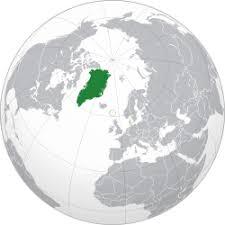
Arctic Alignment—Without Industrial Commitment
On March 2, 2026, Canada’s Department of Natural Resources and Greenland’s Ministry of Business, Mineral Resources, Energy, Justice, and Gender Equality signed a Joint Declaration of Intent in Toronto. The language is deliberate: cooperation on critical minerals, geological research, Arctic microgrids, ESG standards, and infrastructure resilience.
But the JDI is explicitly non-binding. No funding allocations. No project commitments. No timelines. No processing infrastructure.
This is coordination. It is not a construction.
The Deeper Game: Sovereignty, Security, and Supply Chain Geometry
Greenland’s geology is compelling. Its rare earth potential—particularly heavy rare earth elements (HREEs) such as dysprosium and terbium—matters in a world seeking non-Chinese supply. Canada’s Arctic strategy is equally strategic: North-North alignment signals Western consolidation in high-latitude resource governance. And at the same time, there are harder questions.
Does upstream collaboration solve downstream dependence?
Mapping deposits and harmonizing ESG frameworks does not alter the global reality that industrial-scale solvent extraction remains the only commercially proven large-scale rare earth separation method. Processing chokepoints—not geological scarcity—define today’s vulnerability.
This JDI is silent on separation plants. Silent on metallization. Silent on magnet alloying. Silent on capital formation vehicles. In supply chain geometry, this remains upstream optionality—not midstream control.
What Is Technically Sound—and What Requires Scrutiny
Grounded realities:
- Greenland’s infrastructure deficits are very real.
- Arctic permafrost and microgrid challenges directly affect project economics.
- Geological data exchange lowers exploration risk and accelerates permitting confidence.
Strategic omissions:
- No reference to refining capacity co-investment.
- No sovereign financing frameworks or development banks attached.
- No integration with the North American magnet manufacturing strategy.
ESG alignment is highlighted. That is prudent—but ESG without industrial throughput does not move markets.
The Legal Architecture: A Signal, Not a Contract
Section 5 is decisive: the JDI creates no legal rights or obligations. Each participant bears its own costs. Any binding commitments must arise from future instruments.
For investors, this means optionality, not inevitability.
The Unasked Questions Investors Should Be Asking
- Will Canada underwrite Greenlandic refining, or merely encourage dialogue?
- Will Arctic rare earths move through Western separation—or through existing Asian infrastructure?
- How will Indigenous governance frameworks intersect with accelerated development timelines?
- Is this alignment defensive geopolitics—or a precursor to capital deployment?
Greenland sits at the intersection of sovereignty, climate resilience, and rare earth strategic autonomy. Canada’s consular expansion in Nuuk signals long-term engagement. But engagement is not execution.
The Arctic board is positioned.
The real test will be who builds the separation plants, and the refinery at scale—and where. That’s what matters most in this race.


0 Comments
No replies yet
Loading new replies...
Moderator
Join the full discussion at the Rare Earth Exchanges Forum →