
Highlights
- France is partnering with Greenland through its geological agency BRGM to map mineral deposits including lithium, uranium, and rare earth elements, potentially worth trillions of euros, as Europe seeks alternatives to China’s critical minerals dominance.
- Despite significant mineral potential, Greenland’s rare earth projects face formidable barriers including extreme Arctic weather, limited infrastructure, environmental sensitivities, and massive capital requirements that can delay production by a decade or more.
- Experts warn that trillion-euro valuations are speculative and that many rare earth deposits remain economically unviable due to complex mineralogy, low recovery rates, and the reality that processing capacity—not geology alone—determines actual supply chain power.
One recent report claims France is moving to help map Greenland’s mineral wealth—potentially worth “trillions of euros”—through a cooperation agreement with Greenlandic authorities and France’s geological agency BRGM. The project will use satellite data and geological analysis to better understand deposits of lithium, uranium, and rare earth elements.
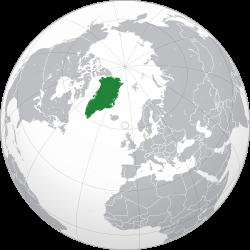
In plain terms Defence24 reports (opens in a new tab) Europe wants a clearer picture of Greenland’s underground resources as governments scramble to secure critical minerals for batteries, defense systems, and advanced technologies.
The story frames Greenland as an emerging strategic frontier where energy transition, Arctic geopolitics, and great-power competition converge.
The Geological Reality Beneath the Ice
The article is correct about one key point: Greenland does host significant mineral potential, including rare earth deposits such as the well-known Kvanefjeld and Kringlerne projects. However, “potential” is the operative word. More than 100 exploration licenses exist, yet only a handful of projects have progressed toward production.
The barriers are formidable:
- extreme Arctic weather
- limited infrastructure
- environmental sensitivities
- massive capital requirements
Even well-defined deposits can take a decade or more to move from exploration to production.
For rare earth investors, this timeline matters.
And expert-critics such as the Rare Earth Observer (opens in a new tab) suggest far less opportunity in Greenland then popular media suggests. The Singapore-based expert and trader argued last year that many widely discussed rare earth projects and policy initiatives are far less viable than headlines suggest. In fact the critic raises serious doubts about Greenland’s Kvanefjeld rare earth-uranium project, highlighting complex mineralogy, low pilot-plant recovery rates (~32%), and the potential generation of nearly 90,000 tonnes of radioactive thorium waste over the life of the mine—factors that could undermine economic feasibility.
The author also critiques exaggerated reserve claims and media maps of rare earth deposits, warning that many so-called deposits in places like Ukraine or Belarus are merely geological occurrences with uncertain economic value.
Europe’s Strategic Footprint Expands
France’s involvement through BRGM (Bureau de Recherches Géologiques et Minières (opens in a new tab)) is a significant detail. BRGM does happen to be one of Europe’s most respected geological institutions and plays a central role in EU critical-minerals policy.
Does this agreement signal something larger than scientific curiosity? What about the reality that Europe seeks to quietly build strategic geological intelligence in regions that could support future supply chains?
Could it be the case that for the EU, Greenland might represent one of the few politically aligned territories with potential rare earth resources outside China’s influence?
When Headlines Get Ahead of the Drill Bit
The phrase “trillion-euro minerals” deserves a raised eyebrow.
As cited above by the Singapore-based REO, and Rare Earth Exchanges™ critical vetting, are resource valuations at this scale typically speculative? Highly sensitive to commodity prices, extraction costs, and recovery rates? Media outlets often extrapolate theoretical in-ground value without accounting for mining economics, infrastructure, or metallurgical complexity.
In the rare earth sector especially, processing—not geology—determines supply power.
Without separation facilities, metallization capacity, and magnet manufacturing, even large deposits cannot translate into market dominance.
Why This Story Matters for the Rare Earth Supply Chain
Despite the hype, the article highlights an important trend: the Arctic is entering the strategic minerals conversation.
It could be the case that climate change continues to open up access to previously unreachable regions–while Western governments search for alternatives to China’s rare earth supply chain dominance.
Greenland sits at the intersection of those forces. Yet investors should remember a simple rule: Minerals in the ground are only the first chapter of the supply chain story. Processing, infrastructure, and capital ultimately decide whether geology becomes industry.


0 Comments