
Highlights
- Inner Mongolia Ebo Intelligent Manufacturing Technology increased operating revenue by 182.66% through international expansion strategies.
- The company completed seven major engine overhauls in Mongolia and is making strategic progress in entering the Canadian market.
- Baogang is transforming from an internal support service to a global industrial service export model, challenging Western OEM service networks.
Inner Mongolia Ebo Intelligent Manufacturing Technology Co., Ltd. (an affiliate linked to Baogang’s ecosystem around the Bayan Obo mine) says it used international expansion as its growth wedge in 2025—delivering cross-border services while keeping core repair-and-spares work on track.
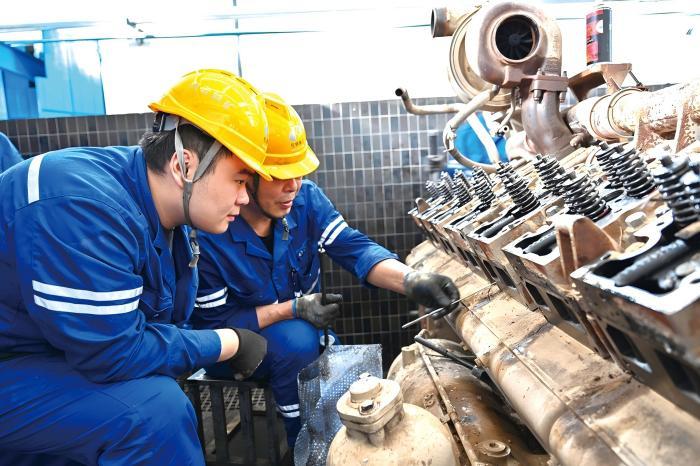
From January through September, the company reported operating revenue of RMB 91.55 million, up 182.66% year over year. External (non-group) market sales were RMB 19.53 million, with total profit of RMB 12.27 million, according to a company update carried by Baogang Daily. Alongside domestic projects “concentrated” on mine equipment overhauls and spare-parts manufacturing, the firm completed seven major engine overhauls in Mongolia and says it has made “positive progress” entering the Canadian market. A photo accompanying the notice shows technicians inspecting a Cummins engine (opens in a new tab) following repairs.
Rare Earth Relevance
Baogang’s quiet but deliberate push into North America may be easy to miss, but it’s strategically charged. Concrete traction in Canada suggests that China’s industrial service ecosystem—long anchored to Baogang’s massive mining and metallurgical empire—is now testing the waters of the North American maintenance, repair, and overhaul market. This is the home turf of U.S. equipment suppliers, where competition is fierce and brand loyalty runs deep.
The company’s wins in Mongolia, particularly the overhaul of Cummins engines, spotlight a growing ambition in the after-sales and lifecycle services arena. These are not low-margin assembly-line contracts; they’re high-value, skill-intensive refurbishments that can chip away at the dominance of Western OEM service networks. Should Baogang’s technicians replicate this success in Canada, it could trigger quite pressure on pricing and contract structures for rebuilds and aftermarket support across the continent.
Equally telling is Baogang’s shift beyond captive work. The clear divide between internal group projects and external client revenue points to a calculated strategy: monetize the in-house expertise built over decades of operating China’s largest rare-earth and steel operations. What began as a support arm for Baogang’s mines now looks more like a standalone industrial export model—offering not just machinery, but a package of know-how, tooling, and technical labor.
The ripple effects could be far-reaching if such business expansion ensues. As Chinese industrial service firms globalize, Western miners and OEMs will likely face new competitive pressures in pricing, turnaround time, and service models. For mixed fleets operating both Western and Chinese equipment, these players could upend established norms, introducing hybrid parts ecosystems and cross-border service contracts that redefine what “aftermarket” really means in the global mining and heavy machinery landscape.
Key Takeaway
A Baogang-linked repair-and-spares specialist nearly tripled YTD revenue by using cross-border services as its growth lever, with Mongolia overhauls completed and Canada in the crosshairs—a small but telling marker of China’s industrial services stepping outward.
Source: Baogang Daily (company with state ownership). This item originates from a state-owned entity’s publication; details should be independently verified before making business or investment decisions.
©!-- /wp:paragraph -->


0 Comments
Discuss this article