
Highlights
- Baogang Group conducts fourth round of Party Committee inspections to align corporate strategy with national political directives.
- Inspection focuses on:
- Party discipline
- Governance
- Anti-corruption
- Ensuring alignment with Beijing's industrial agenda
- The move demonstrates China's tightening political control over critical rare earth supply chain infrastructure.
Baogang Group, the state-owned steel and rare earth conglomerate that anchors Northern Rare Earth’s supply chain, has launched its fourth round of Party Committee inspections under the company’s ninth Party leadership. The move signals Beijing’s ongoing push to integrate political oversight with corporate governance at one of the world’s most strategically important rare earth hubs.
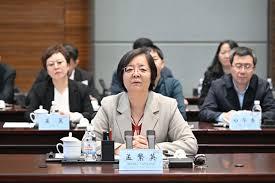
At an August 20 meeting in Baotou, Party Secretary and Chairman Meng Fanying emphasized that the inspection program is central to advancing China’s high-quality development goals (opens in a new tab). He called on inspection teams and company leaders to uphold “political responsibility” and ensure alignment with the Communist Party’s central directives, particularly those tied to President Xi Jinping’s framework of “self-revolution” within the Party.
Party Secretary and Chairman Meng Fanying
The inspections will focus on four key areas: enforcing Party discipline, monitoring governance and anti-corruption measures, aligning operations with national policy goals, and ensuring that corporate development strategies reflect Beijing’s broader industrial agenda. The process aims to uncover problems at a political level, enforce strict accountability, and close gaps through a strengthened corrective action system.
Liu Wenhui, head of Baogang’s discipline commission and inspection office, underscored that the effort is designed to “forge an iron army” of inspectors—tightening supervision, sharpening investigative authority, and embedding oversight into every layer of management.
Why It Matters
For the West, this development highlights a less visible but increasingly critical dimension of China’s rare earth dominance: political supervision inside the corporate engine room. Baogang controls key rare earth production assets in Baotou, the foundation for Northern Rare Earth—the world’s largest rare earth supplier. Strengthening Party-led inspections at Baogang ensures tighter alignment between corporate strategy, political loyalty, and national industrial policy.
This heightened governance framework has dual implications:
- Operational stability: By closing corruption and compliance gaps, Beijing is aiming to ensure that rare earth supply remains reliable on China’s terms.
- Strategic insulation: Embedding Party authority at Baogang means decisions on pricing, supply allocation, and overseas partnerships will be even more tightly linked to Beijing’s geopolitical agenda.
For U.S. and European policymakers trying to diversify supply chains, the message is clear: suggests Rare Earth Exchanges (REEx), China is not only defending its industrial advantage in rare earths—it is hardening it through political centralization and corporate discipline.
©!-- /wp:paragraph -->


0 Comments
Discuss this article