
Highlights
- Baogang Group is a critical global rare earth element producer controlling 40-45% of global REE reserves.
- The company's recent Party meeting emphasized strict governance, discipline, and operational improvement strategies.
- Baogang's operations significantly impact global steel and rare earth markets through state-aligned production and export policies.
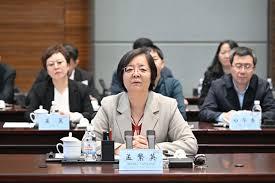
On August 8, Baogang Group’s Party Committee convened a public evaluation forum to review how the company is studying and implementing the Communist Party’s Central Eight-Point Regulations—the Party’s code aimed at curbing bureaucracy, formalism, and extravagance. The meeting, held at Baogang’s Technology & Business Exchange Center, was chaired by Meng Fanying, Party Secretary and Chairman. Liu Wenhui, Baogang’s Discipline Inspection chief and resident supervisory commissioner from the Inner Mongolia regional watchdog, reported progress on education, rectification, and ongoing corrective measures. Attendees included the board secretary, the special task force for the study campaign, Party heads of key subsidiaries, rank-and-file Party members, non-Party representatives, and employee delegates.
Why is Baogang Group Important?
Baogang Group (Baotou Iron and Steel Group) is one of the most strategically important players in the global rare earth element (REE) supply chain due to its state-owned status, direct control by China’s State-owned Assets Supervision and Administration Commission (opens in a new tab) (SASAC), ownership of China Northern Rare Earth Group (opens in a new tab)—the world’s largest producer of light rare earths—and dominance over the giant Bayan Obo deposit in Inner Mongolia, which holds roughly 40–45% of global REE reserves.
As both a steel giant and vertically integrated rare earth producer, Baogang controls mining, beneficiation, separation, and refining, giving it near-monopoly leverage in neodymium and praseodymium (NdPr) oxide supply for high-performance magnets used in EVs, wind turbines, and defense systems. This structure ensures Beijing can align Baogang’s production, export, and pricing with national industrial policy, using it as a key instrument in geopolitical strategy; because China supplies about 70% of the world’s REEs and processes more than 85% of global output, any shift in Baogang’s operations—whether export quota changes, tariff adjustments, or policy directives—can significantly influence global prices, availability, and the security of supply chains in the U.S., Japan, and other advanced economies.
The Meeting
Participants endorsed the campaign’s results, saying it has hardened work discipline and addressed salient operational problems. They urged Baogang to innovate training formats, convert study outcomes into durable management mechanisms, and maintain “open-door education”—keeping channels wide open for employees to raise concerns. Next steps center on embedding theory study into daily routines for cadres, turning educational gains into concrete process improvements, deepening case-driven rectification with routine supervision, and reducing formalism burdens at the grassroots.
Leadership emphasized that the final stages of the campaign require no let-up: Party secretaries must own outcomes; discipline inspectors must supervise; and executives must fulfill dual responsibilities, pushing strict Party governance to underpin Baogang’s “high-quality development.”
Why is this newsworthy for U.S./Western readers?
Baogang Group, as cited above, represents a core node in China’s steel and rare earth value chain. When the Party features prominently, it signals ideological and political leadership inside corporate governance—operational priorities can be set as much by state strategy as by commercial metrics. This forum points to tighter, sustained Party oversight of budgets, compliance, and behavior across Baogang’s system, potentially affecting cost control, capital allocation, supplier relations, and workforce management.
Open questions for investors and policymakers outside China:
- Will stricter Party discipline accelerate approvals and execution (by cutting formalism) or slow decisions (through added oversight layers)?
- How will “open-door education” and continuous supervision translate into ESG, safety, and disclosure practices visible to foreign customers?
- To what extent could Party objectives override market pricing or export priorities in the steel and rare earth supply chain, especially during tight markets or geopolitically sensitive periods?
Original reporting: Baogang Daily, (opens in a new tab) August 12, 2025.


0 Comments
Discuss this article