
Highlights
- Baogang (Baotou Steel Group) signs a strategic cooperation agreement with ECUST to drive research in rare earth and advanced materials.
- The company aims to transform from traditional steel to rare earth-driven new materials and integrated services.
- The partnership represents China's approach to aligning state-owned industrial giants with top research universities for faster technological commercialization.
Baotou Steel Group (Baogang), parent of Northern Rare Earth, is strengthening its ties with Chinese academia to accelerate its transformation into a leading supplier of advanced materials. This is part of the Two Rare Earth Bases China imperative. On September 11, Chairwoman Meng Fanying led a Baogang delegation (opens in a new tab) to East China University of Science and Technology (ECUST) (opens in a new tab), where the two sides signed a strategic cooperation agreement.
Meng underscored Baogang’s pivot away from traditional steel toward rare earth–driven new materials and integrated services, positioning the company as a “main force” behind China’s two state-backed rare earth bases. She praised ECUST as one of China’s top research universities, highlighting synergies between the school’s strengths in chemical engineering, new materials, and talent development, and Baogang’s national strategy. The company hopes to expand cooperation into modern coal-to-chemicals, rare earth applications, and translational R&D, turning lab breakthroughs into industrial gains.
East China University of Science and Technology (ECUST)
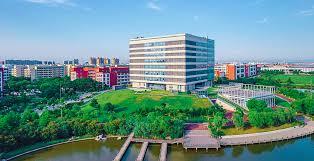
ECUST Party Secretary Jiang Chuanhai welcomed the partnership, emphasizing Baogang’s historic role in China’s industrial development and its clear future roadmap. He stressed that the two sides share overlapping priorities, particularly in joint R&D platforms, talent pipelines, and coordinated technology projects. The aim is to blend university research capacity with Baogang’s industrial base, driving faster commercialization of scientific results and building a model of “university–enterprise integration.”
During the visit, the delegation also toured ECUST’s Institute of Clean Coal Technology and a university exhibition showcasing research achievements. ECUST Vice President and Chinese Academy of Sciences academician Zhu Weihong and Baogang Vice General Manager Liu Zhengang formally signed the cooperation agreement.
Relevance
This partnership is another sign that China is aligning its state-owned industrial giants with top research universities to accelerate rare earth and advanced materials breakthroughs. For the West, the implications are significant:
- China is building a tight R&D-to-industry pipeline, designed to shorten commercialization timelines for strategic materials.
- By embedding rare earths into fields like coal-to-chemicals, semiconductors, and structural alloys, Beijing is reinforcing its dominance not just in supply but in application-level innovation.
- The U.S. and allies, by contrast, still struggle with fragmented public–private coordination in critical materials R&D.
Disclaimer: This report originates from a Chinese state-owned entity. The information should be independently verified before forming investment or policy conclusions.
©!-- /wp:paragraph -->


0 Comments