
- Trump administration imposes a 132% tariff on Russian palladium imports while federal officials visit Montana to promote $13 million in funding for domestic mining and critical mineral recovery from the Berkeley Pit.
- The tariff aims to protect Sibanye-Stillwater's operations—the only primary platinum and palladium production in the U.S.—amid oversupply challenges that caused 2024 layoffs.
- Policy shift signals an aggressive U.S. stance on mineral supply chain security, potentially setting a precedent for future critical minerals trade actions beyond platinum group metals.
The Trump administration has imposed a 132% tariff on Russian mineral imports, including palladium, while senior federal officials visited Montana (opens in a new tab) to promote renewed domestic mining investment. The move aims to support U.S. platinum group metal (PGM) production—particularly at the Stillwater and East Boulder mines—while advancing federal funding to extract critical minerals from legacy sites like the Berkeley Pit. The development signals a more aggressive U.S. posture on mineral trade and domestic supply chain security.
Big Sky Country
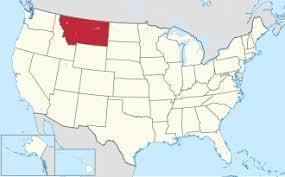
A 132% Tariff and a Mining Reset
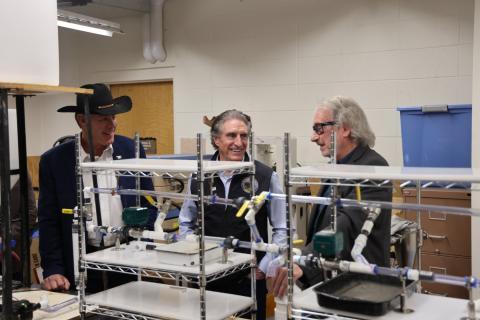
The Trump administration has implemented a 132% tariff on Russian mineral imports, with palladium at the center of the policy shift. Interior Secretary Doug Burgum and Congressman Ryan Zinke traveled to Butte, Montana, to highlight support for domestic mining and tour Montana Tech’s mineral research facilities. The visit also spotlighted $13 million in proposed federal funding aimed at recovering critical minerals from the Berkeley Pit—materials previously considered technically or economically unrecoverable.
The practical objective is clear: protect and stabilize U.S. production, particularly Sibanye-Stillwater’s operations, which represent the only primary platinum and palladium mining capacity in the United States.
Market Reality: Palladium and Price Pressure
Russia has long been one of the world’s dominant palladium suppliers. Oversupply and depressed prices in recent years contributed to layoffs at Stillwater in 2024. A 132% tariff materially changes import economics and could tighten U.S. supply conditions, potentially improving pricing dynamics for domestic producers.
Stillwater’s mines are strategically important. Platinum group metals are essential to catalytic converters, advanced defense systems, electronics, and emerging hydrogen technologies. Maintaining domestic capacity aligns with U.S. supply-chain resilience priorities.
Meanwhile, federal backing for mineral recovery from legacy sites reflects a broader trend: reprocessing tailings and abandoned assets to reduce reliance on foreign sources.
Policy, Trade Risk, and Global Flows
The announcement emphasizes “American Mineral Dominance” and reduced reliance on foreign adversaries. However, the policy details remain limited. Questions remain about tariff duration, downstream cost impacts, and potential retaliation.
PGMs trade globally. If U.S. import channels narrow, supply will shift to other markets. Markets rarely stand still.
Importantly, this is about platinum and palladium—not rare earth elements. But the policy logic is transferable. The trade tools used here could set a precedent for future rare-earth actions.
Strategic Context
Montana now sits at the intersection of tariffs, federal funding, and domestic production. The tariff is tangible. The industrial policy shift is measurable. The longer-term supply chain impact will depend on price behavior, restart timelines, and global response.
Investors should watch the data—not the speeches.
Profile
Stillwater and East Boulder Mines are owned and operated by Sibanye-Stillwater (opens in a new tab).
Aglobally diversified precious metals producer with primary PGMs operations in South Africa and the United States, plus a meaningful recycling platform in North America, legacy South African gold assets, and growth exposure to lithium (Keliber, Finland) and zinc retreatment in Australia. In 2025, the Group reported revenue of R129.7 billion (US$7.25 billion) and adjusted EBITDA of R37.8 billion (US$2.1 billion), with headline earnings per share up 281% to 244 SA cents and a final dividend of 131 SA cents declared. Net debt stood at R22.1 billion (US$1.3 billion) at year-end 2025, with management targeting a 50% gross debt reduction over 2–3 years and maintaining gearing below 1.0x through the cycle. Operationally, the company delivered 1.80Moz of 4E PGMs from South Africa in 2025, restructured its US PGM operations to profitability in H2 2025, and positioned recycling as a stable, cash-generative counter-cyclical contributor.
Strategically, Sibanye-Stillwater is repositioning toward a “future-focused metals” portfolio: consolidating SA PGM assets (including Kroondal and Marikana projects), advancing high-return brownfield expansions such as K4, and developing Europe’s first integrated mine-to-lithium hydroxide project at Keliber with an 18-year life of mine. The Group guides 2026 SA PGM production of 1.65–1.75Moz and US PGM mined output of 280–300koz 2E, alongside disciplined capital allocation split roughly one-third to dividends, one-third to debt reduction, and one-third to life-extension and growth. With 356.7Moz of precious metal mineral resources and 58.2Moz of reserves across a multi-decade asset base, Sibanye-Stillwater presents itself as a vertically integrated PGM and battery-metals platform leveraged to autocatalyst demand, energy transition trends, and recycling-driven supply security.


0 Comments
No replies yet
Loading new replies...
Moderator
Join the full discussion at the Rare Earth Exchanges Forum →