
- St George Mining's Araxá project in Brazil sees resource estimate jump 75% to 70.91 million tonnes, containing 4.06% rare earth oxides and 0.62% niobium pentoxide.
- The updated estimate excludes 41 completed and 50 planned drill holes plus a new eastern discovery zone, suggesting further resource growth potential.
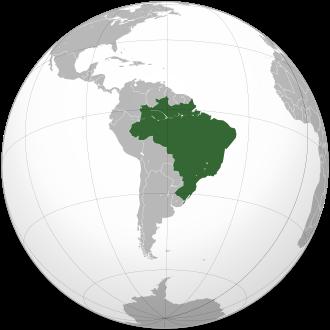
- Brazil's Araxá deposit positions itself as a strategic non-Chinese source for combined niobium and rare earth supply to Western markets.
Australia’s St George Mining says the resource estimate for its 100%-owned Araxá project in Brazil has jumped 75%, a notable upgrade that could strengthen Western interest in non-Chinese rare earth and niobium supply. According to the Chinese-language report, which cites Reuters, the project’s ore resource has increased from 40 million tonnes to 70.91 million tonnes after work conducted since July 2025.
What’s Going On
The updated estimate puts the deposit at an average grade of 4.06% total rare earth oxides (TREO) and 0.62% niobium pentoxide (Nb₂O₅). That matters because Araxá is being framed not as a pure rare-earth play, but as a combined niobium-and-rare-earth deposit—a potentially attractive mix for markets seeking diversified critical mineral supply. The report also says geological modeling indicates an additional 24.56 million tonnes of niobium ore could still be added.
Just as important, the new estimate may not be the final word. The report says the updated resource does not yet include 41 completed drill holes, 50 planned holes, or a new eastern discovery zone at Araxá. In plain English: the deposit may still be getting bigger.
Implications Ex-China
For American and European readers, this is why the story matters. Brazil is increasingly viewed as one of the few jurisdictions with the geology, mining tradition, and relative geopolitical alignment to support a meaningful ex-China critical minerals strategy.
A larger Araxá resource does not automatically translate into fast production, downstream separation capacity, or magnet supply. But it does improve the odds that Brazil could become a more important node in future Western rare earth and niobium supply chains.
One important nuance: this is a resource update, not a production breakthrough. It signals scale and potential, not guaranteed economics or near-term output. Still, for investors and policymakers, a 75% jump in a JORC-compliant estimate is the kind of development that earns attention.


0 Comments
No replies yet
Loading new replies...
Moderator
Join the full discussion at the Rare Earth Exchanges Forum →