
Highlights
- Brazil ranks second globally in rare earth reserves and dominates niobium supply.
- The country lacks the critical processing and separation infrastructure needed to compete with China's decades-long industrial advantage.
- The U.S.-backed Serra Verde Pela Ema project in Goiás represents a rare non-Chinese heavy rare earth deposit, highlighting Brazil's potential role in diversifying supply chains away from Chinese dominance.
- While diplomatic momentum and Development Finance Corporation (DFC) capital signal opportunity, Brazil faces a familiar crossroads: develop downstream processing capabilities or repeat the pattern of exporting raw materials while importing dependency.
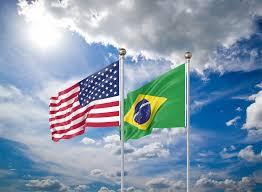
A recent commentary (opens in a new tab) in Americas Quarterly by Fernanda Magnotta asks whether Brazil and the United States can strike a deal on rare earths. The framing is timely. As Washington scrambles to dilute China’s dominance across high-tech and defense supply chains, Brazil—rich in minerals yet historically poor in downstream leverage—appears newly central. The article correctly identifies rare earths as diplomatic lubricant, helping thaw relations between President Donald Trump and President Luiz Inácio Lula da Silva after months of friction. That alone makes the story notable. But geology, as Rare Earth Exchanges readers know, is only the opening act.
Table of Contents
Can the Two Come Together
Where the Ground Truth Holds
On the facts, much of the article is solid. Brazil does rank second globally in reported rare earth reserves, according to USGS data, and its dominance in niobium—supplying more than 90% of global output—is unquestioned. The reference to the Serra Verde Pela Ema project in Goiás (opens in a new tab), backed by up to $465 million from the U.S. International Development Finance Corporation, is particularly important. Pela Ema is one of the few non-Chinese ionic clay-style deposits with meaningful heavy rare earth content, including dysprosium and terbium—elements that actually matter for permanent magnets.
The article also accurately situates Brazil’s broader critical-mineral endowment: lithium in Minas Gerais, graphite in Bahia, and a growing role as a key alumina supplier to the United States. These are real assets in a world rethinking supply security.
Plus Rare Earth Exchanges has picked up contradictory chatter. On the one hand, Americans are in some cases beating Europeans to certain projects on the ground in Brazil. Yet we know of prominent miners in Brazil receiving few American-originated calls. Life in mining is a network contact sport.
Where Optimism Starts to Float
The piece today leans into a familiar temptation: equating mineral abundance with strategic power. The suggestion that Brazil can quickly “reshape supply chains” glosses over the hardest problem in rare earths—processing and separation. Brazil has rocks. What it lacks, at scale, are solvent extraction circuits, metallurgical expertise, and magnet manufacturing ecosystems that can compete with China’s decades-long head start. Joint ventures and dialogues, however promising, do not compress ten-year industrial learning curves into political timelines.
There are initiatives, such as those in Minas Gerais, reported on by Rare Earth Exchanges. Then there is Brazilian Rare Earth, a sophisticated group with large holdings of heavy rare earth elements, substantial capital, and its new processing partnership with France’s Carester.
There is also an implicit bias toward assuming U.S. intent aligns cleanly with Brazilian industrial upgrading. History suggests otherwise. Washington’s priority is diversification away from China, not necessarily the creation of a fully sovereign Brazilian rare earth value chain. But the window of opportunity could be now for American-Brazil synergies.
Why This Matters Now
What makes this moment consequential is not diplomacy alone, but timing. The U.S. is deploying capital through institutions like the DFC precisely because markets have failed to solve rare earth bottlenecks. Brazil, meanwhile, faces a familiar crossroads: move up the value chain—or repeat the old pattern of exporting raw materials and importing dependency.
For investors and policymakers, the signal is clear. Brazil matters—but processing, not promises, will decide whether this story becomes a strategic reality or just another chapter in resource geopolitics.
Source: Magnotta, F. Can Brazil and the U.S. Reach a Deal on Rare Earths? December 9, 2025.
© 2025 Rare Earth Exchanges™ – Accelerating Transparency, Accuracy, and Insight Across the Rare Earth & Critical Minerals Supply Chain.


0 Comments