
Highlights
- Metalysis has started commercial production of high-purity aluminium-scandium alloy powder in the UK.
- This move responds to China's export controls and semiconductor industry demand for 5G RF filters and AI hardware.
- As a midstream processor, Metalysis occupies the most vulnerable link in Western critical-mineral supply chains.
- The company converts scandium oxide into alloys essential for aerospace, defense, and semiconductor manufacturing.
- The current production capacity is limited to approximately 350 kg per year per unit.
- The FFC Cambridge process by Metalysis offers a non-Chinese pathway for strategically critical materials.
- Reliable grams are emphasized over bulk tonnage in their production approach.
A short UK manufacturing update would normally pass unnoticed. This one shouldn’t. According to Machinery Market (Dec. 22, 2025), Metalysis (opens in a new tab) has begun commercial production of aluminium–scandium (Al₃Sc) alloy powder (opens in a new tab), responding to demand accelerated by China’s recent export controls on rare earth elements. That alone makes the news relevant. The deeper significance lies in where Metalysis sits in the rare earth supply chain—and what it is producing.
Table of Contents
Scandium is not a bulk rare earth.

It is a performance multiplier, used in small quantities to improve strength, weight, and thermal and piezoelectric properties in semiconductors, aerospace, and defense systems. Supply has long been fragile and heavily concentrated.
Why This Is Not Just Another UK Factory Story
Metalysis is headquartered in South Yorkshire, operating across two UK sites, and is increasingly positioned as a midstream processor—the most vulnerable link in Western critical-mineral strategies. Unlike miners or downstream fabricators, Metalysis converts scandium oxide and aluminium oxide into high-purity alloy, precisely where China’s leverage is strongest.
The company reports producing 36 wt% aluminium–scandium alloy with low impurity levels (oxygen ~500 ppm), aimed at sputtering targets used to deposit aluminium-scandium nitride (AlScN) films. These coatings are central to 5G RF filters, AI-enabled hardware, and advanced wireless systems. This is not speculative demand; it is already part of semiconductor manufacturing roadmaps.
What Holds Up—and What to Watch
What checks out:
- Scandium demand is small but strategic (commonly estimated at 3–4 tonnes per year globally).
- AlSc alloys are increasingly evaluated as replacements for titanium and legacy aluminium in aerospace and defense.
- China’s export controls have intensified Western interest in non-Chinese midstream supply.
What deserves scrutiny:
- Current capacity is limited: Gen 2 units produce ~350 kg per year each.
- Scaling to multi-tonne output depends on Gen 3 and Gen 4 units, which are planned but not yet fully deployed.
- Feedstock relies on diversified scandium oxide suppliers—credible, but not publicly detailed.
No hype here, but no illusion of scale either.
Why Investors Should Care
This is supply-chain leverage in miniature. Semiconductor and defense systems do not need millions of tonnes; they need reliable grams, consistently. Does Metalysis’ FFC Cambridge electrolysis process offer a non-Chinese pathway to exactly that?
When midstream capability is the chokepoint, can small tonnage still move strategic needles?
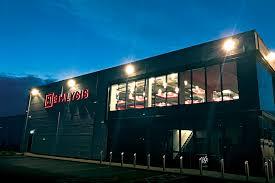
Company Profile: Metalysis
- Headquarters: South Yorkshire, United Kingdom
- Employees: ~100 (est.)
- Focus: Advanced metal powders via solid-state electrolysis
- Core Technology: Patented FFC Cambridge process
- End Markets: Semiconductors, aerospace, defense
Source: Machinery Market, Dec. 22, 2025.
© 2025 Rare Earth Exchanges™ – Accelerating Transparency, Accuracy, and Insight Across the Rare Earth & Critical Minerals Supply Chain.


0 Comments
Discuss this article