
Highlights
- Tsodilo Resources identified rare earth elements at its Gcwihaba skarn project in northwest Botswana, but the junior explorer is not a “mining giant” and the discovery remains early-stage exploration without a compliant resource estimate or proven metallurgy.
- Company-disclosed intercepts show TREO grades around 0.16% over meter-scale intervals at shallow depths, which could support open-pit concepts if continuity and recovery cooperate—but no processing partner or separation plan exists yet.
- While Botswana offers jurisdictional stability, the real supply-chain bottleneck remains downstream separation capacity outside China; without metallurgical data and refining infrastructure, this discovery cannot graduate from “interesting rocks” to viable supply.
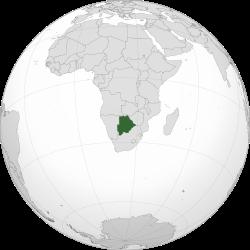
This Rare Earth Exchanges™ brief audits a Feb. 25, 2026 Business Insider Africa report (opens in a new tab) that Tsodilo Resources Limited (opens in a new tab) identified rare earth elements and other critical minerals at its Gcwihaba (Skarn Metals) Project (opens in a new tab) in northwest Botswana. We separate what’s supported by disclosed exploration results from what remains unproven, and we frame the discovery against the real bottleneck: processing and separation capacity outside China.
In plain English: Tsodilo says drilling and analysis indicate a rare-earth-bearing skarn system in Botswana. That is promising exploration news—but it is not a mine, not a resource, and not a supply-chain “solution” yet.
First Correction: “Mining Giant” Is Inflated
Tsodilo is a junior exploration company (TSX-V listed), not a “Canadian mining giant.” That phrasing reads like narrative seasoning, not a balance-sheet fact.
What’s Real: Targets, Skarn, and Early Grades
Tsodilo reports that the C26 and C27 skarn targets host an “extensive suite” of minerals and include 15 rare earth elements, as referenced against the USGS 2025 Critical Minerals List (which lists 15 REEs).
Company-disclosed intercept examples include meter-scale intervals with TREO on the order of tenths of a percent in places (e.g., 18 m averaging ~0.16% TREO reported in one hole). Encouraging—but still early and not yet an economic case.
The depth cited (roughly 20–50 m below surface in the article) can be compatible with open-pit concepts—if continuity, strip ratio, and metallurgy cooperate.
The Missing Middle: No Resource, No Metallurgy, No Route to Magnet Metals
What’s not shown (yet):
- A compliant resource estimate (NI 43-101/JORC)
- Mineralogy + recovery data (the “can we separate it?” question)
- A defined processing partner or separation plan
- Capex/opex and permitting timelines
Absent these, investors should treat this asexploration momentum, not imminent supply.
The China Reality: Mining Isn’t the Bottleneck
The article’s U.S.–China framing is directionally right—China dominates downstream processing. But the hard truth remains: separation/refining capacity (solvent extraction at scale) is the choke point, and new feedstock often still gravitates back toward Chinese conversion unless alternative plants are ready.
Canada’s current rare-earth separation footprint is limited, not a ready-made sink for new African concentrate.
Why This Still Matters
Botswana is a comparatively stable jurisdiction, which lowers sovereign risk friction. A credible REE discovery is a useful option on a tightening supply chessboard—provided it can graduate from “interesting rocks” to a separable, financeable, permittable product.
Discovery is a spark. Separation is the engine.
Profile
Tsodilo Resources Limited is a Toronto-based, TSX Venture Exchange-listed (TSD) junior resource company focused on the acquisition, exploration, and development of base and precious metal mineral properties in Botswana. Key projects include the 100%-owned Gcwihaba project (diamonds, copper, cobalt, rare earth elements) and the BK16 kimberlite project.


0 Comments
No replies yet
Loading new replies...
Moderator
Join the full discussion at the Rare Earth Exchanges Forum →