
Highlights
- December 2025 study examines Central Asia's potential to challenge China's 70% control of rare earth supply and 90% processing dominance through strategic foreign investment.
- Research concludes mining without local processing capacity keeps supply chains vulnerable—downstream refining, not just extraction, is the critical strategic choke point.
- Success requires pairing sustained FDI with governance reform, ESG standards, and domestic processing infrastructure to transform regional potential into reliable supply chain security.
A December 2025 study led by Ayesha Khan, Hassan Malik, and Khalid Hussain examines whether Central Asia can realistically help rebalance global critical mineral supply chains now dominated by China. Titled Critical Minerals, Mining Sector Investment, and Central Asia’s Role in Global Supply Chain Security (opens in a new tab), the research synthesizes academic literature, policy analysis, and real-world investment cases to assess how foreign direct investment (FDI)—particularly from the United States and multinational partners—could unlock the region’s lithium, rare earth elements (REEs), uranium, and other strategic minerals. The authors conclude that Central Asia holds genuine strategic promise, but only if sustained investment is paired with governance reform, environmental safeguards, and—most critically—domestic processing capacity that reduces dependence on China’s near-monopoly.
Table of Contents
Why This Study Matters Now
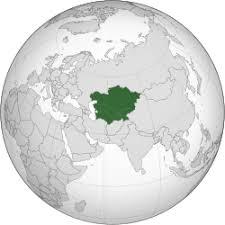
Rare earths and other critical minerals underpin modern life—from electric vehicles and wind turbines to semiconductors and defense systems. Today, China controls roughly 70% of global rare earth supply and nearly 90% of processing and separation capacity, giving Beijing outsized influence over prices and availability. This concentration has prompted governments and investors to search urgently for alternatives. Central Asia—particularly Kazakhstan, Uzbekistan, and Kyrgyzstan—has resurfaced as a potential diversification hub due to its geological endowment and strategic location between Europe and East Asia.
Study Methods: How the Authors Reached Their Conclusions
The study uses a qualitative, case-based approach, drawing on peer-reviewed literature, government and multilateral reports, industry disclosures, and policy analyses. Rather than estimating ore grades or project economics, the authors evaluate how investment flows, governance standards, and geopolitical alignment affect supply chain security. Case studies of U.S. and multinational mining investments are assessed for scale, technology transfer, environmental and social governance (ESG) practices, and integration into global markets.
This approach is designed to answer a practical question for policymakers and investors: Can Central Asia move from “resource potential” to “reliable supplier”?
Key Findings, Explained Simply
1. Central Asia has real mineral potential—but it is uneven.
The region hosts meaningful deposits of lithium, REEs, uranium, and base metals critical to energy transition technologies. However, most countries lack advanced processing and separation facilities, forcing reliance on foreign—often Chinese—refineries.
2. Foreign investment is necessary, but not sufficient.
FDI brings capital, technology, and operational expertise. The study finds that projects aligned with international ESG standards tend to perform better and face less local resistance. Still, investment alone does not guarantee supply chain security if minerals must be shipped abroad for processing.
3. Processing—not mining—is the strategic choke point.
The authors stress that mining without local processing does little to weaken China’s dominance. Without downstream capacity, Central Asia risks becoming another upstream supplier feeding Chinese-controlled refineries.
4. Governance and stability are decisive factors.
Transparent regulation, predictable permitting, and anti-corruption measures significantly influence investor confidence. Inconsistent rules and bureaucratic friction remain major barriers in parts of the region.
Implications for Global Supply Chains
If developed responsibly, Central Asia could diversify global critical mineral supply, reduce exposure to single-country risk, and support U.S. and allied industrial strategies. For host countries, successful projects could generate jobs, infrastructure, and long-term economic upgrading. For investors, the region offers optionality—but not certainty.
The study also underscores a geopolitical reality: competition for these resources is intensifying. China, Russia, the EU, and Gulf states are all active in the region. U.S. engagement, the authors argue, must be strategic, coordinated, and long-term to be effective.
Limitations and Controversial Points
The authors are explicit about limitations. The study does not prove that Central Asia can replace China as a processing hub in the near term. Many projects remain early-stage, and large-scale, commercially proven REE processing outside China is still rare globally.
Moreover, political risk, infrastructure gaps, and environmental concerns could derail poorly designed investments.
A more controversial implication is that diversification may increase geopolitical competition rather than reduce it—especially if investments are perceived as zero-sum or externally imposed. Local buy-in and fair benefit sharing are therefore essential.
Conclusion: Promise with Preconditions
Central Asia represents a strategic opportunity, not a silver bullet. The study’s central message is cautious but constructive: sustained investment, strong governance, and domestic processing capacity are prerequisites for turning mineral wealth into supply chain security. Without them, Central Asia risks remaining a raw-material exporter in a system still controlled elsewhere.
Citation
Khan, A., Malik, H., & Hussain, K. (2025). Critical Minerals, Mining Sector Investment, and Central Asia’s Role in Global Supply Chain Security. December 2025.
© 2025 Rare Earth Exchanges™ – Accelerating Transparency, Accuracy, and Insight Across the Rare Earth & Critical Minerals Supply Chain.


0 Comments