
Highlights
- Chile released a National Critical Minerals Strategy identifying 14 materials.
- Key materials include:
- Copper
- Lithium
- Molybdenum
- Rhenium
- Rare earths
- The strategy aims to diversify beyond copper dependence.
- The target markets are AI, battery, and clean energy sectors globally.
- Minerals are categorized into three tiers based on Chile's market position.
- Tier One minerals where Chile already dominates supply:
- Copper: 23% global supply
- Lithium: 20.4% global supply
- Molybdenum: 14.6% global supply
- Rhenium: 46.8% global supply
- Chile positions itself as a politically stable alternative to China-dominated supply chains.
- The strategy signals openness to Western partnerships for technology transfer and midstream investment in strategic materials.
Chile, via the Ministry of Mining, has formally released a National Critical Minerals Strategy (opens in a new tab), positioning itself as a long-term, reliable supplier to global markets as demand surges from artificial intelligence, advanced technologies, and the energy transition. The announcement, reported by the Ministry of Mining, marks a notable policy shift for Chile at a politically sensitive moment—just weeks before President Gabriel Boric (opens in a new tab) leaves office.
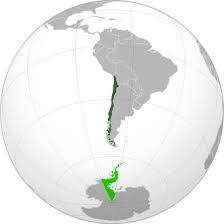
At its core, the strategy acknowledges a hard reality: Chile’s historic over-reliance on copper is no longer sufficient in a decarbonizing, data-driven global economy. Instead, the country is explicitly pursuing resource diversification to remain central to future industrial supply chains tied to AI infrastructure, batteries, electronics, and clean energy systems.
What’s New—and Why It Matters
Chile has identified 14 critical minerals, a broader and more explicit list than in past policy statements. These include copper, lithium, molybdenum, rhenium, cobalt, rare earth elements, antimony, selenium, tellurium, gold, silver, iron ore, boron, and iodine.
Crucially, the strategy does more than list minerals—it categorizes them by global relevance and domestic capability, offering investors and governments a clearer signal of where Chile intends to compete.
- Tier One (Global Anchors): Copper, lithium, molybdenum, and rhenium. Chile already controls roughly 23% of global copper supply, 20.4% of lithium, 14.6% of molybdenum, and an extraordinary 46.8% of rhenium. These are universally recognized as critical by major economies.
- Tier Two (Strategic Optionality): Cobalt, rare earths, antimony, selenium, and tellurium—materials with little or no current production in Chile, but which are increasingly strategic for AI hardware, semiconductors, and energy systems.
- Tier Three (Value-Chain Upside): Gold, silver, iron ore, boron, and iodine—already produced domestically, with room to move up the global value chain.
Implications for the U.S. and the West
For the United States and its allies, the signal is mixed but important. Chile is not positioning itself as a raw-materials junior partner, but as a stable, politically credible alternative supplier at a time when China dominates refining and processing for many critical minerals. The inclusion of rare earths and AI-relevant materials—despite limited current output—suggests Chile is laying the groundwork for future partnerships, technology transfer, and midstream investment.
If followed by concrete incentives, permitting reform, and downstream build-out, this strategy could reshape Western sourcing options over the next decade.
Source—see Ministry of Mining report (opens in a new tab).


0 Comments
No replies yet
Loading new replies...
Moderator
Join the full discussion at the Rare Earth Exchanges Forum →