
Highlights
- Baogang Steel has deployed an unmanned AI-powered taphole clay injection robot system in live ironmaking operations, removing workers from one of steel production's most dangerous jobs while achieving precision under extreme heat and conditions.
- The deployment is part of Baogang's broader digital transformation strategy, including inspection robots, fire-response systems, and multi-sensor platforms that turn steel plants into data-driven, semi-autonomous production environments.
- China is embedding AI and robotics deep into heavy industry metallurgical processes, creating replicable and potentially exportable industrial automation systems that could widen the competitiveness gap in energy- and labor-intensive manufacturing sectors.
A new milestone in China’s industrial automation drive is taking shape inside the blast furnace. Baogang Steel (Inner Mongolia Baotou Steel Union) and its technology partner Xinlian have developed an “unmanned taphole clay injection robot system”—now officially selected as a model case in China’s 2025 steel industry digital transformation catalog.
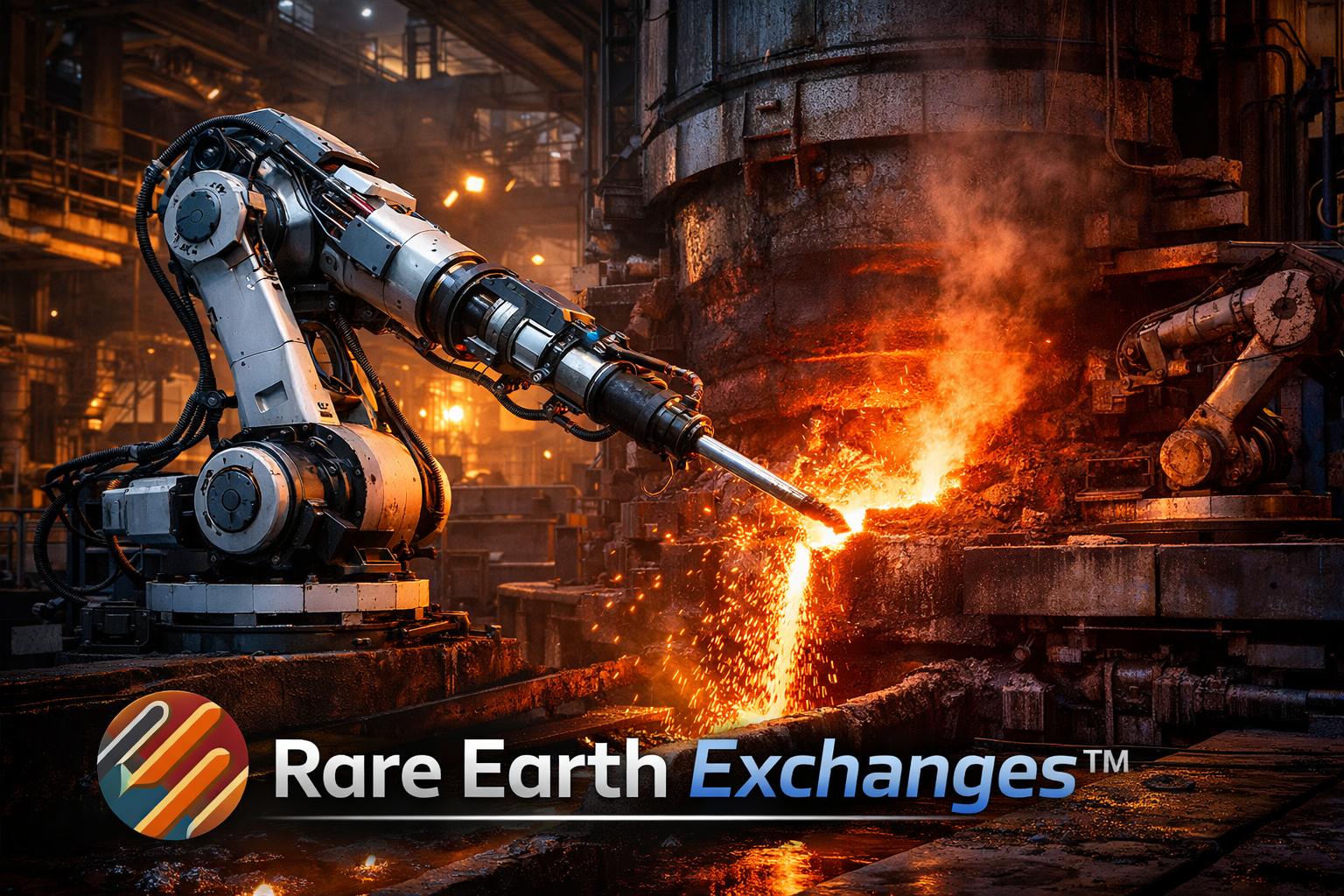
Note that according to industry media this is not a lab prototype. It is already deployed in live ironmaking operations, replacing one of the most dangerous manual jobs in steel production.
From Hazardous Labor to Autonomous Precision: AI + Robotics Move Into the Harshest Industrial Environments
The system integrates robotics, intelligent gripping tools, and machine vision on an electric mobile platform. Using polarized imaging, 3D vision, and AI, it can identify, pick up, and inject taphole clay under extreme conditions—tasks traditionally performed by workers in high heat and high-risk zones.
Beyond automation, the system introduces real-time safety intelligence: intrusion alerts in work zones, material shortage warnings, and precision control of the injection process. The result is not just higher efficiency—it is the removal of frontline workers from hazardous, high-intensity roles, materially reducing safety risk.
A Broader Robotics Strategy Taking Shape: Inspection, Fire Response, and Fully Digitized Plants
This deployment is part of Baogang's wider push to digitize core production processes. Xinlian has rolled out a suite of industrial robots, including:
- Inspection robots that continuously monitor equipment and auto-generate fault alerts
- Fire-response robots capable of detecting and responding to ignition sources
- Multi-sensor systems that reduce manual inspection workload while improving accuracy
Together, these systems are reshaping plant operations into data-driven, semi-autonomous environments.
Why This Matters for the West: China Is Scaling Industrial AI Where It Counts
The real signal is strategic. China is not just leading in upstream materials—it is embedding AI and robotics deep into heavy industry, where productivity, safety, and cost advantages compound over time.
For U.S. and European manufacturers, the implication is clear:
- Automation is moving beyond assembly lines into core metallurgical processes
- China is building replicable, exportable industrial AI systems
- This could widen the competitiveness gap in energy- and labor-intensive sectors like steel—and by extension, critical minerals processing
Bottom Line: A Replicable Blueprint for Smart Steel
Baogang’s system is being positioned as a scalable model for industry-wide adoption, offering a blueprint for modernizing blast furnace operations. It signals a future where heavy industry is not just mechanized—but intelligent, autonomous, and continuously optimized.
Disclaimer: This news item originates from media affiliated with a Chinese state-owned enterprise. The information should be independently verified before making investment or strategic decisions.


0 Comments
No replies yet
Loading new replies...
Moderator
Join the full discussion at the Rare Earth Exchanges Forum →