
Highlights
- China establishes its first province-level critical metals conglomerate with $5.8B capital, consolidating Guangxi's strategic mineral resources including tin, antimony, and indium into a vertically integrated industrial platform.
- The Guangxi group represents systematic industrialization beyond mining—integrating processing, advanced materials, and automated manufacturing to control entire supply chains, not just raw resources.
- This state-backed consolidation widens the gap with fragmented Western efforts, as China mobilizes regional governments to build coordinated, capitalized platforms securing future dominance in critical mineral ecosystems.
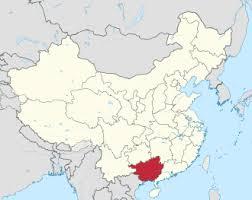
China has formally launched Guangxi Critical Metals Industry Development Group Co., Ltd. in Nanning, with a registered capital of 42.15 billion yuan (~$5.8B USD). This marks the first province-level “critical metals” conglomerate in China, signaling a coordinated push to consolidate resources and accelerate industrial scale in strategic minerals.
From Resource Base to Industrial Powerhouse
The announcement frames Guangxi’s shift from a “resource-rich region” to an “industrial stronghold.”
Guangxi is already one of China’s most mineral-rich provinces:
- Holds reserves in 30 of China’s 36 strategic minerals
- A globally rare tin–antimony–indium polymetallic zone
- One of China’s best-preserved and least-developed rare earth regions
The new group is tasked with integrating mining, processing, and advanced materials—moving beyond extraction into high-value manufacturing and supply chain control.
Industrial Policy in Action—Not Theory
This is not a standalone move. Since 2025, Guangxi has rolled out multiple policy packages to:
- Build critical metals as a top-tier pillar industry
- Develop industrial parks and processing hubs
- Advance the Nandan Critical Metals Pilot Zone
The scale is already significant:
- 2025 nonferrous industrial output: 461 billion yuan (~$64B USD)
- Growth rate: +16.9% YoY
Translation: This is a scaling system, not a pilot experiment.
What’s New—and Why It Matters
1. Structural Consolidation
China is formalizing province-level industrial champions—similar to past consolidation in rare earths (“Big Six”).
2. Vertical Integration Push
Explicit focus on:
- High-end materials
- Intelligent (automated) manufacturing
- Green processing
- Clustered industrial ecosystems
3. Strategic Intent
The mandate is clear:
Align with “national needs” and secure critical mineral supply chains at scale.
Implications for the U.S. and the West
This development reinforces a core reality:
- China is not just mining—it is systematically industrializing entire supply chains
- Regional governments are being mobilized to build integrated, state-aligned platforms
- Future competition will center on processing, materials science, and scale—not raw resources
For the U.S. and allies, this raises the stakes:
- The gap is not closing—it is being institutionalized
- Fragmented Western efforts contrast with coordinated, capitalized regional systems
Bottom Line: A Quiet but Strategic Escalation
This is not a headline-grabbing breakthrough—it’s something more important:
industrial architecture being built in real time. China is doubling down on control of critical metals ecosystems, not just supply.
Profile
Guangxi Critical Metals Industry Development Group Co., Ltd., established on January 16, 2026, is a state-owned enterprise created to secure China’s strategic mineral supply and advance high-quality industrial development, with registered capital of approximately 4.215 billion yuan and leadership led by Chairman Luo Yong and General Manager Wang Xu. The company’s core mandate is to integrate Guangxi’s critical metal resources—particularly tin, antimony, and indium—while building a fully vertically integrated industrial chain spanning exploration, mining, beneficiation, smelting, and downstream processing. Anchored in the Nandan Critical Metals development zone, the group is also expanding into higher-value segments, such as high-purity and new-energy materials, supported by the parallel launch of the Guangxi Critical Metals Research Institute (500 million yuan in capital). Together, these efforts position the entity as a centralized platform designed to consolidate regional resources, scale processing capabilities, and elevate Guangxi into a nationally significant—and globally competitive—critical metals hub.
Disclaimer: This news originates from Chinese state-affiliated media sources. While the information appears credible and consistent with known policy direction, readers should independently verify key claims and data points.


0 Comments
No replies yet
Loading new replies...
Moderator
Join the full discussion at the Rare Earth Exchanges Forum →