
Highlights
- President Xi Jinping directed central SOEs to align with CCP priorities, emphasizing breakthroughs in core technologies and stronger competitiveness as part of China's national security strategy.
- Central SOE assets grew from under ¥70 trillion to over ¥90 trillion ($12.5 trillion) during 2021-2025, with R&D spending exceeding ¥1 trillion annually for three consecutive years.
- The directive signals that Western firms face coordinated, state-backed competition rather than pure market dynamics, with implications for supply chains in energy, infrastructure, and strategic materials.
In a year-end directive that reads as both a policy signal and a message to global competitors, China’s top leadership reaffirmed the central role of state-owned enterprises (SOEs) in national economic security, technological self-reliance, and industrial power.
Table of Contents
Ramifications
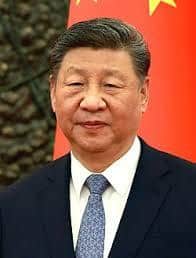
President Xi Jinping told centrally administered SOEs to align more tightly with Communist Party priorities and national strategy, emphasizing breakthroughs in “key and core technologies,” deeper integration of technological and industrial innovation, and stronger core competitiveness. The remarks, chronicled (opens in a new tab) by the entity charged with state ownership, were conveyed at a meeting of central SOE heads held in Beijing.
For U.S. and Western business audiences, the subtext is clear: this is not a call for market liberalization. It is a directive to consolidate, scale, and compete—backed by state capital and political authority.
Companies: Time to Line Up with CCP
Premier Li Qiang reinforced the message in the context of China’s 15th Five-Year Plan (2026–2030), urging central SOEs to support major infrastructure buildouts, accelerate digital and intelligent upgrades to traditional infrastructure, and strengthen “self-reliance” across industrial and supply chains. That framing has obvious downstream implications for energy, resources, and strategic materials—including rare earths—even if specific firms were not named.
The scale is striking.
The State-owned Assets Supervision and Administration Commission of the State Council (opens in a new tab) (SASAC) reported central SOE assets rising from under ¥70 trillion to more than ¥90 trillion ($12.5 trillion) during the 14th Five-Year Plan (2021–2025), while total profits increased from ¥1.9 trillion to ¥2.6 trillion. SASAC also said SOE R&D spending has exceeded ¥1 trillion annually for three consecutive years—signaling sustained, state-backed industrial innovation.
Executives cited practical priorities. CRRC Corp described expansion across rail and clean energy equipment, including hydrogen commercialization. China Railway Group emphasized AI-enabled, greener construction and upgrading traditional sectors rather than simply expanding capacity. FAW Group was highlighted as a manufacturing example.
Why it matters for the U.S. and Europe
Beijing is openly positioning central SOEs as instruments of national modernization, supply-chain resilience, and technology control. For Western firms, competition with China’s SOEs is not purely commercial—it is strategic, coordinated, and long-horizon.
Disclaimer: This news item is based on reporting from SASAC, a government agency and part of the People’s Republic of China. The information presented should be independently verified before forming business or investment conclusions.
© 2025 Rare Earth Exchanges™ – Accelerating Transparency, Accuracy, and Insight Across the Rare Earth & Critical Minerals Supply Chain.


0 Comments