
- China's Minister of Science and Technology announced an ambitious 15th Five-Year Plan (2026-2030) emphasizing rapid integration of scientific research with industrial production, with R&D spending reaching $540 billion (2.8% of GDP) in 2025.
- Beijing is prioritizing breakthroughs in semiconductors, AI, quantum technology, biomanufacturing, brain-computer interfaces, and nuclear fusion, with 525 Chinese firms now among the world's top 2,000 corporate R&D spenders (26% of total).
- China's strategy aims to align research agendas directly with industrial demand from the outset, using expanded technology finance, tax incentives, and new commercialization platforms to accelerate deployment and strengthen technological self-sufficiency.
China’s science leadership has unveiled an ambitious strategy to accelerate technological breakthroughs and tightly integrate scientific research with industrial development—an approach that could reshape global competition across industries ranging from semiconductors to artificial intelligence.
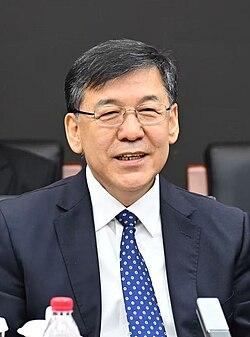
Speaking on March 5 during the opening “Minister’s Corridor” press briefing at the Fourth Session of the 14th National People’s Congress in Beijing (opens in a new tab), China’s Minister of Science and Technology Yin Hejun (opens in a new tab) outlined priorities for the upcoming 15th Five-Year Plan period (2026–2030). The strategy emphasizes strengthening foundational scientific breakthroughs, expanding industrial innovation capacity, and building a tightly coordinated national innovation system designed to move discoveries rapidly from laboratory to factory floor.
Yin Hejun, China’s Minister of Science and Technology
Industrial Policy Used to Prime the Pump of Demand
Yin pointed to China’s expanding scientific capacity, noting that national research and development spending exceeded 3.92 trillion yuan (about $540 billion) in 2025, representing 2.8% of GDP. Investment in basic research reached nearly 280 billion yuan, accounting for 7.08% of total R&D spending, the first time that share has exceeded 7%.
The government plans to intensify research in semiconductors, artificial intelligence, quantum technology, biomanufacturing, brain–computer interfaces, and nuclear fusion fields that Beijing views as essential to long-term technological competitiveness and economic security.
Translational Capacity
Chinese officials also highlighted indicators of growing innovation capacity. According to Yin, 525 mainland Chinese firms now rank among the world’s top 2,000 corporate R&D spenders, representing roughly 26% of the total. He also noted that the Shenzhen–Hong Kong–Guangzhou innovation cluster ranks first globally in one widely cited global innovation cluster index, with Beijing and the Shanghai–Suzhou cluster also among the top performers.
Another indicator cited by Chinese policymakers is the rapid expansion of the country’s “three new economy” sectors—new technologies, new industries, and new business models—which now account for more than 18% of China’s GDP.
A central theme of Yin’s remarks was the need to fuse scientific discovery directly with industrial production. Rather than the traditional model—where research is commercialized after the fact—China intends to align research agendas with industrial demand from the outset, accelerating the deployment of new technologies.
Monitoring in West
As Rare Earth Exchanges™ has been chronicling, for Western policymakers and investors, the message is unmistakable: Beijing intends to deepen its state-coordinated innovation ecosystem, combining research institutions, corporations, finance, and regional development policies to accelerate technology commercialization. Planned measures include expanded technology finance, increased tax incentives for corporate R&D, and new testing and commercialization platforms to accelerate breakthroughs into real-world markets.
If executedeffectively, the strategy could strengthen China’s drive toward technological self-sufficiency and leadership in emerging industries, potentially intensifying competition with the United States and Europe.
Disclaimer: This report is based on information published by Science and Technology Daily (科技日__报) and distributed via the China Rare Earth Industry Association, both affiliated with Chinese state media and government institutions. The information should be independently verified before being relied upon for investment, policy, or commercial decisions.


0 Comments
No replies yet
Loading new replies...
Moderator
Join the full discussion at the Rare Earth Exchanges Forum →