
Highlights
- China's MIIT convened its 14th SME roundtable focusing on accelerating the new materials sector, emphasizing full-chain coordination from R&D to industrialization and prioritizing AI integration to compress innovation cycles.
- The meeting highlighted efforts to bridge the pilot-to-scale commercialization gap through state-directed market competition, where SMEs align with national priorities while still operating under competitive market pressures.
- China's integrated model presents both advantages in coordination and potential internal tensions, including risks of misallocated capital, overcapacity, and conflicting incentives between market agility and state strategic objectives.
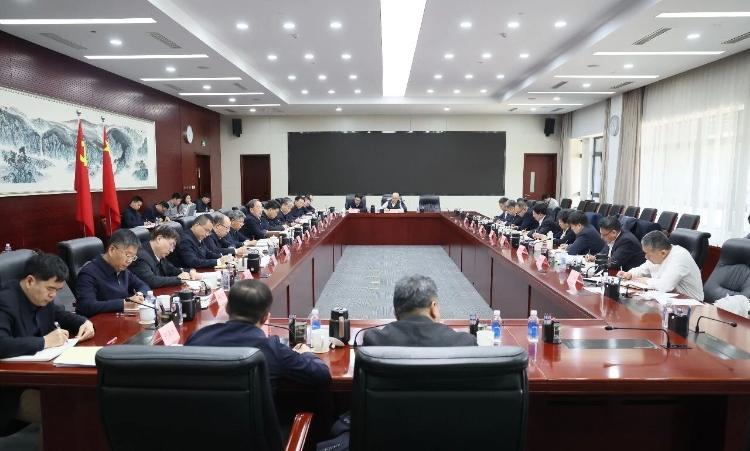
China’s Ministry of Industry and Information Technology (MIIT) (opens in a new tab) convened its 14th SME roundtable on March 19, chaired by Minister Li Lecheng. The focus: accelerating development of the “new materials” sector—spanning advanced industrial materials, strategic resources (including rare earth-related systems), and next-generation materials tied to emerging technologies.
Eight SME leaders presented across R&D,pilot-scale validation, and early industrialization. They also surfaced operational constraints—suggesting Beijing is actively probing friction points in scaling innovation, not just funding it.
From Lab to Factory—Closing the Commercialization Gap
A central theme was bridging research and industrial deployment. MIIT’s emphasis on pilot-scale validation is notable: this is the stage where many technologies fail to transition into commercially viable production.
Li called for “full-chain” coordination—linking upstream discovery with downstream application. This reflects a continued policy priority: controlling not just resources, but processing, refinement, and manufacturability, where economic leverage is often greatest.
AI + Materials: Compressing the Innovation Cycle
MIIT explicitly identified “AI + materials” as a priority, spanning R&D, pilot testing, and production environments. The implication is not just faster discovery, but tighter feedback loops between design, scale-up, and manufacturing.
If executed effectively, this could shorten development timelines in areas such as advanced alloys, battery chemistries, and rare earth processing—domains already characterized by high technical barriers.
State Direction—But Not a Purely Non-Market System
The meeting reinforced China’s “new whole-of-nation system,” including calls for “extraordinary measures” to achieve breakthroughs in key materials. SMEs are encouraged to align with national priorities, increase R&D investment, and target supply chain vulnerabilities.
However, framing this as purely “non-market” would be incomplete.
China’s model is better understood as state-directed market competition:
- Firms still compete, fail, and respond to price signals
- Capital allocation is influenced—but not fully dictated—by policy
- Local governments, funds, and private actors all play roles alongside central planning
The open question is not whether markets exist—but how constrained, guided, or distorted they become under strategic imperatives.
Key Strategic Questions for the West
No single breakthrough was announced—but the directional signal is clear. More importantly, it raises harder questions than simple conclusions:
- Can Western systems consistently bridge the pilot-to-scale gap without comparable coordination? Note, in a more open market environment, this would not be a question, but that’s not the current unfolding situation
- Will AI-driven materials development become a state-backed competitive moat in China?
- How much of China’s advantage stems from policy alignment vs. market responsiveness?
- And critically: can the U.S. and allies compete on speed of industrialization, not just innovation?
Remex Reflection
China is reinforcing an integrated model: aligning SMEs, accelerating scale-up, embedding AI, and coordinating across the full materials value chain. The risk for the West is not just resource dependence—it is falling behind in the system-level execution of materials innovation.
Ironically, this very model generates internal tensions that could constrain its effectiveness. The push for tight state alignment can accelerate coordination—but may also suppress entrepreneurial risk-taking, misallocate capital, and crowd out bottom-up innovation. Efforts to localize supply chains and achieve self-sufficiency can enhance resilience, yet risk redundancy, inefficiency, and overcapacity—problems China has faced before in sectors like steel and solar.
The integration of AI into materials development promises speed, but depends on high-quality data, open scientific exchange, and global collaboration—areas potentially limited by geopolitical fragmentation and data silos. Meanwhile, SMEs are expected to be both agile market actors and instruments of national strategy, a dual role that can create conflicting incentives around profitability, innovation timelines, and political compliance.
In short, the same system that enables scale and coordination may also introduce rigidity, information distortion, and diminishing marginal returns if not carefully balanced.
Disclaimer: This news item is based on reporting from Chinese state-affiliated sources, including the Ministry of Industry and Information Technology and the China Rare Earth Industry Association. The information should be independently verified, as official communications may reflect policy positioning and strategic messaging rather than fully transparent operational outcomes.


0 Comments
No replies yet
Loading new replies...
Moderator
Join the full discussion at the Rare Earth Exchanges Forum →