
Highlights
- A new DRC-China mining agreement reinforces Beijing's structural dominance over Congo's cobalt and copper sectors, emphasizing local processing and investment protection as Congo arbitrages great power competition.
- China's two-decade advantage in critical minerals isn't just about mining access—it's about midstream processing control, the decisive choke point where value concentrates in battery supply chains.
- While the US launches competing minerals partnerships, Congo executes a rational hedging strategy: engage both superpowers, commit to neither, as Chinese firms maintain embedded control through equity stakes and infrastructure financing.
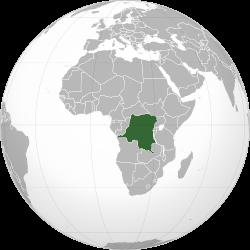
A new mining cooperation agreement between the Democratic Republic of the Congo and China reinforces the Asian nation’s dominance over access to mineral wealth. The deal reinforces China’s already dominant role in Congo’s cobalt and copper sectors while advancing provisions for local processing and investment protection. At the same time, the United States is attempting to counter with its own minerals partnership. The strategic reality: Congo is not aligning—it is arbitraging great power competition in what Rare Earth Exchanges™ calls the Great Powers Era 2.0. And China remains structurally ahead where it matters most—midstream processing and supply chain control.
A Resource War Without Bullets
In Kinshasa, power is negotiated not in treaties, but in tonnes. Congo—holder of the world’s largest cobalt reserves and a cornerstone of the battery economy—has deepened ties with China, reinforcing a relationship that already shapes global supply. Yes, Chinese firms such as CMOC and Zijin dominate production across key assets. Beijing is also Congo’s largest bilateral creditor. This is not emergent influence. It is embedded.
Hard Power in Plain Sight: What the Reporting Gets Right
Recent Reuters reporting captures the essential truths on the ground:
- Congo accounts for the majority of global cobalt supply
- Chinese firms control substantial mining output and financing channels
- The agreement includes geological data sharing and investment safeguards
- Crucially, it signals support for local processing
That final element is decisive. In critical minerals, value accrues not at extraction, but at transformation.
Washington Arrives—After the Map Is Drawn
The United States is advancing a competing minerals partnership aimed at diversifying supply and reducing reliance on China. But this is, by definition, catch-up.
China’s position was built over two decades—through equity stakes, infrastructure financing, and a vertically integrated strategy. Western efforts remain fragmented and comparatively recent.
Congo, meanwhile, is executing a rational strategy: engage both, commit to neither.
The Quiet Omission: The Midstream Is the Battlefield
The article references “local processing,” but stops short of its implications.
The supply chain is simple:
- Mining (upstream) extracts
- Processing (midstream) separates and refines
- Manufacturing (downstream) captures end-market value
China dominates the midstream. That is the choke point.
Without credible domestic or allied processing capacity, Congo’s resources—no matter how vast—will continue to flow into externally controlled value chains.
Follow the Bottleneck: An Investor’s Reality Check
There is little outright error in the reporting. The gap is emphasized.
This is not merely a geopolitical contest. It is an industrial one.
Congo is hedging. China is consolidating. The United States is reacting.
For investors, the signal is unambiguous: ignore headlines about access—track control of processing.
That is where margins concentrate. And where real power, ultimately, resides.


0 Comments
No replies yet
Loading new replies...
Moderator
Join the full discussion at the Rare Earth Exchanges Forum →