
- Baotou's March 17 task force meeting signals China's shift from capacity expansion to tightening control across the rare earth supply chain through coordinated innovation and downstream value capture.
- China is compressing the innovation-to-commercialization cycle while focusing on advanced materials, high-performance magnets, and embedding rare earth demand into EVs, robotics, and defense systems.
- Western efforts remain coordination-poor and fragmented, while China's centralized execution model continues to compound its lead in separation, metallization, and magnet manufacturing.
A routine municipal meeting in Baotou—China’s undisputed rare earth capital—offers a revealing look at Beijing’s next move. The takeaway is not a single breakthrough, but something more consequential: a coordinated push to accelerate innovation, deepen integration, and capture more value across the entire rare earth supply chain.
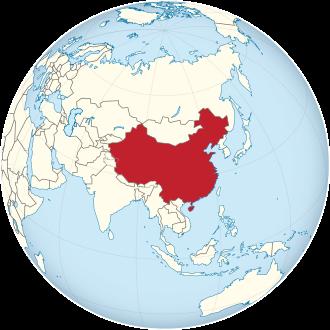
No production numbers were disclosed. No new mine announced. Yet the signal is unmistakable—China is refining its dominance, not just expanding it.
Policy in Motion: The “Two Rare Earth Bases” Strategy
On March 17, Baotou’s top leadership convened its “Two Rare Earth Bases” task force, reviewing 2025 progress and setting 2026 priorities alongside early-stage planning for China’s 15th Five-Year Plan.
For Western observers, this is not ceremonial governance. It is active industrial orchestration.
Baotou already anchors much of China’s rare-earth separation, metal, and magnet production. This initiative reinforces its role as a national command center for the execution of rare-earth industrial policy.
From Research to Revenue: Collapsing the Innovation Gap
The most important shift is not in research, but in translation.
Officials emphasized accelerating the path from lab discovery to industrial deployment through:
- Expanded state-backed R&D platforms
- Formalized expert advisory systems
- Aggressive talent recruitment and training pipelines
- Tight integration of academia, industry, and end-use applications
In practical terms, China is compressing the innovation-to-commercialization cycle—a persistent weak point in Western systems.
Industrial Upgrade: Where Value Is Actually Won
The meeting reinforces a familiar but critical truth: the rare earth battle is not about mining—it is about control of downstream value.
Priorities include:
- Advanced materials and high-performance magnet manufacturing
- Digitized, automated production systems
- Cleaner, more efficient processing technologies
Equally important, officials stressed expanding “application scenarios”—code for embedding rare earth demand deeper into EVs, robotics, energy systems, and defense platforms.
This is demand engineering aligned with supply control.
The China Model: Coordination Over Fragmentation
The execution framework remains unchanged—and highly effective:
- Centralized strategic direction
- Localized operational delivery
- State-backed “champion firms” driving scale
This model continues to outperform Western approaches that remain capital-rich but coordination-poor, particularly in separation, metallization, and magnet manufacturing.
Reading Between the Lines: No Breakthrough—By Design
There are no breakthroughs in the relevant China update. That is precisely the point.
What emerges instead is disciplined continuity with increasing precision:
- Investment is steady, not speculative
- Focus is shifting from capacity to efficiency and yield optimization
- The endgame remains downstream dominance—magnets, alloys, and applications
China is not chasing the next leap. It is compounding its lead.
Implications for the United States and Allies
For the West, the implications are structural:
- China continues to shorten the distance between innovation and industrial scale
- Its coordination advantage remains intact
- Western efforts still face friction—permitting delays, fragmented policy, and unresolved technical bottlenecks
Capital alone will not close this gap. Execution discipline and process mastery still govern outcomes—especially in solvent extraction, metallization, and magnet fabrication.
Bottom Line: Control, Not Expansion
This is not a story about a new supply. It is a story about tightening control over value.
China is reinforcing its position not by moving faster—but by moving more deliberately, more cohesively, and more completely across the stack. In the rare earth era, that is how dominance is sustained.
Disclaimer: This report is based on information published by Baotou Daily, a state-affiliated Chinese media outlet. The content reflects official government messaging and should be independently verified where possible.


0 Comments
No replies yet
Loading new replies...
Moderator
Join the full discussion at the Rare Earth Exchanges Forum →