
Highlights
- China is activating industry associations as policy execution nodes to build a unified national market, reducing provincial fragmentation and increasing central Party control over economic coordination.
- The initiative eliminates regional regulatory flexibility for foreign firms while potentially creating stronger, more coordinated domestic Chinese competitors through standardized rules and faster policy execution.
- This represents economic mobilization under the guise of market reform—prioritizing state control and external resilience over market flexibility in an era of technology competition and supply chain decoupling.
A provincial policy meeting in central China signals a deeper push by Beijing to align industry associations with the construction of a “unified national market”—a long-running but increasingly urgent initiative. The effort reflects a broader strategy: reduce internal fragmentation, standardize rules, and mobilize quasi-private institutions into a coordinated economic system with clear national security undertones.
Translation: What the Article Actually Says
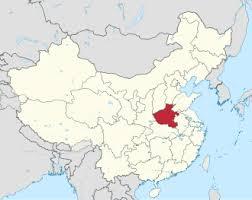
A recent meeting convened by Henan’s provincial social work authorities brought together industry associations and chambers of commerce to support China’s “national unified market” strategy.
Officials emphasized the need to:
- Align organizations with central government directives
- Integrate regional development goals with enterprise demand
- Strengthen Party leadership within industry groups
- Improve policy transmission and regulatory coordination
- Promote standardization to eliminate regional barriers
- Facilitate the flow of capital, labor, and resources
- Maintain market order and “fair competition” through industry self-regulation
The message is unambiguous: industry associations are not independent intermediaries—they are expected to function as policy execution nodes within the state system.
From Fragmentation to Command Coordination
China has long struggled with provincial protectionism and regulatory inconsistency. The “unified national market” initiative seeks to resolve this by:
- Standardizing rules across provinces
- Reducing internal trade frictions
- Increasing central oversight of economic activity
But the tone here goes further. This is not merely reform—it is system-level coordination, aligning public and quasi-private actors under Party direction in a way that increasingly resembles economic mobilization.
Why This Matters for Western Business
For U.S. and European firms, several implications emerge:
- Policy Uniformity: Fewer regional workarounds—and less flexibility in local negotiations
- State-Embedded Intermediaries: Industry groups increasingly act as extensions of government policy
- Faster Execution: Central mandates may translate into rapid, synchronized market shifts (e.g., rare earths, EVs, biotech)
- Stronger Domestic Competitors: A more integrated internal market could sharpen Chinese firms before global competition
This is industrial policy at scale—less visible than subsidies, but potentially more consequential.
Breakthrough or Bureaucratic Overreach?
The key development is organizational: Beijing is activating networks that were once semi-autonomous into a more tightly controlled system.
Countervailing pressures remain:
- Bureaucratic Rigidity: Top-down control can also slow economic responsiveness
- Political Distortion: Party priorities may override market signals
- Innovation Constraints: Entrepreneurial activity may be dampened if compliance dominates
China is making a deliberate tradeoff—control over flexibility. The long-term outcome remains uncertain.
The Bigger Picture: Toward Economic War Readiness?
In the context of export controls, supply chain decoupling, and technology competition, this initiative reads less like routine reform and more like preparation, one in the Great Powers Era 2.0. A unified domestic market enhances not just efficiency, but resilience under external pressure.
Disclaimer: This report is based on content published by Chinese state-affiliated sources, including the China Rare Earth Industry Association and China Social Work News. The framing and information should be independently verified.


0 Comments