
Highlights
- Liu Shijin argues China must transition from investment-and-export-led growth to a consumption and innovation-driven model, focusing on developmental consumption in education, healthcare, housing, and pensions to revive domestic demand.
- Beijing's strategy centers on creating internal demand through greening and digitization of infrastructure, driving consumption of rare earth-related products, robotics, batteries, and smart technologies as outlined in the new five-year plan.
- The consumption shift faces critical barriers: Liu's analysis overlooks how tighter controls, regulatory ambiguity, capital controls, and weak transparency undermine household confidence and investor trust essential for genuine demand growth.
China cannot export its way out of its current slowdown forever. In a March 25 essay, Liu Shijin (opens in a new tab)—former deputy director of the State Council’s Development Research Center and now vice chair of the China Development Research Foundation—argues that the country’s central weakness is no longer a lack of investment or exports, but chronically weak household consumption, especially in education, health care, housing, pensions and other forms of what he calls “developmental consumption.” Writing in Economic Observer and republished by Sina Finance, Liu says the 15th Five-Year Plan should embrace a new growth model built around stronger consumption, industrial upgrading, financial reform, and a much larger middle class.
Where Liu and Rare Earth Exchanges Meet
On the core diagnosis, Liu is persuasive. China’s old growth machine—property, infrastructure, and exports—has lost force, and weaker domestic demand is now exposing overcapacity, price pressure, and softer urban middle-class spending. That overlaps with what Rare Earth Exchanges™ has been warning: Beijing is trying to create demand at home through the greening and digitization of cities, transport corridors, and industrial systems, including robotics, electrification, and other advanced hardware that can absorb metals, magnets, and materials at scale. China’s new five-year planning cycle is explicitly centered on technological upgrading and industrial modernization. The internal demand for rare earth-related products is certain to rise domestically.
Liu Shijin: Needed—Chinese Consumption
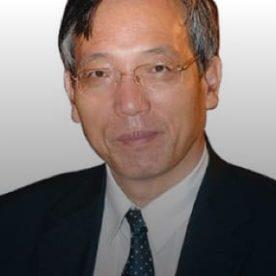
Midway through his essay in the Economic Observer, Liu makes the larger point: China must move from an investment- and export-led model to one driven more by innovation and consumption. Western investors should take that argument seriously. It speaks directly to Beijing’s effort to build future demand for sectors tied to rare earths, batteries, robotics, and smart infrastructure.
What Liu Leaves Out
Yet the essay leaves out some of the hardest parts. Consumption is not only about income; it is also about confidence. Liu says relatively little about the effects of tighter top-down controls, regulatory ambiguity, and weak market transparency on household and business behavior. China’s capital controls, according to Rare Earth Exchanges’ networks in the Mainland, are causing a growing angst.
Frankly, those omissions matter. China is trying to revive foreign investor confidence after FDI fell 9.5% in 2025 to 747.7 billion yuan, and officials have recently been forced to reiterate promises of better treatment for foreign firms. Yes, Biotech from Europe and the USA are doing record numbers of deals in Mainland China. So there are plenty of bright spots, too.
The REEx View
Liu identifies the disease clearly. But he understates the political and institutional barriers to the cure. Consumers spend when they feel secure. Businesses invest when rules are legible. Investors commit when signals can be trusted. Until China improves transparency, confidence, and private-sector trust, Beijing may keep expanding supply faster than demand can truly absorb it. For rare earth markets, that matters: downstream demand can be encouraged by policy, but not fully manufactured by decree.


0 Comments
No replies yet
Loading new replies...
Moderator
Join the full discussion at the Rare Earth Exchanges Forum →