
Highlights
- U.S. yttrium imports from China plummeted over 90% following April 2025 export controls, with prices surging 60% and aerospace suppliers now rationing critical jet engine coating materials to major customers like Boeing and Airbus.
- Scandium supply presents an even tighter crisis, with global output measured in tens of tons annually and U.S. semiconductor firms warning that current stockpiles may last only months, risking disruptions to 5G chip production.
- Despite a $12 billion critical minerals initiative, the U.S. remains deeply dependent on Chinese specialty rare earth supply chains, with alternative yttrium and scandium sources expected to take several years to scale.
China’s grip on two lesser-known rare earth elements — yttrium and scandium — is increasingly surfacing as a vulnerability in U.S. aerospace and semiconductor manufacturing. According to industry coverage from Rare Earth Online, exports of both elements to the United States remain sharply constrained despite last year’s U.S.–China trade stabilization efforts, which have contributed to tightening supply conditions across high-tech sectors.
The constraints stem from export controls imposed by Beijing in April 2025 on certain heavy rare earth elements. While officials have signaled partial easing, export licensing reportedly remains highly selective, and U.S. buyers are facing difficulty securing new approvals.
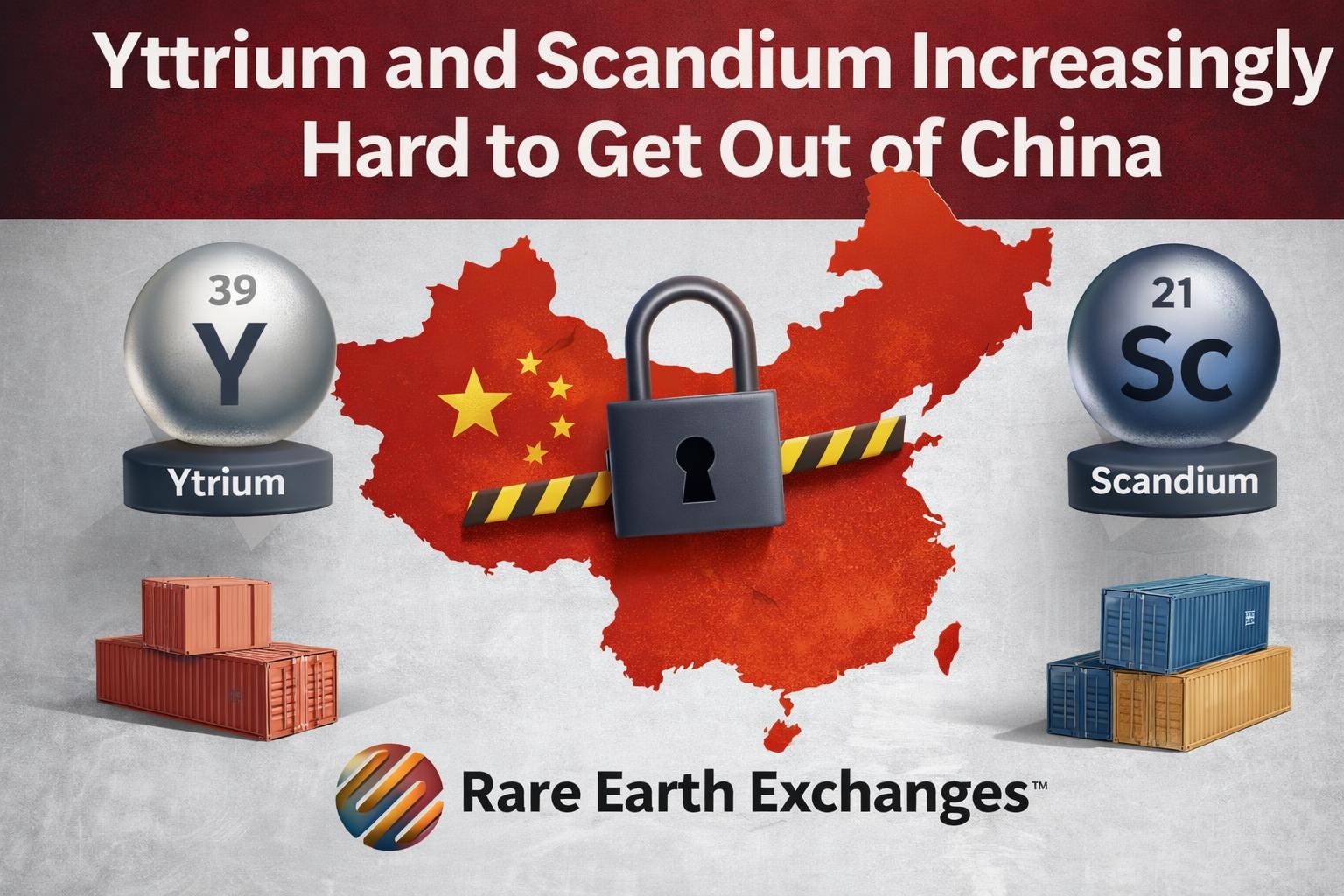
Yttrium: Jet Engine Supply Chains Under Stress
Yttrium plays a critical role in thermal barrier coatings used on jet engines and industrial gas turbines, allowing components to withstand extreme temperatures. It is also used in specialized semiconductor insulation and protective coatings.
Since Reuters highlighted the issue in late 2025, international yttrium prices have reportedly climbed roughly 60%, with European yttrium oxide prices reaching about $270 per kilogram at peak levels. Chinese customs data cited in the report indicate that in the eight months following the April 2025 controls, U.S.-bound yttrium exports fell to 17 tons, compared with 333 tons during the same period a year earlier — a drop of more than 90%.
At least two North American aerospace coating suppliers have reportedly curtailed production or instituted strict allocation policies, prioritizing major customers such as Boeing and Airbus. Smaller customers and export orders have been deferred. One supplier is said to have exhausted inventories of yttrium oxide-based materials. While there has been no confirmed shutdown of jet engine assembly lines, manufacturers face mounting strain amid elevated spare-parts demand and higher production targets.
Scandium: A Thin and Vulnerable Market
Scandium presents an even tighter bottleneck. Global annual output is estimated in the tens of tons, with no meaningful U.S. domestic production. China remains the dominant commercial supplier. Scandium is used in advanced semiconductor processing and packaging, 5G infrastructure components, fuel cells, and lightweight, high-strength aerospace aluminum alloys.
U.S. semiconductor firms are reportedly seeking government support amid declining inventories. SemiAnalysis CEO Dylan Patel has warned that current stockpiles may last months rather than years, raising the risk of disruptions to 5G chip production if replenishment stalls.
Strategic Implications
The episode underscores the ongoing U.S. dependence on Chinese specialty rare-earth supply chains, even amid broader economic détente. Washington has announced a $12 billion critical minerals reserve initiative and continues supporting domestic and allied projects — including MP Materials’ magnet facility in Texas — but scaling alternative yttrium and scandium supply is expected to take several years.
Rare earth exports may also surface in upcoming high-level U.S.–China discussions.
Disclaimer: This summary is based on reporting from Chinese industry media affiliated with state-linked entities. Export figures, pricing data, and supply-chain impacts have not been independently verified and should be confirmed through third-party government and industry sources.


0 Comments
No replies yet
Loading new replies...
Moderator
Join the full discussion at the Rare Earth Exchanges Forum →