
Highlights
- A former banker acquired a Wyoming coal mine for $2M with potential rare earth mineralization valued at $37B on paper, but the economics remain unproven, and the asset faces major metallurgical and processing challenges.
- The jump from geological occurrence to viable rare earth production requires demonstrated recovery rates, pilot-scale processing, cost competitiveness, and midstream separation capacity—none of which have been validated at Brook Mine.
- Until Ramaco Resources can prove scalable extraction, establish NI 43-101/JORC-compliant reserves, secure processing pathways, and demonstrate cost competitiveness against China, the Brook Mine remains an early-stage prospect rather than a commercial rare earth asset.
A former banker acquired a Wyoming coal mine for roughly $2 million and later revealed potential rare earth mineralization valued—on paper—at up to $37 billion. The discovery is real, but the economics remain unproven. This analysis separates geological signal from promotional noise, helping investors understand what actually drives value in the rare earth supply chain.
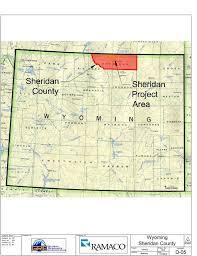
The Jackpot Narrative: A Story Markets Want to Believe
As reported in the UK’s Mirror (opens in a new tab), a distressed coal asset becomes a rare earth windfall—that is the hook. There is truth here: Ramaco Resources has disclosed rare earth element (REE) potential at its Brook Mine in Wyoming, including neodymium, praseodymium, dysprosium, and terbium. U.S. strategic urgency is also real, given China’s ~60% share of mining and ~85–90% dominance in processing.
But the jump from occurrence to multi-tens-of-billions valuation is where narrative outpaces evidence.
Rocks Are Not Revenue
Rare earths are geologically widespread. Economically viable deposits are not.
Critical distinctions often blurred:
- Resources vs. reserves: no confirmed economic extraction case
- Coal-hosted REEs: typically low-grade, heterogeneous, and metallurgically challenging
- Separation bottleneck: capital-intensive, chemically complex, and still limited in the U.S.
Absent demonstrated recovery rates, pilot-scale processing, and cost curves, headline values remain theoretical constructs—not bankable assets.
Where the Story Stretches
Several claims require discipline:
- “Supply the U.S. for 100 years” → aspirational, not technically validated
- Gallium and germanium presence → plausible, but commercial recovery unclear
- “Largest deposit” language → promotional without NI 43-101/JORC-style validation
Reported short-seller scrutiny reinforces that this is contested ground, not a settled fact.
From Ore to Oxide: The Only Path That Matters
Investors should track execution, not headlines:
- Metallurgical testwork and recovery efficiency
- Pilot-to-commercial scale-up pathway
- Midstream buildout (separation, refining)
- Offtake agreements with credible counterparties
Without these, the asset remains geology, not supply chain relevance.
The Real Takeaway: America’s Structural Gap
This story underscores a persistent truth: the United States has resource potential but lacks scaled midstream capability.
Until separation and refining capacity expand, even credible discoveries will have limited geopolitical impact.
In rare earths, value is not discovered—it is engineered, financed, and processed.
REEx Reflection
The right way to evaluate the Ramaco Resources Brook Mine comes down to four core questions: Can the material be extracted economically (metallurgy)? Can it be processed at scale (midstream)? Is there a validated, bankable resource (validation)? And can it compete globally on cost? These are not theoretical concerns—coal-hosted rare earths are typically low-grade and complex, separation remains the true bottleneck, and the widely cited ~$37B figure likely reflects in-situ value rather than recoverable economics, with no clear NI 43-101/JORC-compliant reserve publicly established.
Investors must also probe deeper: are REEs recoverable from raw coal, ash, or byproducts; who controls the processing chemistry; and how consistent are grade and mineralogy across the deposit?
Until Ramaco can demonstrate scalable metallurgy, credible and controlled processing pathways, validated reserves, and cost competitiveness with China, the Brook Mine remains less a commercial rare-earth asset—and more an early-stage asset.


0 Comments
No replies yet
Loading new replies...
Moderator
Join the full discussion at the Rare Earth Exchanges Forum →