
Highlights
- The World Magnetic Conference at Coiltech Deutschland 2026 exposes how global electromechanical engineers are redesigning motors and powertrains to reduce rare earth dependency amid supply chain vulnerabilities.
- Technical presentations reveal a strategic shift toward lower magnet grades, rare-earth-free motor designs, and efficiency optimization as proxies for supply security in e-mobility and electrification.
- The exhibition floor mirrors global supply dynamics: Chinese firms dominate NdFeB volume production, while Western companies concentrate on high-performance niches, systems integration, and advanced testing technologies.
This Rare Earth Exchanges™ intelligence brief examines Coiltech Deutschland 2026 through its most consequential feature—the World Magnetic Conference (WMC). Beneath the technical language, the event reveals a system adapting in real time to rare earth dependency, supply fragility, and the limits of substitution.
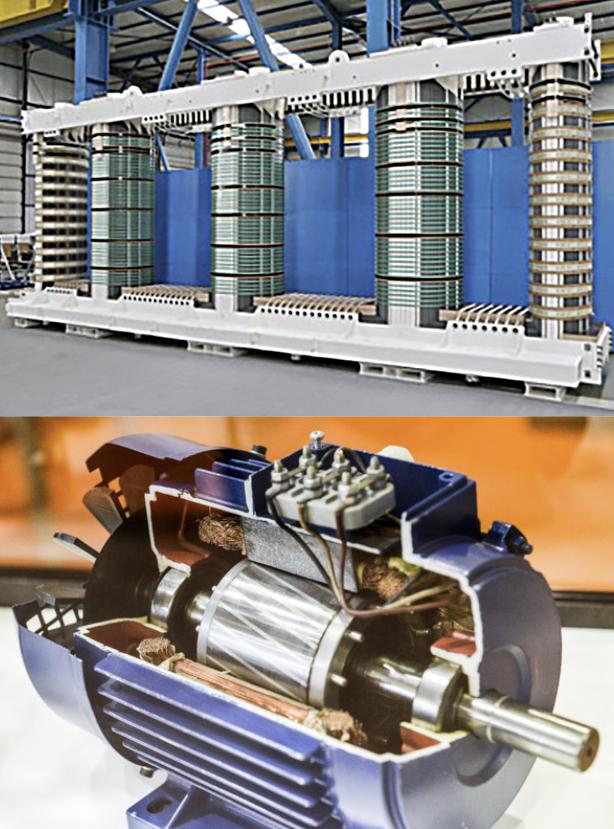
The World Magnetic Conference: Strategy Disguised as Engineering
If Coiltech is the marketplace, the World Magnetic Conference is where the future is quietly negotiated.
Since its founding in 2010, the WMC has hosted presentations from more than 200 companies and universities, curated by an academic steering committee led by Prof. Marco Villani. The selection criteria are unusually strict: only technically substantive contributions are accepted, and participation is free of charge. This structure filters out commercial noise and elevates the signal.
The result is one of the clearest windows into the true priorities of the global electromechanical industry—not what companies say in press releases, but what engineers are actually working on.
A Program Shaped by Constraint, Not Choice
The official agenda spans electrification’s core domains—e-mobility, electric motors, materials science, manufacturing technologies, and testing—but its underlying theme is unmistakable: constraint.
Sessions on advanced EV powertrains sit alongside discussions on material substitution, while transformer-focused panels address the sustainability of copper and electrical steel. Most telling is the dedicated session on “The Strategic Role of Rare Earths in the Motor Industry.” Even without overt geopolitical framing, the structure of the program reflects a sector grappling with resource risk as a design parameter.
Engineering Around Scarcity
The most revealing presentations do not celebrate breakthroughs—they manage trade-offs.
Engineers are actively exploring ways to lower magnet grades in traction motors, reduce reliance on heavy rare-earth materials, and redesign architectures to tolerate weaker magnetic performance. Alternative motor designs—such as electrically excited synchronous machines (EESM) and emerging rare-earth-free concepts—feature prominently.
There is also growing attention on SmFeN, bonded magnets, and nanocrystalline materials, alongside incremental improvements in thermal management, insulation, and system simulation. These are not replacements for NdFeB at scale. They are workarounds. Efficiency has become a proxy for supply security. Every incremental gain in electrical steel performance or winding optimization reduces the quantity of constrained materials required per unit of output.
The Rare Earth Session: A Moment of Clarity
The conference’s most candid moment arrives in the rare earth session itself.
Presentations explicitly trace the chain from mine to magnet, outline supply vulnerabilities, and explore recycling and circularity pathways. A panel discussion on how the motor industry can adapt signals growing awareness that material risk is no longer abstract.
Yet even here, the tone remains technical rather than strategic. The conversation acknowledges fragility, but stops short of confronting its geopolitical roots.
Exhibitor Reality: A Global Supply Chain in Miniature
The exhibition floor reinforces what the conference implies.
Chinese firms—including Baotou Tianhe, JL MAG, Zhenghai, and ZhaoBao—anchor the permanent magnet segment, reflecting their scale advantage in NdFeB production and processing. European companies, particularly in Germany, concentrate on bonded magnets, systems integration, and testing technologies. American firms such as Arnold Magnetic Technologies and VAC Magnetics (German and U.S. facilities) occupy high-performance niches in aerospace and defense, while Japan’s Daido Steel exemplifies leadership in advanced magnetic materials.
The pattern is consistent and well understood:
Asia supplies volume and processing depth; Europe and the U.S. specialize in design, integration, and high-end applications.
Signals, Silences, and Strategic Reality
The signals coming out of WMC this year seem clear. Industry is investing heavily in efficiency, substitution, and design flexibility. Collaboration between academia and manufacturers remains strong, and there is growing recognition that supply chains are vulnerable. The silences are just as telling. There is little direct acknowledgment of China’s dominance in heavy rare earth processing, minimal discussion of export controls, and almost no reference to the structural absence of Western midstream capacity. These omissions do not reflect ignorance—they reflect the boundaries of what is openly discussed in technical forums.
Conclusion: The Frontline Is the Design Lab
The World Magnetic Conference is not a geopolitical event. It does not need to be.
Geopolitics is embedded in every design decision presented on stage—in lower magnet grades, in rare-earth-free prototypes, in recycling strategies, and in the relentless pursuit of efficiency.
This is what Rare Earth Exchanges™ describes as the Great Powers Era 2.0 competition expressed in engineering terms.
And the conclusion is difficult to avoid: the West is redesigning its machines because it has not yet secured its materials.
See the link to the conference (opens in a new tab), ongoing March 25-26 in Augsburg, Germany.


0 Comments
No replies yet
Loading new replies...
Moderator
Join the full discussion at the Rare Earth Exchanges Forum →