
Highlights
- Critical Metals Corp raised $50 million via PIPE financing to advance Tanbreez, Greenland's giant rare earth deposit with 4.7 billion tonnes of HREE-rich ore and full exploitation permits through 2028.
- The company secured $120 million EXIM Bank loan support and U.S. offtake deals with Ucore and REAlloys, positioning Tanbreez as a key Western alternative to Chinese rare earth dominance.
- Despite strategic promise, Tanbreez faces execution risks including multi-hundred-million-dollar capital needs, complex eudialyte processing, remote logistics, and tight licensing deadlines requiring production by 2028.
Critical Metals Corp (opens in a new tab). (NASDAQ: CRML) has secured $50 million (opens in a new tab) in fresh funding via a private investment in public equity (PIPE) deal with an unnamed “fundamental” institutional investor. The cash infusion – raised through the issuance of 1.47 million new shares plus 1.56 million pre-funded warrants (exercisable into shares) – effectively hands the investor roughly 3.03 million shares for their $50 million bet. This structure suggests a notable discount to recent market prices, a typical sweetener in PIPE deals. Indeed, Critical Metals’ stock has skyrocketed in recent weeks, closing at $14.98 before the deal and jumping to nearly $25 on the news. The PIPE pricing (~$16.50/share) implies the investor demanded a substantial cushion against the lofty market valuation. In exchange, the company gains a much-needed liquidity boost without the delays of a public offering, albeit at the cost of about 3% dilution (on a $2 billion market cap) and future overhang from the warrants.
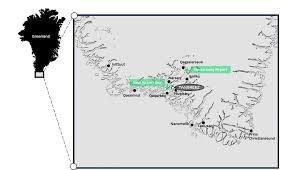
Tanbreez Location
The Players
On the company side stands Tony Sage (opens in a new tab), Critical Metals’ CEO and Chairman – a mining financier known for bold ventures. Sage also chairs Australia’s European Lithium Ltd, which engineered Critical Metals’ Nasdaq listing and retains a 60% stake in CRML. In fact, European Lithium is a major backer: even after recently cashing in 3.85 million CRML shares at $13 each (a 12% discount to market) for its own coffers, it still holds 56 million shares in Critical Metals. That sale to a U.S. institutional buyer netted European Lithium $50 million (opens in a new tab) – coincidentally matching the new PIPE amount – and, according to Sage, highlighted “the huge demand for CRML shares” after a significant run-up in price. On the other side of the table is the mystery institutional investor providing the PIPE financing. The company has not disclosed a name, spurring speculation that it could be a deep-pocketed strategic fund or sovereign-backed investor looking for exposure to Western critical minerals.
The deal’s arrangers, Jett Capital Advisors (opens in a new tab) and Cohen & Company (opens in a new tab), served as placement agents, while White & Case LLP (opens in a new tab) acted as legal counsel – indicating a fairly high-profile, cross-border transaction.
Tanbreez on the Ground
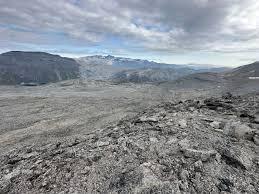
Another key player is Gregory Barnes (opens in a new tab), the geologist who discovered Tanbreez and, until recently, owned a majority of that project. Just two weeks ago, Barnes agreed to vend most of his remaining interest in Tanbreez to Critical Metals in exchange for 14.5 million CRML shares cited Mining.com (opens in a new tab). That stock issuance, priced at $8 (a 23% premium at the time), will boost Critical Metals’ ownership of Tanbreez from 42% to 92.5% – pending final sign-off by the Greenland authorities. Barnes’ company Rimbal Pty will retain only a 7.5% direct project stake, alongside European Lithium’s 7.5%, once the deal closes. In short, Critical Metals Corp. itself is a SPAC-spawned hybrid, controlled by European Lithium (opens in a new tab), armed with Barnes’ world-class deposit, and now bankrolled by at least one significant new investor betting on its success.
Tanbreez and the $50M PIPE: Strategic Progress or Just a Start?
Critical Metals Corp’s recent $50 million PIPE financing is aimed squarely at advancing the Tanbreez rare earth project in southern Greenland. Management says the funds will support technical studies, permitting compliance, and early-stage infrastructure. With Tanbreez fully permitted since 2020 but bound by revised license milestones—submission of exploitation plans by 2025, financial guarantees by 2026, and mine commencement by 2028—this injection is both timely and strategic. Local government support appears solid, positioning Tanbreez as a rare Greenlandic project with official momentum. Still, the countdown has started: Critical Metals must demonstrate steady progress or risk jeopardizing its exploitation license.
As of late 2025, Tanbreez remains in the feasibility and exploration stage. A drilling program launched mid-year aims to expand the resource base and zero in on higher-grade zones. The deposit is already massive—estimated at 4.7 billion tonnes of ore—but development will hinge on economics, not just scale. Crucially, Tanbreez’s low uranium/thorium content allowed it to bypass the political roadblocks that derailed other Greenland projects, such as Kvanefjeld.
The PIPE is just one element in a broader financing strategy. Critical Metals also secured a $120 million project loan letter of intent from the U.S. EXIM Bank, aimed at funding pre-production activities. This U.S. government support reflects Tanbreez’s geopolitical value—one of the only heavy rare earth element (HREE) resources in a Western-aligned jurisdiction. Two U.S.-based offtake agreements further this narrative: a 10% supply deal with Ucore Rare Metals and a 15% deal with REAlloys, both conditional but indicative of demand. These commitments not only support financing efforts but also suggest where Tanbreez’s material will likely be processed—outside of China, fulfilling a key strategic goal.
A Super-Scale Resource with High Strategic Leverage
Tanbreez’s sheer scale sets it apart. Outcropping over an 8x5 km area and extending 400 meters thick, the kakortokite-hosted deposit is unusually rich in HREEs—about 27% of its total rare earth oxides (TREO) are dysprosium, terbium, or yttrium. This composition far exceeds typical global averages and is especially valuable given their use in high-performance magnets, defense systems, and EV motors. Tanbreez may also contain significant zirconium and hafnium, both critical for specialized alloys, offering potential by-product revenue streams.
Location is another advantage. Situated beside a deep-water, ice-free fjord, Tanbreez can support year-round shipping without expensive port construction or road-building. The plan involves open-pit mining, onsite crushing, and dry magnetic separation to produce concentrate, which would then be exported for downstream refining. Side minerals like feldspar and arfvedsonite may be sold as construction materials, offsetting operational costs. But the complexity of eudialyte-based ore raises metallurgical concerns—processing HREEs and other elements will require technically sophisticated partners.
The Risks: Funding, Execution, and Market Realities
Despite the momentum, risks loom. The $50 million PIPE, while helpful, is likely a down payment on a multi-hundred-million-dollar development bill. The EXIM loan, if finalized, helps bridge to pre-production, but further raises—either debt or equity—seem inevitable. Each funding round brings dilution; the PIPE itself adds ~4–5% to the share count, assuming ~75–80 million pre-existing shares. European Lithium’s sale of ~$100 million worth of shares into the PIPE at $13–$16.50 also raises eyebrows. While unlocking value, it signals some insiders are taking money off the table just as excitement builds.
Execution will be a key test. Tanbreez is large and remote, with no existing infrastructure. Construction of a camp, docking system, and basic logistics will be expensive and time-sensitive. Harsh winters, limited daylight, and a small local labor pool complicate matters. The company’s ability to meet Greenland’s license timelines—feasibility by 2025, mine construction by 2026–27, operations by 2028—will require flawless execution and sustained financing.
Downstream processing is another bottleneck. Critical Metals plans to ship concentrate to third-party facilities like Ucore’s Alaska plant or REAlloys’ expected site. But those partners are still building capacity. If delays or technical hurdles emerge, Tanbreez could face a supply chain choke even if it mines on schedule. Processing eudialyte is also nontrivial—gelatinous by-products, multi-element separation, and specialized reagents all add risk.
Then there’s the market. While demand for HREEs is high, these are thinly traded commodities. A large new supply source like Tanbreez could pressure prices, especially if global projects come online simultaneously. Meanwhile, China—still dominating both mining and refining—could retaliate with price suppression, export curbs, or subsidy wars, undermining Western projects’ economics.
Strategic Promise Meets Operational Challenge
Tanbreez is arguably one of the most strategically important rare earth projects globally. It ticks all the boxes: giant resource, HREE-rich, located in a Western-aligned jurisdiction, with early signs of government and industrial support. The $50 million PIPE and offtake deals signal serious interest. But this remains a development-stage asset with all the usual junior mining risks—capital needs, technical execution, regulatory complexity, and volatile markets.
If Critical Metals delivers, Tanbreez could anchor Western REE supply chains for decades. But turning that promise into production will require sustained focus, credible project management, and further financing. For now, the market has priced in a vision. What comes next is execution.


0 Comments