
Highlights
- Defense Metals receives conditional approval for up to C$1.88M from Canada’s First and Last Mile Fund for infrastructure planning at its Wicheeda Rare Earth Project through 2028.
- Planned infrastructure includes engineering studies for a 60 km transmission line (35 MW), upgrades to a 43 km forest service road, rail integration, and Indigenous engagement.
- Funding supports planning only—not construction—and the pre-production project still requires feasibility study completion, full permitting, and project financing before production.
Defense Metals (TSX-V: DEFN) announced (opens in a new tab) it has received conditional approval for up to C$1,878,250 under Canada’s Critical Minerals Infrastructure Fund, (opens in a new tab) which is transitioning into the federal First and Last Mile Fund (opens in a new tab) (FLMF). The funding is earmarked for infrastructure planning tied to the company’s Wicheeda Rare Earth Project near Prince George, British Columbia.
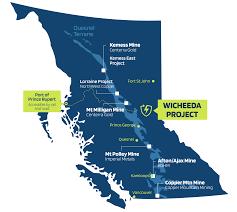
Planned work includes:
- engineering studies for a ~60 km transmission line delivering up to 35 MW from the BC Hydro grid
- engineering design for upgrades to a ~43 km forest service road connecting Highway 97 to the project site
- rail network integration studies
- Indigenous engagement initiatives
The infrastructure planning work is scheduled to run from 2026 through 2028.
What’s Real Progress—and What’s Still Aspirational
There is genuine value here. Reliable grid power and improved transportation access can materially de-risk project logistics, reduce diesel dependence, and strengthen environmental permitting optics. Infrastructure readiness is often a hidden bottleneck in remote mining developments.
However, investors should read the announcement carefully.
The funding is conditional, subject to final due diligence, and supports planning and engineering activities rather than construction or mine development capital. Note that Wicheeda remains a pre-production project currently advancing beyond the 2025 Pre-Feasibility Study stage. A definitive feasibility study, full permitting, and project financing would still be required before a production decision.
Questions Investors Should Still Ask
The release leaves several material questions unanswered:
- What matching capital or co-funding requirements apply to the federal grant?
- Who will ultimately own and permit the transmission corridor?
- Does the 35 MW grid connection align with projected throughput assumptions from the PFS?
- What is the company’s cash runway and financing strategy through feasibility and permitting?
These factors will determine whether infrastructure planning translates into a buildable project.
Stock Snapshot: Junior Developer Economics
Defense Metals remains a pre-revenue rare-earth developer, meaning valuation is driven primarily by project optionality, rare-earth market sentiment, and permitting progress.
The company has roughly 390–400 million shares outstanding, implying a market capitalization near C$100 million at recent trading levels. Share price volatility remains typical for early-stage critical-minerals developers.
REEx Take
Infrastructure funding is constructive, and at the same time, investors should keep perspective.
Western governments are increasingly funding upstream mining readiness, yet the real bottleneck in rare earth supply chains remains midstream separation and downstream magnet production.
Announcements like this move projects forward—but they are one brick in rebuilding a Western rare-earth supply chain, not the house itself.
Canada First and Last Mile Fund
Canada’s First and Last Mile Fund (FLMF) is a federal program providing up to C$1.5 billion in funding through 2030 to accelerate development of the country’s critical minerals supply chains by supporting strategic mining and infrastructure projects. Building on the earlier Critical Minerals Infrastructure Fund (CMIF), the FLMF expands support across both upstream mining and midstream processing, financing activities such as mine-site development, transportation corridors, clean energy connections, and infrastructure needed to move minerals to market. The program can provide grants or repayable/non-repayable contributions and also funds Indigenous engagement, participation, and capacity building, recognizing that many mineral projects occur near Indigenous communities.
Rather than an open call, projects are invited by Natural Resources Canada (opens in a new tab) based on strategic criteria—such as their ability to accelerate production of priority minerals, enable near-term development, attract investment, and strengthen domestic and allied supply chains. Overall, the FLMF aims to close infrastructure gaps, unlock new mineral regions, and strengthen Canada’s position in global critical minerals markets while advancing economic development and Indigenous partnership.


0 Comments