
Highlights
- Japan is in talks with India to explore rare-earth deposits in Rajasthan, estimated at 1.29 million tonnes of rare-earth oxides, as Tokyo seeks to diversify its supply away from China after Delhi suspended a 13-year export agreement.
- While the geological potential exists, investors should note that building viable rare-earth supply chains requires overcoming the key bottleneck of industrial-scale separation and refining capabilities, which are still dominated by China.
- The collaboration reflects a broader global scramble for alternative rare earth corridors, but until large-scale separation capacity emerges outside China, new discoveries alone won’t fundamentally rebalance the market.
Japan is reportedly in discussions with India to jointly explore rare-earth deposits in Rajasthan’s desert region as Tokyo intensifies efforts to diversify its supply chains away from China. Indian officials recently identified three hard-rock rare earth prospects in Rajasthan and Gujarat, estimated to contain roughly 1.29 million tonnes of rare earth oxides, according to statements by India’s Mines Minister.
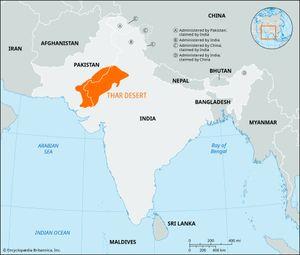
The timing is notable. In 2025, the Indian government instructed state-owned miner IREL (India) Ltd (opens in a new tab). to suspend a 13-year rare-earth export agreement with Japan, signaling New Delhi’s shift toward retaining resources for domestic value chains. Now both nations appear to be reopening dialogue—this time potentially focused on exploration cooperation, technology transfer, and future supply agreements.
For investors following the sector, the development fits a familiar pattern: governments seeking upstream security amid geopolitical tensions that expose the fragility of rare-earth supply chains dominated by China.
The Parts of the Story That Track With Reality
Several elements of the report align with established facts about the rare earth market.
Japan has pursued supply diversification since China’s 2010 restrictions on rare-earth exports following the Senkaku Islands dispute. Tokyo subsequently financed overseas projects and stockpiles through institutions such as JOGMEC, supporting ventures from Australia to Southeast Asia.
India also possesses meaningful rare-earth resources, though most are associated with monazite-rich coastal mineral sands rather than large hard-rock mines. State entities like IREL historically controlledproduction, and the government has recently emphasized expanding domestic separation and refining capacity.
Strategic collaboration between India and Japan is therefore plausible. Both nations want to reduce reliance on Chinese refining, magnet manufacturing, and defense-critical materials used in electric vehicles, wind turbines, robotics, and advanced electronics.
The Geological Reality Check Investors Should Remember
However, investors should approach headline resource numbers cautiously.
A figure such as 1.29 million tonnes of rare earth oxides may sound impressive, but resource estimates rarely translate directly into production. There are earth industries that repeatedly illustrate a simple but brutal truth: discovering ore is the easy part—building a separation industry is not.
Creating a viable rare earth supply chain requires three demanding steps:
- economically viable mining
- complex mineral processing
- industrial-scale separation of individual rare earth elements
That final step remains the sector’s choke point. China still dominates midstream separation and downstream magnet manufacturing, giving Beijing enduring leverage over the global market.
Even if Japanese technology assists in mining or extraction, the larger question remains where separation and refining would occur—and whether those facilities can compete economically.
Signals, Speculation, and Diplomatic Stagecraft
Parts of the story remain uncertain.
The report relies on unnamed sources, offers no timeline for exploration, and identifies no confirmed Japanese companies or financing mechanisms. The proposed visit by Japanese experts suggests a preliminary geological evaluation rather than a finalized mining venture.
References to Chinese restrictions on dual-use exports to Japanese entities reflect broader geopolitical tensions but do not appear directly tied to the Rajasthan project.
In practical terms, this story describes early-stage diplomatic and technical engagement, not an imminent rare earth mine.
The Bigger Picture: A Global Scramble for Supply
Despite the uncertainty, the signal matters.
Industrial economies, including Japan, the United States, India, and Europe, are actively seeking alternative rare-earth supply corridors amid intensifying geopolitical competition. But the lesson investors should remember remains unchanged: rare earth supply chains are built in refineries, not headlines.
Until large-scale separation capacity emerges outside China, new discoveries—whether in Rajasthan, Africa, or the Americas—will not fundamentally rebalance the market.
In rare earths, geology may open the door. But chemistry—and industrial policy—decide who walks through it.


0 Comments
No replies yet
Loading new replies...
Moderator
Join the full discussion at the Rare Earth Exchanges Forum →