
Highlights
- President Trump and PM Takaichi signed a comprehensive U.S.-Japan Framework for Securing the Supply of Critical Minerals on October 28, 2025.
- This marks the most ambitious bilateral accord on rare earths since WWII.
- The framework mobilizes public-private capital, streamlines mining permits, and establishes joint geological mapping.
- It creates a Critical Minerals Rapid Response Group to rebuild supply chains outside China.
- While nonbinding, the agreement represents strategic containment of Chinese rare earth dominance.
- The success of the agreement depends on whether projects break ground and deliver magnets within 24-36 months.
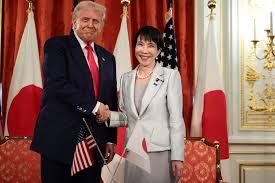
In Tokyo this week, President Donald J. Trump and Japanese Prime Minister Sanae Takaichi signed a sweeping U.S.–Japan Framework for Securing the Supply of Critical Minerals and Rare Earths, a bilateral accord aimed squarely at breaking China’s long-standing dominance in rare earth mining and processing. The framework, announced October 27 from the White House and finalized in Tokyo on October 28, represents the most comprehensive U.S.–Japan coordination on critical minerals since World War II.
Table of Contents
The agreement, described by both governments as a policy framework rather than a binding treaty, lays the foundation for a joint industrial and security architecture spanning mining, refining, investment, and even geological mapping—designed to rebuild the rare earth value chain from mine to magnet.
Deal Making
Mining Meets Geopolitics: What the Framework Actually Does
The 2025 Framework calls for mobilizing public and private capital through grants, guarantees, loans, and offtake agreements to jumpstart new rare earth and critical mineral projects. Within six months, the U.S. and Japan plan to identify and finance strategic projects—from magnets to catalysts and batteries—to secure end-product delivery to domestic and allied markets.
Other measures include:
| Measures | Summary |
|---|---|
| Streamlined permitting | Plus regulatory acceleration for mining and separation. |
| Joint geological mapping | Bid to uncover untapped reserves. |
| Recycling and scrap recovery | Programs to reinforce supply circularity |
| A Critical Minerals Rapid Response Group | Co-led by the U.S. Secretary of Energy and Japan’s METI Minister, to monitor vulnerabilities and coordinate emergency supply actions |
The framework also targets non-market distortions, promising to counter “unfair trade practices” and to establish transparent pricing mechanisms reflecting the real costs of responsible mining.
The Fine Print: Power Politics in Polite Language
While styled as cooperative, this pact is strategic containment in economic clothing. It signals Washington and Tokyo’s intent to build a parallel rare earth ecosystem—one governed by market transparency and national security filters rather than dependence on Chinese refiners. The Framework’s clause on asset sales review reads like an implicit firewall against Chinese acquisitions of rare earth assets in allied nations.
The framework stops short of a treaty—it’s _nonbinding_—but its machinery for coordination and financing suggests de facto industrial alignment, not diplomatic theater.
REEx Analysis: What’s Real and What’s Aspirational
From a supply-chain standpoint, this framework is grounded in realistic mechanics: financing tools, offtake coordination, and regulatory streamlining are all within current U.S. and Japanese capability. The more speculative elements—rapid response units, harmonized pricing, and joint stockpiling—will depend on follow-through and funding.
Still, its timing is profound. As China’s export controls tighten, this pact marks the first serious attempt by two major economies to institutionalize mineral independence. Whether it reshapes markets or remains another policy statement will depend on whether projects break ground—and magnets roll off lines—within 24 to 36 months.
Summary
The new U.S.–Japan Framework for Critical Minerals establishes a joint roadmap to rebuild mining, refining, and processing supply chains outside China. The accord emphasizes financing, permitting reform, recycling, and rapid response coordination, marking the most ambitious bilateral critical minerals pact yet. Its nonbinding nature leaves execution uncertain—but its intent is unmistakable: the era of rare earth dependency is over, at least in rhetoric.
©!-- /wp:paragraph -->


0 Comments