
Highlights
- Europe's climate and defense goals depend on critical minerals, but the continent faces a governance crisis: permitting friction and organized opposition threaten mining projects more than geological constraints.
- Global lessons from Canada, Chile, and Zambia show Indigenous co-governance and benefit-sharing are becoming baseline requirements, not optional ESG features, reshaping project risk profiles.
- The Nordic region serves as Europe's crucial test case where Sámi rights and community consent will determine if the continent can operationalize mining with social legitimacy at scale.
On June 3, 2026, Helsinki will host one of the most consequential—and quietly revealing—gatherings in the global critical minerals debate. Titled “To Mine or Not To Mine Critical Minerals in Europe? (opens in a new tab)”, this high-level forum convenes policymakers, industry leaders, NGOs, Indigenous representatives, and labor voices at a moment when Europe faces a stark reality: you cannot electrify without minerals—but you cannot mine without trust.
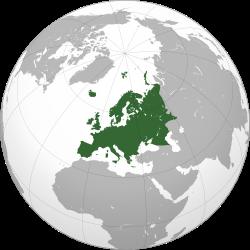
The Core Tension: Strategic Autonomy vs. Social Legitimacy
Europe’s climate ambitions—anchored in electrification, digitalization, and defense rearmament—are colliding with a structural dependency: critical minerals remain overwhelmingly sourced, processed, and refined outside the EU.
Speakers at the Helsinki forum confront several hard truths:
- Recycling and circularity cannot meet projected demand at scale
- AI infrastructure, grid expansion, EVs, and defense systems are accelerating mineral intensity
- Supply chains are increasingly geopolitical, aligning with a “World of Fortresses” dynamic
Yet Europe’s primary constraint is not geology—it is permitting friction, organized opposition, and fragile social license.
The conference reframes the debate:
The question is no longer whether Europe mines—but how, where, and with whom.
Global Lessons: Canada, Chile, Africa—Signals Europe Cannot Ignore
The opening session draws from non-EU perspectives that are increasingly shaping global mining norms:
- Canada (Quebec): Indigenous co-governance is becoming a baseline expectation, not a discretionary feature
- Chile: Movement toward IRMA-aligned lithium production reflects a rising global standard for ESG verification
- Zambia: Inclusion, workforce participation, and development-linked mining signal a broader shift toward shared economic outcomes
Rare Earth Exchanges™ Take:
These are not aspirational ESG narratives—they are emerging operating conditions. Projects lacking credible benefit-sharing mechanisms face rising risks: capital withdrawal, regulatory delay, or social shutdown.
Europe’s Reality Check: Opposition as a Structural Constraint
European lithium and strategic mineral projects increasingly face a defining challenge:
- Local opposition is organized, informed, and politically influential
- Environmental NGOs have evolved into policy-shaping actors
- Communities and labor groups demand economic participation—not just impact mitigation
The Helsinki panels directly test whether “community-centric mining” can evolve from concept to scalable model.
Key Insight: Europe does not lack resources. It faces a governance, trust, and execution deficit.
The Nordic Crucible: Where Policy Meets Indigenous Rights
The Nordics represent Europe’s most revealing test case:
- Sámi land and cultural rights introduce binding legal and ethical constraints
- Projects in Finland and Sweden are becoming proving grounds for rights-based mining frameworks
- The shift from “stakeholders” to “rights holders” fundamentally alters project risk profiles
Rare Earth Exchanges™ Take:
If Europe cannot operationalize mining within the Nordic framework—its most stable and resource-endowed region—it is unlikely to succeed elsewhere.
Strategic Implications: Europe’s Narrowing Window
This conference underscores a critical inflection point:
- Without domestic mining, Europe deepens reliance on China-dominated refining and magnet supply chains
- Without social license, projects stall—regardless of policy support or capital allocation
- Without execution speed, Europe risks exclusion from next-generation industrial value chains
Final Word: From Permits to Social Contracts
The Helsinki forum does not resolve Europe’s mining dilemma—but it clarifies its contours.
The future of European mining will not be dictated in Brussels alone.
It will be negotiated—project by project—through durable agreements between companies, communities, and competing visions of development and justice.
Bottom Line: In the Great Powers Era 2.0, control of minerals is power—or a key part of the proposition of power. But in Europe, power is contingent on legitimacy. Without durable social contracts, the continent’s mineral strategy risks remaining aspirational rather than operational.


0 Comments
No replies yet
Loading new replies...
Moderator
Join the full discussion at the Rare Earth Exchanges Forum →