
Highlights
- Chinese state analysis frames the EU’s Critical Raw Materials Act as an attempt to avoid repeating the Russia-energy dependence mistake with rare earths, though progress lags behind the US under Trump.
- The EU targets 10% extraction, 40% processing, and 25% recycling domestically by 2030, with 47 Strategic Projects and new facilities from Solvay, REEtec, and others rebuilding the magnet-materials chain.
- Beijing positions an upgraded China–EU export mechanism as managed cooperation, while Europe remains structurally dependent on Chinese separation expertise and heavy rare earths in the near term.
A Chinese state learning platform argues the European Union (EU) is racing to diversify and stabilize rare earth supply without sacrificing “strategic autonomy,” citing new laws, faster permitting, domestic projects, and a widening net of overseas partnerships. The article’s headline message is straightforward: Europe is trying to avoid repeating its Russia-energy dependence mistake—this time with rare earths.
Rare Earth Exchanges™ can confirm that the continent has moved far more slowly than America under President Trump. Is this going to change?
Chen Xiaojing, Promoting Chinese-style Industrial Policy for Europe—Rare Earth Realities?
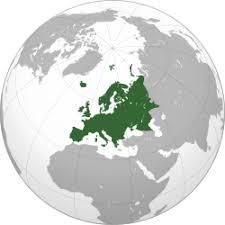
The piece yesterday was authored by Chen Xiaojing (opens in a new tab), an assistant research fellow at the China Institute of International Studies (opens in a new tab) (CIIS), European Studies Division, a state-linked foreign policy think tank affiliated with China’s Ministry of Foreign Affairs.
The Solid Ground: Where the Facts Line Up
Several claims alignwith verifiable EU actions. The EU’s Critical Raw Materials Act sets 2030 (opens in a new tab) benchmarks—10% extraction, 40% processing, 25% recycling inside the EU, and a 65% cap on reliance on any single third country at relevant processing stages.

The European Commission also selected 47 Strategic Projects to expand domestic strategic raw material capacity—an important signal that Brussels is trying to compress timelines and de-risk investment.
And Europe is rebuilding pieces of the magnet-materials chain: Solvay (opens in a new tab) inaugurated a rare earths production line for permanent magnets at La Rochelle in 2025, and ex-Solvay refining experts launched Carester (opens in a new tab). Neo Performance Materials (opens in a new tab) operates on the continent as well, processing and making magnets in addition to two sites in China. KU Leuven brings a center of excellence via SIM2. Norway’s REEtec is building one of the first European separation plants. Mkgango Resources’ (opens in a new tab) owned resources established a magnet recycling facility at the UK’s Tyseley Energy Park in Birmingham.
The Narrative Layer: What This Article Is Really Doing
Yesterday’s Chinese-originated piece is not a neutral analysis. It frames Europe as structurally fragmented—“each acting alone”—and implicitly suggests that meaningful progress requires something closer to a China-style integrated industrial ecosystem. That’s a strategic argument: Europe can legislate targets, but China still holds the industrial muscle memory (separation, metals, magnet-scale manufacturing).
It also spotlights a key diplomatic development: an “upgraded” China–EU export supply mechanism intended to quickly verify and resolve bottlenecks—useful optics for Beijing because it recasts export controls as a “managed” technical issue, not coercive leverage.
Why REEx Readers Should Care
This is the chessboard: Europe is building parallel capacity, but in the near term, it still needs access—especially for heavy rare earths and magnet-grade materials. The more Brussels codifies diversification, accelerates permits, and pursues stockpiles, the more the West’s rare earth story becomes industrial policy—backed by capital, not wishful thinking.
Disclaimer: This item originates from a Chinese state-owned media/party-affiliated platform (“Xuexi Qiangguo”) as reposted by the China Rare Earth Industry Association. Key assertions should be verified with independent EU/third-party sources before informing investment decisions.


0 Comments
No replies yet
Loading new replies...
Moderator
Join the full discussion at the Rare Earth Exchanges Forum →