
Highlights
- China currently refines approximately 70% of 19 out of 20 strategic minerals, creating significant global supply chain vulnerabilities.
- The IEA advocates for a coordinated global approach to critical minerals, similar to how nations responded to the 1970s oil crisis.
- Governments are experimenting with subsidies, equity stakes, and permitting reforms to address critical mineral supply challenges.
Fatih Birol (opens in a new tab), Executive Director of the International Energy Agency (opens in a new tab) (IEA), argues in TIME (Sept. 10, 2025) that the world must respond to critical minerals the way it responded to the 1973 oil shock. His warning rests on solid ground: supply chains are dangerously concentrated. The IEA’s own data shows that China refines roughly 70% of 19 out of 20 strategic minerals, including rare earths, gallium, and graphite. The April 2025 export controls on rare earth magnets that rattled Western automakers only underline the stakes. These are facts few dispute.
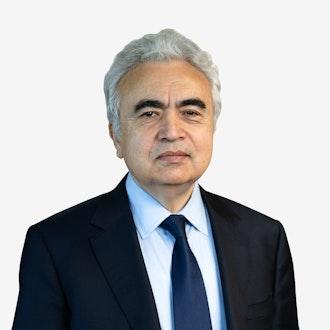
Fatih Birol, Executive Director, IEA
Where the Story Tilts
The oil shock comparison, while catchy, glosses over key differences. Oil is a fungible global commodity with transparent markets. Rare earths and battery metals are fragmented, specialized, and technically complex. Pooling “stockpiles” through an IEA-style mechanism is easier said than done when dysprosium oxide or neodymium magnets can’t simply be swapped like barrels of crude. The editorial also highlights the U.S. DoD’s July 2025 partnership with MP Materials and the EU’s 60 “strategic projects.” Both are real, but presented as if sufficient momentum is already underway. In reality, permitting, financing, and technical execution based on Rare Earth Exchanges (REEx) ongoing analyses remain years behind China’s integrated dominance.
Subtle Framing, Big Questions
The bias here is institutional: the IEA pitching itself as the “natural place” to coordinate a new global framework. That may be true in principle, but readers should ask:
- Will governments actually surrender sovereignty over critical mineral reserves to an IEA-led structure?
- Can price floors or volume guarantees really de-risk capital, or will politics choke such programs?
- If China controls both refining and magnet-making, what good is stockpiling unprocessed ore in the West?
Why It Matters for the Supply Chain
For REEx readers, the notable point isn’t the oil analogy—it’s the acknowledgment that markets alone won’t solve the problem. Governments are already experimenting with subsidies, equity stakes, and permitting reforms. Investors should track whether these early moves—like the MP Materials-DoD deal—scale into a real industrial policy or fizzle into scattered pilot projects. The IEA’s call for collective action is a reminder that the race for secure rare earths isn’t just about supply; it’s about political will.
Source: Fatih Birol, TIME, “Nations Rallied To Stop the 1970s Oil Crisis. It’s Time To Do The Same For Critical Minerals,” Sept. 10, 2025.
©!-- /wp:paragraph -->


0 Comments