
Highlights
- Fujian Jinlong Rare Earth maintained full production through Lunar New Year and is completing a 5,000-ton third-generation digital manufacturing facility for high-performance NdFeB magnets used in EVs, wind turbines, and robotics.
- Changting County's rare earth industrial output surged from RMB 617 million in 2010 to RMB 7.32 billion in 2024, with 22 rare earth enterprises employing nearly 3,500 workers in an integrated supply chain cluster.
- The expansion signals China's continued automation and vertical integration in magnet manufacturing, reinforcing its dominant position in electrification supply chains that Western producers are racing to replicate.
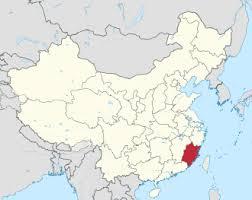
Changting County in Longyan, Fujian Province (opens in a new tab), is accelerating its rare earth industrial expansion, anchored by Fujian Jinlong Rare Earth Co (opens in a new tab)., which maintained full production through the Lunar New Year and is nearing completion of a new 5,000-ton third-generation digital manufacturing facility for high-performance neodymium-iron-boron (NdFeB) magnets. The project is positioned locally as a “national excellence-level” smart factory and reflects a broader push to modernize and scale magnet production—an essential input for electric vehicles, wind turbines, robotics, and high-efficiency appliances.
Background
Golden Dragon Rare Earth (GDRE (opens in a new tab), officially Fujian Golden Dragon Rare-Earth Co., Ltd.) is also known as Fujian Jinlong Rare Earth Co, the subsidiary of Xiamen Tungsten (XTC) (opens in a new tab). GDRE is a leading state-owned enterprise in Fujian, China, focusing on separation and downstream magnetic materials.
Production Ramping Up
On February 24, the first workday after the holiday, Jinlong’s automated production lines were operating at full speed, with robotic systems stacking NdFeB magnet blocks while foundational construction wrapped up at the new facility. Once commissioned, the plant is expected to integrate advanced process technologies into a digitally controlled manufacturing environment designed to improve yield, consistency, and energy efficiency.
Jinlong has developed what local officials describe as a relatively complete rare earth processing chain. The company reports an annual capacity of 2,000 tons of high-purity rare earth oxides, 3,000 tons of rare earth metals and alloys, 1,300 tons of tricolor phosphors, and 20,000 tons of NdFeB magnetic materials, as well as rare earth recycling operations. Company statements claim a leading global share in wind power magnet applications and a top-three global position in compressor-grade NdFeB magnets, though no independent market data were cited.
A Rare Earth Sector Cluster
Changting County has elevated the rare earths industry to flagship status, implementing a “build, strengthen, fill gaps, and extend” supply chain strategy.
Officials report 22 rare earth enterprises in the county, including 13 above the designated industrial scale, employing nearly 3,500 workers. Industry output reportedly increased from RMB 617 million in 2010 to RMB 7.32 billion in 2024—an average annual growth rate of 19%. From January to November 2025, the rare earth industrial park generated RMB 11.33 billion in industrial output, up 13.45% year over year, with rare earth and related applications accounting for RMB 8.14 billion, up 24%.
Local authorities also reference engagement from major state-linked enterprises, including Xiamen Tungsten, PetroChina, China Electronics Technology Group (CETC), and China Rare Earth Group.
Why It Matters
For U.S. and European stakeholders, the key takeaway is scale, integration, and sustained policy alignment. China continues expanding high-performance magnet manufacturing capacity at the regional level, reinforcing its dominant position in NdFeB supply chains critical to electrification and renewable energy.
While no specific technological breakthrough was disclosed, the commissioning of a 5,000-ton digitally managed facility signals continued automation, cost optimization, and vertical integration—areas Western producers are racing to replicate.
Disclaimer: This summary is based on reporting from Chinese state-affiliated media and industry associations. Production figures and market share claims have not been independently verified and should be corroborated through independent third-party sources.


0 Comments
No replies yet
Loading new replies...
Moderator
Join the full discussion at the Rare Earth Exchanges Forum →