
Highlights
- Gansu Rare Earth's cobalt-free, low-nickel hydrogen storage alloy powder has passed customer pilot testing.
- The company has secured a 2-metric-ton commercial order, marking the first large-scale validation of the technology.
- The development took just six months from launch to commercialization.
- The team achieved cost competitiveness through advanced co-doping and multi-phase structural tuning techniques.
- The new alloy reduces dependence on volatile cobalt and nickel prices.
- It delivers improved activation kinetics and high-temperature performance.
- This positions China to compete in battery technologies traditionally dominated by Japan and South Korea.
Gansu Rare Earth Company (opens in a new tab) has reached a major milestone (opens in a new tab) in green energy materials innovation, announcing that its cobalt-free, low-nickel (NFC) hydrogen storage alloy powder has successfully passed customer pilot testing and secured a commercial order of two metric tons. The achievement marks the first large-scale validation of the company’s cobalt-free hydrogen storage technology and a breakthrough toward full industrialization.
Table of Contents
From Laboratory to Market: A Six-Month Innovation Sprint
The project was launched in January 2025 by the Rare Earth Research Institute’s Hydrogen Storage Materials Group (opens in a new tab). Within just two months, the team achieved initial performance design targets—an unusually rapid pace for a new materials program. However, early cost models proved uncompetitive due to volatile raw material prices.
In response, the team pivoted to a cost-reduction strategy centered on co-doping and multi-phase structural tuning, an advanced metallurgical approach that balances performance and material economy. By June, they achieved dual success: maintaining high electrochemical performance while substantially reducing production costs—restoring the material’s market competitiveness.
Efficient Integration of R&D, Production, and Sales
Following the technical breakthrough, Gansu Rare Earth coordinated across its full “production–sales–R&D–supply” ecosystem.
- The manufacturing unit established a “green channel” to accelerate prototype production.
- The marketing division engaged directly with potential clients, promoting the environmental and cost advantages of the new powder.
- Research teams provided continuous technical support during field application testing.
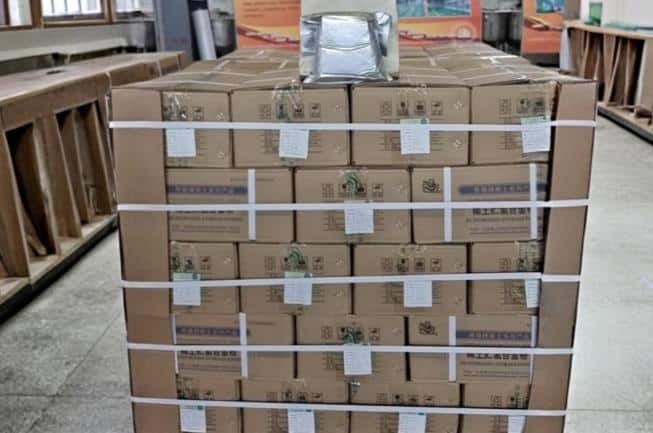
After two successful pilot purchases totaling 280 kg, a client in the nickel-metal hydride (NiMH) battery sector approved the material and placed a bulk order—validating both the product’s reliability and the company’s ability to scale innovation to production.
Green Chemistry for a Carbon-Neutral Era
Compared with traditional cobalt-free alloys, the new low-nickel NFC formulation delivers:
- Reduced exposure to cobalt and nickel price volatility, stabilizing costs and supply chains.
- Enhanced activation kinetics, meaning faster and more efficient hydrogen absorption.
- Improved high-temperature charge retention in NiMH cells—critical for stationary and EV battery performance.
- Full alignment with China’s “dual-carbon” (carbon peaking and neutrality) strategy and global ESG manufacturing standards.
Strategic Implications
This breakthrough signals that China’s state-linked rare earth enterprises are now pushing beyond raw materials into applied energy storage technologies—a domain once dominated by Japan and South Korea. Rare Earth Exchanges has discussed the concept of the Two Rare Earth Bases China, and the quest to own the future of rare earth element-derived innovation.
For Western observers, the commercialization of low-cobalt, low-nickel hydrogen storage alloys suggests that Chinese firms are potentially eroding material-dependence bottlenecks while exporting green-chemistry expertise across the battery supply chain.
Disclaimer: This report originates from the media of a Chinese state-owned entity. Information should be independently verified before forming business or investment conclusions.
©!-- /wp:paragraph -->


Which group at the Rare Earth Research Institute led the project?