
Highlights
- The U.S. already has sweeping military access to Greenland through a Cold War-era defense agreement, making acquisition unnecessary for strategic positioning in the Arctic.
- Threatening to acquire Greenland risks fracturing NATO alliances and hardens local politics, while failing to solve the real bottleneck: China's dominance in rare earth midstream processing.
- The winning strategy is co-investment in Greenlandic infrastructure and processing capacity through allied consent, not territorial conquest or coercive rhetoric.
Greenland is not a joke, not a meme, and not a pawn you “win” with a louder press briefing. It is a semi-autonomous Arctic territory under the Kingdom of Denmark, sitting on a geologic endowment of critical minerals and a geopolitical position that matters more as the Arctic becomes more navigable.
When senior Trump administration voices publicly entertained the idea of “acquiring” Greenland—and implied that military options remain on the table—what looks like theater in Washington reads as coercion in Copenhagen and Nuuk. That is how alliances crack: not with a treaty vote, but with rhetoric that forces partners to plan for the unthinkable. European leaders, including France, Germany, and Canada, have warned that any unilateral U.S. move could threaten NATO unity.
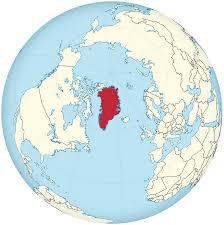
Table of Contents
The Arctic Is Opening — But Not Cleanly
Climate change is not turning the Arctic into a smooth, safe highway, but it is changing the map. Research shows decades of declining sea ice, making sea routes more navigable and increasing strategic competition among global powers. Greenland — between North America and Europe — becomes the watchtower. Opening sea lanes heightens the region’s value for logistics and defense, but also for mineral access as Europe and North America seek alternatives to Chinese-dominated supply chains.
The U.S. Already Has a “Free Hand,” But Not Sovereignty
Crucially, the U.S. does not need to “buy” or take Greenland to project military power there. As the New York Times (opens in a new tab) cites, a Cold War-era defense agreement (from 1951) with Denmark gives the United States sweeping military access across the island, including the ability to construct and operate bases, house personnel, and control movements of forces — essentially what Trump’s aides have described as “almost a free hand” in the territory.
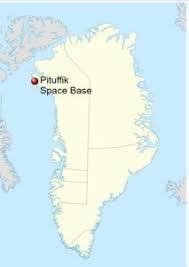
Today, the Pituffik Space Base (formerly Thule Air Base) under U.S. Space Force control underscores that access. That existing arrangement already delivers the core strategic benefits the administration cites — radar, early warning, Arctic surveillance, and positioning vis-à-vis Russia and China — without changing sovereign control.
Minerals: A Prize, and a Trap
Yes, Greenland holds rare earth elements and other critical minerals. Investors watch developments in projects such as the Tanbreez heavy rare earth deposit as potential upstream diversification sources. Reuters reported U.S. and Danish officials urging that key Greenlandic assets not be sold to Chinese developers, underlining how global powers see Greenland’s resource future.
But Rare Earth Exchanges’™’ central warning is blunt: owning ore bodies doesn’t solve the problem. Rare earth power is exercised in midstream separation, refining, alloys, and magnet production — all still heavily dominated by China. So “taking” Greenland (or talking like you might) can become a strategic error: you spook allies, harden local politics, and still don’t conjure a midstream industry into existence.
Chatter: Telegraph Comment Thread as Signal
The Telegraph’s thread (opens in a new tab) isn’t just noise — it’s a signal of how public audiences are processing the story. One cohort dismisses the debate outright, calling it “sensationalist journalism” and mocking Denmark’s capacity to resist U.S. actions. Another camp interprets the idea as classic political brinkmanship, suggesting Trump is posturing to extract concessions or leverage NATO cooperation rather than enact actual annexation. A more alarmist group believes unilateral U.S. ambitions risk fracturing NATO itself (“end of NATO,” “US will be an enemy”), while others float conspiracy theories linking the story to unrelated politics. Underneath it all is a mix of nationalism, strategic anxiety, and the internet’s typical distortions — reflecting how unconventional geopolitical events are widely misunderstood outside expert circles.
What the U.S. Should Do Instead
Greenland is a supply-chain opportunity — but only through allied consent. The U.S. already has deep Arctic equities via defense infrastructure and partnerships. The winning strategy is not conquest, but co-investment in Greenlandic infrastructure, transparent offtake agreements, and support for non-Chinese midstream processing capacity in cooperative jurisdictions. REEx has repeated this: in a supply-chain cold war, control of throughput beats fantasies of conquest. An American-centric alliance up north makes a lot of sense.
©!-- /wp:paragraph -->


0 Comments