
Highlights
- Nigerian firm Hasetins Commodities Ltd plans Africa's largest rare earth and critical minerals processing plant in Nasarawa State.
- The $400M project aims to triple Nigeria's processing capacity to 18,000 tpa and create over 10,000 jobs.
- The venture represents Nigeria's strategic push to move from raw ore exporter to midstream separator in the critical minerals supply chain.
A private Nigerian commodities firm with a growing appetite for critical minerals. Paper trails show Hasetins Commodities Ltd (opens in a new tab) was incorporated on Feb. 7, 2019 in Abuja (RC-1559791). Its registry listing pegs it to “mining and grinding services,” confirming a domestic corporate footprint rather than a fly-in promoter.
On its public-facing materials and press, Hasetins casts itself as an integrated producer—sourcing, pre-processing, transporting and refining feedstock into saleable critical-metals products. The company’s releases emphasize rare earth elements (REEs) and PGMs for tech and defense applications, and an operating model that folds in artisanal miners via local pre-beneficiation and structured offtake.
The headline project: a $400 million REE plant in Nasarawa
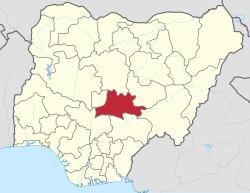
In June 2025, Hasetins announced a plan to build Africa’s largest rare-earth and critical-minerals processing facility in Nasarawa State (opens in a new tab). Abuja’s support was immediate and loud: the Ministry of Solid Minerals called it a flagship for in-country beneficiation with a 10,000+ jobs ambition and a cornerstone for Nigeria’s mining-led diversification push.
The Managing Director of Hasetines is “Prince” Jidayi Ijudigal, (opens in a new tab) also the Managing Director of Viettals.
Nasarawa State, Nigeria
The company’s numbers are specific. Hasetins says it already runs ~6,000 tpa of processing capacity; the new plant adds 12,000 tpa, lifting Nigeria’s total to ~18,000 tpa once online. For rare earths—where midstream separation is the choke point—that is a material installation in any geography outside China.
What exactly will it make? Hasetins hasn’t published a unit-by-unit flowsheet, but statements point to REE concentrates/separated oxides as the primary outputs. The firm also says the complex will “accommodate rising feedstock demand from our mining sites” and pull in artisanal supply—which implies a front-end upgrade circuit (screening/wet concentration) feeding a chemical separation line.
When does it start? Here’s the deal. The government teed up support; Hasetins teed up capacity. But no firm construction schedule or completion date has been released, and analysts have flagged this as the key open item. Until the EPC calendar, funding close, and long-lead equipment orders land in daylight, timeline risk remains non-trivial.
Why Abuja—and investors—care
Rare earths are a small-tonnage, high-leverage market. China still dominates refining/separation, which is the profitable, IP-heavy piece of the chain. A credible Nigerian midstream hub would provide OEMs and magnet makers with an additional non-Chinese option, and give West Africa a chance to capture value beyond raw ore exports. That’s why ministers are leaning in and why the news cycle framed Nasarawa as a national industrial statement.
Hasetins also fits Abuja’s jobs-and-skills narrative: on-the-ground training for small miners; local pre-processing; formal markets for informal ore. That approach won’t solve all feedstock risks, but it does widen the sourcing funnel while spreading income effects beyond a single pit.
What we know
Public reporting consistently labels the plant as a $400 million FDI project—but the capital stack is still opaque. Ecofin notes Hasetins hasn’t disclosed whether the full amount is secured or contingent on later milestones and partners. Translation: financing exists on paper and in principle; the named lenders, equity funds, or sovereign partners have not been published. For a private Nigerian sponsor in a specialized chemical industry, outside technical and financial partners are likely before first production.
Signals from the field
Two data points suggest the team is building capacity behind the scenes:
Government choreography is tight
Multiple outlets carried synchronized statements from the Minister, with consistent language on jobs, “largest in Africa” positioning, and fast-track facilitation (permits, security, infrastructure). That’s not a guarantee of execution, but it’s more than boilerplate.
Exploration scale-up
In September 2025, Hasetins announced (opens in a new tab) the purchase of long-range UAVs (LiDAR + hyperspectral) to accelerate target generation—useful for sourcing REE-bearing monazite/bastnäsite in laterites and placer systems. It’s a small press item, but it addresses the biggest mid-term risk: securing a consistent, processable feed.
The Ecosystem Fit
Africa’s REE map is filling in—Tanzania, Namibia, South Africa, Angola—and Nigeria wants a piece of the midstream, not just upstream. Abuja’s bet mirrors global strategy: diversify separation outside China, embed local value-add, and crowd-in allied OEMs. If Nasarawa moves from press release to production, Nigeria could play a regional processor, taking concentrates from within West/Central Africa and exporting separated oxides/compounds to magnet makers in Europe, North America, and Asia.
What are Some Investor Questions?
Timeline discipline.
Where are we on EPCM selection, long-lead orders (SX mixer-settlers, calcination/roasters, neutralization circuits), and commissioning plan? Without a dated Gantt, discount the headline.
Feedstock quality and variability.
Monazite chemistry swings (Th/U penalties, Ce-rich vs. NdPr-rich fractions). What’s the blend strategy, and how does it map to product slate (NdPr, Dy/Tb content) and customer specs?
The flowsheet.
Does Hasetins go conventional acid crack + SX for light REEs, or partner for membrane/IX/novel solv-ex hybrids? What’s the capex/opex delta vs. Chinese peers.
Product offtake & credit.
Who are the anchor buyers (magnet alloyers, catalysts, polishing powders) and how bankable are those contracts for project finance?
ESG and social license.
REE separation has real waste streams (radioactive residues from monazite, neutralized brines, organics). What’s the residue encapsulation/landform design, and how are artisanal miners integrated without creating health & safety liabilities?
Risk ledger (concise)
- Funding & execution: Capital structure undisclosed; no published construction calendar. Both can slow-roll a 12–18-month build.
- Resource supply: Nigeria’s in-situ REE picture is under-mapped; plant may need multi-source feed (domestic + regional). UAVs and exploration budget help, but pipeline risk persists.
- Technical: REE chemistry is unforgiving. First-time operators at this scale face ramp-curve risk and product-quality drift. (The upside: modern control systems and licensed flowsheets can compress learning.)
- Regulatory/political: Federal support is clear; continuity through permitting, elections, and security is what matters.
- Market/geopolitics: REE prices are volatile; China can flex supply. Contracts and cost discipline—not headlines—protect IRR.
Bottom line
Hasetins is not an overnight sensation; it’s a 2019-incorporated Abuja operator now trying to punch above its weight with a $400 million midstream bet that, if delivered, would triple Nigeria’s REE processing footprint and give OEMs one more non-Chinese door to knock on. Government is aligned. The capacity math (6k → 18k tpa) is plausible. The jobs number is politically potent. The timeline and capital stack are the tell. For now, this is a credible thesis with incomplete execution detail—and exactly the kind of project that could shift Africa’s role in rare-earths from ore supplier to separation player if the next 12–24 months bring hard contracts, visible kit, and chemistry that works at scale.
©!-- /wp:paragraph -->


0 Comments