
Highlights
- Hebei Province is scaling rare earth corrosion-resistant steel production using lanthanum and cerium.
- This new steel offers a cheaper alternative (RMB 200-500/ton) compared to traditional galvanizing (RMB 500-1,500/ton).
- It is also an environmentally cleaner option than galvanized steel.
- China projects this technology could replace up to 80% of its 70 million tons of annual galvanized steel consumption.
- Applications include infrastructure such as guardrails, power towers, and photovoltaic mounts.
- National standards, patents, and mass production are already underway at major steelmakers.
- This development could reduce global zinc demand.
- Western manufacturers may face a competitive disadvantage unless they adopt similar technology.
China’s China Rare Earth Industry Association reports (opens in a new tab) that Hebei Province is accelerating the large-scale adoption of rare earth corrosion-resistant steel, positioning the material as a cheaper and greener substitute for galvanized steel across infrastructure and industrial uses. Yet another example of rare earth element downstream innovation use cases.
At a January 8 matchmaking and promotion event in Shijiazhuang (opens in a new tab), provincial officials, steelmakers, universities, research institutes, designers, and end-users coordinated to advance commercialization. The steel is produced by adding small amounts of low-cost light rare earths—primarily lanthanum and cerium—to conventional steel. Officials say this improves corrosion resistance while avoiding zinc plating and paint.
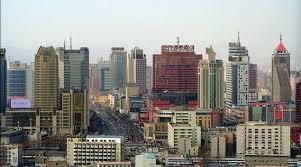
Shijiazhuang, Hebei, China
Why Relevant
Experts cited cost differentials showing galvanizing adds roughly RMB 500–1,500 per ton, while rare earth additions raise costs by RMB 200–500 per ton, with corrosion resistance reportedly improving by about twofold. Because galvanizing involves pickling wastewater and exhaust emissions, the rare-earth route is framed as environmentally preferable.
Hebei designated the material a priority for steel upgrading in 2025, backing it with standards, R&D, demand-side matching, and demonstration projects. To date, the province has issued one national standard and seven group standards, secured 10 invention patents, and achieved mass production at firms including Jinan Iron and Steel Group and Qinhuangdao Baigong Iron and Steel. Applications already demonstrated include communication towers, photovoltaic mounts, and highway guardrails.
Demand projections are ambitious. Calculations by Shanghai University estimate China uses ~70 million tons of galvanized steel annually; officials claim rare earth corrosion-resistant steel could substitute up to 80% of that—about 56 million tons—across guardrails, power and telecom towers, PV structures, steel buildings, and water projects.
Industrial uptake is emerging. A fastener maker in Hebei’s Yongnian cluster noted galvanizing can account for ~25% of product cost and said rare-earth steel could cut costs and extend service life. Jinan Iron and Steel said it has multiple plate, coil, section, bar, and wire-rod lines ready to scale products developed with Shanghai University.
At the national level, the China Iron and Steel Association (CISA) formed a working group on January 6 to promote the material, naming Hebei the first national pilot province—a signal of coordinated rollout.
Any implications for the West? Certainly could be: if performance claims hold at scale, this approach could reduce zinc demand, embed light rare earths into bulk steel markets, and create a standards-driven pathway China could export—pressuring Western steelmakers that rely on galvanizing.
Disclaimer: This item is translated and summarized from reporting published by state-affiliated Chinese platforms. Information should be independently verified.


0 Comments