
Highlights
- India holds the world's third-largest rare earth reserves but supplies less than 1% of global production.
- The new $4.1B National Critical Minerals Mission aims to close this gap through downstream processing and refining rather than raw ore exports.
- The October 2025 U.S.-China rare earth armistice creates psychological space for India's ambitions, though Beijing's April 2025 controls on seven critical rare earths remain intact and China's processing dominance unchanged.
- India's targets are serious but modest—2,000-3,000 tonnes of REO output by FY26.
- Skill gaps in heavy REE separation and magnet manufacturing keep India years behind China, Australia, and Brazil, despite genuine long-term potential.
Is India poised to seize a rare window created by the Oct. 30 U.S.–China rare earth “armistice,” a one-year suspension of China’s October 9th export controls? The optimism is tempered as of course April 2025 controls on seven critical rare earths remain fully intact. Beijing’s leverage has not evaporated; it has merely changed tempo.
Table of Contents
The Observer Research Foundation (ORF) raises (opens in a new tab) India’s interest in moving downstream to rare earth element refining. But China’s strength in this sector is the first truth investors should recognize: this “pause” changes little in the global rare earth power map. It does, however, create psychological room for India to accelerate its long-delayed ambitions in separation, refining, and magnet technology.
Rare Earth Refining Center of the Future?
The Great Indian Pivot: From Sand to Separation
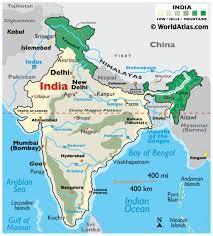
India holds the world’s third-largest rare earth reserves but supplies <1% of global production—a mismatch born from decades of exporting raw monazite while importing finished magnets. The ORF piece highlights that New Delhi’s new National Critical Minerals Mission (NCMM) aims to reverse this through:
- ₹34,300 crore in incentives (~US$4.1B),
- 1,200 exploration projects by 2031,
- 50 overseas acquisitions,
- and domestic processing of five key REEs.
The ambition is real. India’s state miner IREL is expanding beach-sand processing in Odisha, piloting indigenous magnet technologies in Vizag, and pushing for recycling and e-waste recovery.
The strategic logic is sound: India wants to become a processing-led power, not merely a raw ore exporter.
What’s Strong, What’s Spin
Accurate Signals
- India’s reserves and long-term potential are genuinely large.
- The April 2025 Chinese controls remain the dominant global constraint.
- India’s skill gaps in semiconductors and metallurgy are serious, documented, and constraining.
Where the Article Romances Reality
- India’s target of 2,000–3,000 tonnes of REO output by FY26 is modest—well short of strategic scale.
- India’s processing ecosystem is years behind China, Australia, or even Brazil.
- The semiconductor linkage—while conceptually correct—does not, by itself, create magnetic alloys or high REE content.
India’s pivot is serious, but not yet decisive.
Why This Matters for Global Investors
A rising India in rare earth processing could reshape the geopolitical calculus for Western OEMs desperate for ex-China supply diversification. But the article underplays the stubborn truth: heavy-rare-earth separation and NdFeB magnet manufacturing remain overwhelmingly Chinese domains. India is entering the race—but from the starting blocks, not the midfield.
© 2025 Rare Earth Exchanges™ – Accelerating Transparency, Accuracy, and Insight Across the Rare Earth & Critical Minerals Supply Chain.


0 Comments