
Highlights
- India’s 2026-27 budget positions rare earths and critical minerals as strategic assets, promising integrated corridors, magnet manufacturing revival, and customs relief to build domestic value chains and reduce dependence on China.
- The budget’s critical weakness is India’s lack of commercial rare earth separation capacity—the capital-intensive, IP-heavy midstream that remains unaddressed despite ambitious downstream manufacturing goals.
- Three key milestones will test India’s credibility:
- Securing separation technology deals
- Establishing a radioactive waste regime
- Implementing magnet-specific incentives with anchor customers to move from promise to proof
India’s 2026–27 budget frames rare earths and critical minerals as strategic assets. The government promises integrated “rare earth corridors,” magnet manufacturing revival, customs relief for processing equipment, and a large decarbonization fund. The message is simple for a lay reader: India wants to cut dependence, build domestic value chains, and compete in green tech and defense components—fast.
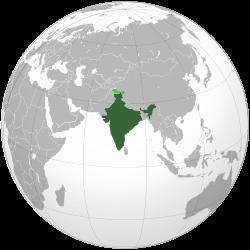
Now the most populous nation according to some sources, and also the fifth biggest economy worldwide, what happens in India matters.
The Steel in the Spine
Several claims are grounded. Co-locating mining, processing, and manufacturing is global best practice. Duty exemptions lower capex barriers. Recycling relief via TCS rationalization helps a real bottleneck: working capital. India’s monazite-bearing sands are genuine resources, and magnets—not ore—are where strategic value concentrates. The budget correctly identifies the where and why.
The Unfinished Middle
The budget’s weakest link is the midstream. Rare earth separation—solvent extraction at scale—is capital-intensive, IP-heavy, and environmentally complex. India lacks commercial separation capacity today, and the budget is quiet on technology licensing, JVs, or timelines. Handling radioactive by-products (thorium) is acknowledged by omission. Corridors without separation are industrial cul-de-sacs.
When Confidence Outruns Craft
Talk of reviving magnet manufacturing is aspirational without a path to IP, tooling precision, quality certification, and anchor offtake. China’s dominance rests on decades of process know-how and customer lock-in, not just mines. Without named OEM partners or production-linked incentives tailored to magnets, the leap from intent to export-grade output remains unproven.
Why This Matters Now
Globally, rare earth leverage is shifting from mines to manufacturing resilience. India’s budget is a credible signal in a crowded arena where the U.S., Japan, Australia, and the EU are spending heavily. If India closes the midstream gap, it becomes a consequential alternative. If not, dependence simply moves downstream.
From Promise to Proof
Investors should watch three milestones: (1) separation technology deals, (2) a clear radioactive waste regime, and (3) magnet-specific incentives with anchor customers. Until then, optimism should be measured.
The Statesman, Profiled
The Statesman is one of India’s oldest English-language newspapers, founded in 1818 and headquartered in Kolkata with a national editorial presence in New Delhi. Descended from The Friend of India, it built its reputation on terse, serious reporting and liberal editorial values, notably opposing British censorship during the Bengal Famine, resisting the 1975–77 Emergency, and publishing incisive political and strategic analysis. Though its circulation has declined relative to newer competitors, it remains widely regarded as a paper of record for sober journalism, standard English usage, and long-form analysis. A founding member of the Asia News Network, it combines domestic reporting with broad Asian coverage and maintains a strong cultural footprint through literary and arts supplements, reinforcing its identity as an intellectually rigorous, establishment-minded but independent voice in Indian media.
Source: The Statesman. Rare Earth Exchanges™ — keeping the minerals beat honest.


0 Comments