
Highlights
- Ashvini Rare Earth commissioned India's first domestic Neodymium-Praseodymium (Nd-Pr) metal facility at 15 tonnes per annum.
- The facility is a symbolic milestone but is pilot-scale compared to China's dominance in the sector.
- The Pune-based firm plans to expand with a 600 tonnes per annum metal plant and a 100 kg/day magnet line.
- Financing and timelines for expansion remain unconfirmed.
- Equipment sourcing is a critical bottleneck.
- Chinese magnet manufacturing gear is far cheaper than Western alternatives, which cost 3-4 times more.
Ashvini Rare Earth (opens in a new tab) is a Pune-based Indian rare earth and magnet materials firm linked to Ashvini Magnets, a group (opens in a new tab) founded in 1984 and widely regarded as India’s largest maker of injection-molded and bonded magnets with an estimated ~80% domestic market share. Traditionally focused on ferrite and bonded rare-earth magnets for motors, pumps, and sensors, Ashvini has been central to India’s modest permanent magnet industry.
But today’s news isn’t about magnets—it’s about metals.
Table of Contents
A Domestic First With a Tiny Footprint
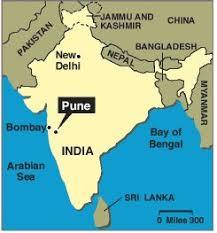
On December 22, 2025, The Financial Express reported (opens in a new tab) that Ashvini has commissioned a 15-tonne-per-annum Neodymium–Praseodymium (Nd-Pr) metal facility, the first of its kind in India outside China’s orbit. This is a milestone worth noting: India has never operated a dedicated rare-earth metal production at a commercial scale.
But let’s contextualize the numbers:
- 15 tonnes per year is small compared with global rare-earth metal production, which China dominates with thousands of tonnes annually.
- At full utilization, the new plant could supply about 25% of India’s Nd-Pr requirement—but that’s 25% of a demand hole that has historically been filled by imports from China and other suppliers.
In the broader global supply chain, 15 tonnes is pilot-scale, not power-scale, underscoring just how far India (and other Western challengers) are from making a dent in China’s rare-earth hegemony.
What Ashvini Is Actually Building
Ashvini’s pitch is simple: produce metal → enable magnets → build demand. Managing Director Vikram Dhoot (opens in a new tab) argues that metal without downstream magnet capacity is commercially hollow. To address this, the company is evaluating:
- A 600 tpa metal plant via partnerships under government incentives;
- A 100 kg/day integrated magnet line using in-house metal.
Has either path been financed, contracted, or timetabled? Remember, intention does not equal execution.
The Chokepoint: Equipment, Not Just Metal
The most credible part of the reporting is the equipment bottleneck: magnet manufacturing gear is still overwhelmingly supplied by China, and alternatives from Japan, Europe, or the U.S. are 3–4× more expensive. Ashvini’s mention of domestic engineering solutions is interesting—but unproven at scale.
Why This Matters (and Why It Doesn’t Rock China)
Ashvini’s effort is notable because it targets the metal-to-magnet gap, where almost all non-Chinese diversification efforts stall. That’s a strategic choke point. But at ~15 tonnes per year, this facility is not a supply shock. It is a symbolic domestic bet, a stepping stone—not a competitor.
For investors, the signal is clear: capability is emerging, but scale remains distant.
Source: The Financial Express, December 22, 2025.
© 2025 Rare Earth Exchanges™ – Accelerating Transparency, Accuracy, and Insight Across the Rare Earth & Critical Minerals Supply Chain.


0 Comments