
Highlights
- GSI survey reveals significant mineral deposits across Northeastern Indian states, including graphite, rare earth elements, and strategic metals.
- Potential for diversifying global mineral supply chains.
- Commercial viability and extraction remain years away.
- Discovery could position India as a competitive alternative to China in the critical minerals market.
A new report from India’s Geological Survey of India (GSI) (opens in a new tab) suggests the country’s Northeast could sit atop more than 70 million tonnes of critical minerals and rare earth elements (REEs). The Economic Times paints the discovery as a goldmine—possibly positioning India as a counterweight to China. But is this solid ground or speculative hype?
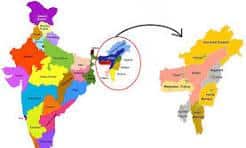
Notheast India
Rock-Solid Facts
The GSI has indeed identified large mineral prospects across Assam, Arunachal Pradesh, Meghalaya, Manipur, and Nagaland. Confirmed finds include:
- Arunachal Pradesh: 24.8 Mt of natural flake graphite—high quality and suitable for lithium-ion batteries.
- Assam (Jashora Complex): 28.6 Mt of REE-bearing deposits.
- Meghalaya (Sung Valley): ultramafic-carbonatite complexes with REE potential.
- Nagaland & Manipur: nickel, cobalt, chromium in ophiolite belts (still trace, requiring beneficiation).
- Arunachal Pradesh (Pakke Kessang): 2.2 Mt of REEs, including neodymium—crucial for permanent magnets.
These data points are grounded in official GSI surveys, making the mineral inventory credible.
Glittering Promises, Shaky Timelines
The article frames Northeast India as an imminent lithium brine hotspot—even hinting at rivalry with South America’s Lithium Triangle. That stretches reality. Brines at early prospect stage are far from validated for commercial viability. Likewise, “India’s richest state” rhetoric from local officials reads as boosterism more than evidence. Mining hasn’t started; environmental hurdles and infrastructure deficits are enormous.
Narrative Tilt: The Counter-China Lens
The reporting leans into geopolitics, casting the Northeast as a strategic bulwark against China. While true in theory—mines here could diversify supply chains—the story underplays the decade-plus runway from discovery to exportable product. The framing also risks glossing over local community opposition and biodiversity risks (e.g., Pakke Tiger Reserve overlap).
Why This Matters for the West
If India succeeds—even partially—it could reduce global reliance on China, especially in graphite anodes and NdFeB magnet feedstocks. For U.S. and European firms, that’s potential new sourcing diversification. But investors should temper enthusiasm: this is a resource map, not a mining operation.
Bottom Line
The GSI’s survey is factual and significant, but claims of immediate game-changing supply are premature. The real story is that India is now officially mapping a pathway to become a serious REE and battery mineral contender. Execution, not geology, will decide whether the Northeast is truly a goldmine—or just glitter.
Citation: Economic Times, “How North East may become a goldmine for India's quest for rare earth (opens in a new tab),” Sept. 5, 2025.
©!-- /wp:paragraph -->


0 Comments