
Highlights
- India's proposed Rare Earth Corridors aim to scale domestic supply chains, but policy frameworks still underemphasize recycling from electronics, EVs, and magnets—leaving heavy dependence on Chinese imports largely unresolved.
- While recycling could theoretically supply 35% of magnet demand, structural constraints—limited feedstock availability, technical complexity, and economic competition with Chinese refining—mean it will remain a supporting contributor rather than primary source.
- The real strategic signal for investors lies in India's whole-of-government push to build midstream separation and downstream magnet manufacturing capabilities—the decisive battleground where supply chain power actually shifts.
A March 2026 policy commentary argues that India’s proposed Rare Earth Corridors—announced in the Union Budget for 2026–27—could help scale the country’s rare earth supply chain. The concept clusters mining, processing, research, and manufacturing across mineral-rich states, including Odisha, Kerala, Andhra Pradesh, and Tamil Nadu.
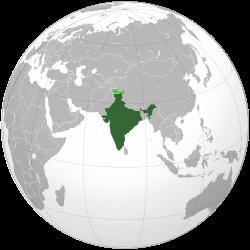
A piece from the Indian think tank Observer Research Foundation ( (opens in a new tab)ORF) suggests that while these corridors are an important step, India’s policy framework still underemphasizes rare earth recycling, particularly from end-of-life electronics, electric vehicles, and permanent magnets. Without stronger incentives and coordinated regulation, the argument goes, India will struggle to reduce dependence on Chinese rare earth supply chains.
For investors watching the global race for critical minerals, the core question is straightforward: can recycling realistically become a meaningful pillar of India’s rare-earth strategy?
Where the Argument Holds Water
Several core points align with the realities of today’s rare-earth supply chain.
India remains heavily dependent on imports of rare-earth permanent magnets (REPMs)—most of which originate in China. While India holds large monazite-bearing beach sand deposits along its coasts, converting those resources into market-ready rare earth oxides, metals, and magnets requires complex midstream and downstream capabilities that remain underdeveloped.
The policy references cited in the article are legitimate and reflect India’s growing strategic focus.
Key initiatives include:
- REPM Manufacturing Scheme (₹7,280 crore/USD$790m) aimed at developing domestic magnet production capacity
- National Critical Mineral Mission (NCMM) supports exploration, processing, and recycling
- E-Waste Management Rules (2022) governing electronic waste recovery
- End-of-Life Vehicle rules (2025) introducing recycling pathways for EV components
Taken together, these policies reveal a broader ambition: India is attempting to move up the value chain—from resource ownership to magnet manufacturing.
That shift—from mining to magnets—is the real strategic prize.
Recycling Dreams vs. Industrial Physics
Where the commentary leans toward optimism is its suggestion that recycling could supply around 35% of India’s rare-earth permanent magnet demand. In practice, recycling will likely remain a supporting contributor rather than a primary source of supply.
Three structural constraints dominate.
First is feedstock availability. End-of-life magnets from EVs, wind turbines, and electronics remain limited because many of these technologies are still in early deployment cycles.
Second, as Rare Earth Exchanges™ has introduced many times, it remains a technical complexity. Recovering rare earths from magnets requires advanced dismantling, sorting, and chemical processing—often involving hydrometallurgy and separation steps similar to primary refining.
Third and finally continues to be Economics. Recycled material must compete with primary rare earth oxides supplied through highly optimized Chinese refining networks. And remember, put this in the context of the state-owned Chinese ecosystem, and the economic issues can proliferate.
And Rare Earth Exchanges reminds all that even in regions with active recycling programs, recovered rare earths currently represent a modest share of total supply. For the foreseeable future, recycling will complement—not replace—mining and industrial separation processes such as large-scale solvent extraction, which remains the only proven commercial method for separating individual rare earth elements.
Environmental Framing and Policy Advocacy
The article also emphasizes environmental concerns associated with expanded rare earth mining, particularly in India’s coastal monazite regions.
These debates are real. Monazite sands contain thorium, raising regulatory and environmental considerations. Local communities have raised concerns about radiation exposure, coastal disruption, and water contamination.
So a big argument is to be made that presenting recycling as a clean substitute oversimplifies the industrial realities. Rare earth recycling still requires chemical reagents, acids, solvents, and controlled waste management systems.
Recycling reduces some upstream impacts—but it does not eliminate industrial processing.
The Strategic Signal Investors Should Notice
The real signal in this discussion lies beyond recycling.
India is signaling a whole-of-government effort to build a domestic rare earth ecosystem spanning:
- mining
- separation and refining
- metal making
- magnet manufacturing
- recycling
This mirrors strategies underway in the United States, Japan, and the European Union, all seeking to reduce reliance on Chinese midstream processing.
Yet investors should remain clear-eyed about scale. Rare earth supply chains are built on decades of industrial infrastructure and highly specialized separation chemistry. And China just happens to be the nation that solidified, concentrated, and intensified investment in this complex over the past couple of decades.
Recycling may grow. Corridors may help.
So the decisive battleground remains the one Rare Earth Exchanges readers know well: midstream separation and downstream magnet manufacturing.
Until those capabilities exist at an industrial scale, recycling policy alone will not meaningfully shift the global balance of power in rare earths.


0 Comments
No replies yet
Loading new replies...
Moderator
Join the full discussion at the Rare Earth Exchanges Forum →