
Highlights
- China launches Chief Engineer Responsibility System in 2026, replacing committee-based governance with single-point accountability across rare earth and semiconductor R&D chains to accelerate commercialization.
- The model operates in 5-year cycles with strict KPIs, milestone audits, and tranche-based funding tied to measurable industrial outcomes rather than academic publications.
- While optimizing execution speed and coordination, the system risks suppressing dissent and high-risk innovation, potentially creating fragility through premature convergence on flawed solutions.
China is not just funding technology—it is restructuring how it gets built. According to the Inner Mongolia regional government, a new “Chief Engineer Responsibility System” will govern major science and technology programs beginning in 2026, with rare earths and advanced semiconductor initiatives as the first pilots. The policy explicitly shifts toward outcome-driven management, prioritizing measurable industrial results over fragmented academic output.
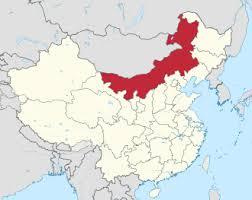
From Committee Chaos to Single-Point Accountability
At the core is a structural change: one empowered “chief engineer” with end-to-end authority across the full innovation chain—basic research, engineering, scale-up, and commercialization. Unlike prior multi-agency, consensus-heavy models, this system concentrates decision-making in a technically elite leader, selected for scientific authority and execution capability.
This is not symbolic. It is designed to reduce bureaucratic drag, shorten decision cycles, and align incentives around delivery—not publication.
Five-Year War Rooms for Strategic Materials
The program will operate in defined five-year cycles, with clearly scoped “main attack directions” and priority bottlenecks. In rare earths, this likely targets persistent weak points even within China’s dominance: heavy rare earth separation efficiency, advanced magnet materials, and downstream application integration.
Inner Mongolia—home to much of China’s rare earth production—becomes the proving ground for tighter integration between mining, processing, and industrial deployment.
Full-Stack Innovation—Now Financially Enforced
The model mandates a closed-loop system:
- Basic science → engineering breakthroughs → commercialization → financing → talent
Projects are broken into annual plans with explicit KPIs, budgets, and milestones. Funding is released in tranches and can be cut if targets are missed. A parallel “project officer” system and milestone audits create continuous oversight.
This is effectively a hybrid: state-directed strategy with internalized performance discipline.
Why This Is a Strategic Escalation
There is no single technological breakthrough here. The breakthrough is organizational. China is attempting to industrialize innovation itself—treating R&D like a coordinated supply chain rather than a loose federation of labs and firms. If executed, this compresses the time from discovery to scale and reduces failure points between upstream and downstream.
For the U.S. and allies, the implication is uncomfortable: the West’s advantage in basic research may continue, but China is optimizing the far harder step—turning science into industrial dominance, particularly in midstream rare earth processing and magnet manufacturing.
Bottom Line—Execution Is the New Battleground
This move signals a shift from capacity to coordination. China already dominates rare earth processing; now it is refining how quickly and reliably it can extend that dominance into next-generation materials and applications.
If successful, the competitive gap will widen—not because of resources, but because of execution architecture.
The Yin and Yang of the CCP
Paradoxically, the very strengths of this model may generate its weaknesses: concentrating authority in a single “chief engineer” can accelerate decisions but risks intellectual monoculture, suppressing dissent, alternative hypotheses, and serendipitous discovery—the lifeblood of true innovation.
A rigid, KPI-driven system may optimize for near-term, measurable outputs while crowding out high-risk, high-reward science that cannot be easily milestone-managed. The closed-loop, state-directed structure could also create feedback distortion—where success is reported upward to secure continued funding rather than rigorously challenged—leading to hidden technical debt that only surfaces at scale.
Moreover, compressing timelines from basic research to commercialization may overlook the nonlinear nature of materials science, particularly in rare-earth separation and magnet performance, where scaling often breaks lab assumptions. In short, the synthesis may be speed and coordination—but the contradiction is fragility: a system that moves fast, but risks converging too quickly on the wrong answers.
Disclaimer: This report is based on information published by the China Rare Earth Industry Association and the Inner Mongolia regional government. As these are state-affiliated sources, the information should be independently verified. Rare Earth Exchanges can also confirm a growing network in the region. 20% of Rare Earth Exchanges community members reside in China.


0 Comments
No replies yet
Loading new replies...
Moderator
Join the full discussion at the Rare Earth Exchanges Forum →