
Highlights
- Defense Metals' Wicheeda Rare Earth Project received early coordination support from British Columbia's Critical Minerals Office—a regulatory de-risking measure, not mining approval or a financing commitment.
- The selection provides administrative streamlining through permitting stages, but the project still requires feasibility advancement, capital, detailed engineering, and market alignment before production.
- While B.C. signals policy alignment with critical mineral goals, rare earth supply chain rebalancing depends on midstream processing capacity—not just upstream mining projects like Wicheeda.
This Rare Earth Exchanges™ brief evaluates Defense Metals’ announcement against official provincial confirmation and the company’s own investor materials. It separates regulatory momentum from production certainty, identifies what is verifiable, and clarifies what remains contingent in the rare earth development cycle.
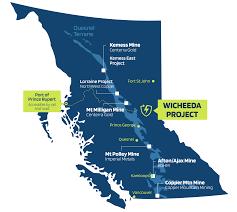
Source: Defense Metals
What Happened — In Plain English
Defense Metals Corp. announced that its 100%-owned Wicheeda Rare Earth Project, located northeast of Prince George, British Columbia, has been selected as one of three projects to receive early coordination support from the province’s Critical Minerals Office (opens in a new tab) (CMO) under its Advanced Project Initiative.
In simple terms, B.C. will help streamline inter-agency coordination as the project advances toward environmental assessment and permitting.
Important distinction: this is not a mining permit, not project financing, and not construction approval. It is an administrative alignment designed to reduce regulatory friction.
The Province of British Columbia independently confirmed that Defense Metals, Northisle Copper and Gold, and Surge Copper were selected for this level of support. That portion of the announcement is factually accurate.
Administrative Acceleration ≠ Commercial Validation
Defense Metals’ language emphasizes “promising,” “world-class,” and “fastest way possible.” That tone is consistent with junior mining communications. The provincial government’s framing is more measured: early coordination support to improve clarity and predictability in environmental assessment and permitting.
Investors should interpret this as process de-risking, not geological validation or economic certainty. The project still requires feasibility advancement, financing, detailed engineering, permitting approvals, and market alignment.
Regulatory assistance reduces timeline risk. It does not eliminate execution risk.
Company Profile — Positioning in the REE Landscape
Based on its February 2026 investor presentation and fact sheet, Defense Metals positions itself as an advanced rare-earth development company focused entirely on Wicheeda.
Key profile elements include:
- Listings: TSX Venture (DEFN), OTCQB (DFMTF), Frankfurt (35D).
- Asset: 100%-owned Wicheeda deposit with a completed NI 43-101 compliant 2025 Pre-Feasibility Study (PFS).
- Narrative focus: A neodymium-praseodymium (NdPr)-oriented permanent magnet feedstock opportunity, supported by infrastructure access (road, rail, hydroelectric power).
- Strategic pitch: Potential future supplier to Western defense, EV, and clean energy supply chains.
The PFS demonstrates preliminary economic potential but relies on significant assumptions regarding metallurgy, capex, operating costs, and rare-earth pricing. It is not a definitive feasibility study.
Wicheeda remains an upstream mining project. The structural supply-chain bottleneck — rare earth separation and refining — remains largely concentrated in China.
What’s Solid — and What’s Aspirational
Verified:
- Selection for CMO advanced project coordination support.
- Continued advancement through the feasibility and permitting stages.
Aspirational:
- Implied trajectory toward production or strategic supply security.
- Assumptions embedded in PFS economics.
Why Rare Earth Exchanges Cares
China’s dominance is rooted in processing and separation, not just mining. Western upstream projects are necessary but insufficient to rebalance supply chains. Wicheeda’s selection signals that British Columbia is actively aligning regulatory infrastructure with critical mineral policy goals. That is meaningful.
But this is incremental progress, not a structural breakthrough.
In rare earths, speed matters. Yet metallurgy, capital discipline, and midstream capacity will ultimately decide the outcome.
Defense Metals Top Holders
As of early 2026, the top holders of Defense Metals Corp. (DEFN) are dominated by strategic institutional investors and company insiders. Key investors include Denver and Perth-based RCF Management LLC (opens in a new tab) (approx. 8.07%–8.3% ownership) and former World Bank and mining executive Guy de Selliers de Moranville (opens in a new tab) (Chairman, ~5.7% ownership). Other significant stakeholders include Andrew Cook’s Palette Investment Management Inc. (opens in a new tab), British Columbia-based Mulgravian Ventures Corp., and Toronto-based Marquest Asset Management Inc. (opens in a new tab)


0 Comments
No replies yet
Loading new replies...
Moderator
Join the full discussion at the Rare Earth Exchanges Forum →