
Highlights
- Kendrick Resources signed a definitive agreement to acquire a majority interest in two Namibia rare earth exploration licenses for $300k cash plus 22 million shares, causing a 21% share price jump—but no resource estimate or metallurgy has been disclosed yet.
- Namibia hosts proven REE geology including the Lofdal heavy-REE project with 4,503t Dy₂O₃ reported, demonstrating the country can deliver economically viable deposits—but carbonatite metallurgy remains complex and costly.
- Kendrick pivoted from Scandinavian battery metals to African critical minerals in 2025, retaining only its Airijoki vanadium project in Sweden while pursuing new rare earth and copper opportunities in Namibia and Zambia.
This Rare Earth Exchanges™ brief checks Kendrick Resources PLC (KEN.L) (opens in a new tab) Namibia deal mechanics, then stress-tests the “world-class” talk against Namibia’s real geology and known rare earth track record. It separates what’s confirmed from what’s still vapor until drill cores and metallurgy say otherwise.
What Happened
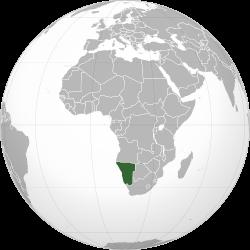
Kendrick Resources says it has signed a definitive agreement with Bonya Exploration to take a majority interest in two rare earth exploration licenses near Lüderitz, Namibia, after “satisfactory” technical due diligence. According to an entry (opens in a new tab) in London Southeast, Kendrick will pay $300,000 cash plus 22 million locked-in shares, with more cash and shares due in 18 months, and it added local mining magnate Wilhelm Shali (Shali Group (opens in a new tab)) to its board. The market liked the story—shares popped about 21% on the day.
Deal Reality: Equity Now, Proof Later
This is real consideration for real ground. But it is still early-stage exploration: no compliant resource estimate disclosed here, no grade/tonnage, and no demonstrated flowsheet. The “fast-track drill program” language is a plan, not an outcome.
Namibia’s Geology: Why REE Hope Springs Eternal
Namibia is not a random dart throw. It hosts alkaline and carbonatite complexes—classic REE source rocks—spread across multiple provinces. Academic and technical literature repeatedly points to carbonatite-style targets (and their messy mineralogy) as the country’s main REE vectors.
The catch: carbonatites can be metallurgically punishing. Fine-grained REE minerals (e.g., monazite/bastnäsite/ancylite) and complex textures can make separation expensive, even when geology looks exciting on paper.
Known REE “Receipts” in Namibia (Not Hype, Numbers)
Namibia already has a benchmark: Namibia Critical Metals Inc’s (opens in a new tab) Lofdal, a heavy-REE project backed by an NI 43-101 resource update, with reported contained ~4,503 t Dy₂O₃ and ~693 t Tb₄O₇ in the updated resource highlights.
That matters because it proves Namibia can host REE systems with the “hard-to-replace” heavy elements—yet it also underscores the bar Kendrick must clear: resource definition, metallurgy, capex realism, and permitting.
Country Profile: Stable Miner, Rising Industrial Ambition
Namibia is widely viewed as mining-friendly and investment-oriented, and it is a major uranium jurisdiction, often cited as the world’s third-largest producer behind Kazakhstan and Canada.
It is also investing in inputs such as sulphuric acid capacity (critical to multiple leach-based flowsheets), a signal of seriousness about scaling critical minerals value chains.
What’s Solid — and Aspirational
Solid: definitive agreement, real consideration, Namibia is geologically plausible for REE.
Speculative: “one of the major undeveloped projects on the planet” with no public resource/assay package disclosed.
In rare earths, Namibia can host the rock. But only metallurgy and economics can mint the money.
Kendrick Resources Plc: A Junior Explorer in Strategic Transition
Kendrick Resources Plc (LSE: KEN) is a London-listed mineral exploration and development company incorporated in England & Wales (registered under the Companies Act 1985). The company operates under the UK City Code on Takeovers and Mergers and is headquartered in London.
Historically, Kendrick focused on energy metals in Scandinavia — notably nickel, vanadium, and copper projects in Sweden, Finland, and Norway. However, funding constraints and shifting commodity cycles forced a strategic pivot. In 2024, the company made a full accounting provision against all exploration projects except its Airijoki vanadium project in Sweden, effectively narrowing its active portfolio to one primary Scandinavian asset.
Strategic Reset: From Scandinavia to Southern Africa
In 2025, the Board announced a strategic realignment. After assessing capital markets and operational costs in Scandinavia, management concluded that Southern Africa offered:
- Lower relative development costs
- More familiar geological terrain
- Stronger board expertise in-region
As a result, Kendrick began actively pursuing new opportunities in Southern Africa.
Key moves include:
- Exercising its option to acquire the Blue Fox License (34412-HQ-LEL) in northwest Zambia (September 2025)
- Entering a binding and exclusive option agreement (January 2026) to acquire at least 70% of Bonya Exploration’s EPL 4458 and EPL 6691 licenses in Namibia, targeting rare earth prospectivity
This marks a clear shift from Scandinavian battery metals to African critical minerals, including rare-earth elements.
Core Asset: Airijoki Vanadium Project (Sweden)
Despite its African pivot, Kendrick continues to highlight the Airijoki vanadium energy storage project in Sweden as its principal retained Scandinavian asset.
Vanadium plays a strategic role in:
- Grid-scale energy storage (vanadium redox flow batteries)
- High-strength steel alloys
Airijoki remains Kendrick’s only fully preserved project after prior write-downs.
Board Profile
The board reflects deep experience in junior mining and Southern African resource development:
- Colin Bird (Executive Chairman) – Longstanding mining executive with African project experience
- Martyn Churchouse (Managing Director)
- Kjeld Thygesen (Non-Executive Director)
- Alex Borrelli (Non-Executive Director)
- Evan Kirby (Non-Executive Director)
Colin Bird, in particular, is well known in AIM/LSE small-cap resource circles and has been involved in multiple African mining ventures.
Investment Reality Check
Kendrick today is:
- A small-cap junior explorer
- In strategic transition
- Concentrating on African opportunities
- Holding one primary Scandinavian energy metals asset
It is not a producer. It does not currently generate operating cash flow from mining activities. Its valuation hinges on exploration success, capital access, and project advancement. In short, Kendrick is repositioning from a Scandinavian battery metals story to a Southern African critical minerals narrative. Whether that pivot becomes value creation depends entirely on drill results, metallurgy, financing discipline, and execution.
As of mid-2022, the top shareholder of Kendrick Resources PLC (KEN.L) is Executive Chairman Colin Bird (opens in a new tab), a mining executive with over 40 years of experience, who holds approximately 20.53% (or ~19.7% in some market data) of the issued ordinary share capital. His holdings include direct shares and shares held through entities such as Camden Park Trading FZE-LLC.


0 Comments
No replies yet
Loading new replies...
Moderator
Join the full discussion at the Rare Earth Exchanges Forum →