
Highlights
- Japan's response to 2010 China export restrictions shows real progress in demand reduction and supply diversification, but technology substitution is incremental, not transformational.
- Seabed mining remains economically premature while China controls 85–90%+ of global rare earth separation capacity—the actual geopolitical chokepoint.
- The rare earth battlefield isn't mining—it's in separation plants, refining, and magnet manufacturing, where China maintains structural dominance.
Japan is not solving rare earth dependence—it is managing it. And that distinction matters.
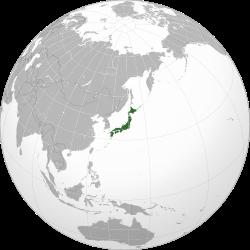
An NPR piece presents Japan as reducing reliance on China through seabed mining, magnet innovation, and long-term policy discipline. Anthony Kuhn positions (opens in a new tab) Tokyo as a potential model for the United States amid rising geopolitical tension. So the message is simple: diversify supply, innovate materials, and dependence fades.
But the real story is narrower—and far more instructive.
What NPR Gets Right: Strategy Born from Shock
Japan’s response to the 2010 China rare earth export restrictions is accurately captured. That event triggered a structural shift:
- Investment in R&D (magnet substitution, recycling)
- Diversification of upstream supply (Australia, Vietnam)
- Reduced the intensity of heavy rare-earth usage
Importantly, Japan has moderated rare earth demand growth even as EV production rises. That is real—and it reflects disciplined industrial policy.
The Assumption Trap: Innovation Replaces Supply
The report leans on a compelling but incomplete premise:
Technology can substitute for rare earth dependence.
In practice, substitution is incremental—not transformational.
- “Heavy rare earth-free” magnets reduce reliance on dysprosium and terbium, but still depend on NdFeB systems
- Performance trade-offs remain, particularly under high-temperature conditions in EV drivetrains and defense systems
- Substitution reduces intensity—it does not eliminate dependency
Physics governs outcomes. Not narratives.
Seabed Dreams vs Industrial Reality
The seabed mining narrative is visually compelling—but economically premature.
- No commercial-scale seabed rare earth production exists
- Extraction and processing costs remain prohibitive
- Environmental and permitting barriers are substantial
- Critically, mining does not address the core bottleneck: separation and refining
At Rare Earth Exchanges™, the principle is clear:
Mining is optional. Refining is control. China continues to dominate approximately 85–90%+ of global rare earth separation capacity—the true center of gravity.
The Quiet Omission: Processing Power & Supply Chain Control Equals Geopolitical Power
While NPR acknowledges China’s dominance, it understates its structural implications.
- Rare earth markets are not transparent or liquid
- Pricing is opaque, often governed by long-term contracts and relationships
- Supply chains are vertically integrated, not modular
Japan has not exited dependence—it has optimized within it.
Investor Take: Model or Mirage?
Japan offers lessons—but not a replicable blueprint.
What holds:
- Demand shaping can slow exposure
- Strategic stockpiling adds resilience
- R&D buys time
What does not:
- Full independence from China
- Rapid substitution at an industrial scale
- Mining-led supply security
Bottom Line: Control Lives Downstream
Japan’s strategy is serious—but bounded by industrial reality.
For U.S. policymakers and investors, the signal is unmistakable:
- The rare earth battlefield is not on the ground.
- It is in separation plants, metal-making, and magnet manufacturing, plus downstream demand.
Until those capabilities scale outside China, diversification remains a strategy—not a solution.


0 Comments
No replies yet
Loading new replies...
Moderator
Join the full discussion at the Rare Earth Exchanges Forum →