
Highlights
- Kazakhstan unveils comprehensive rare earth element (REE) production reforms across:
- Battery materials
- High-performance alloys
- Semiconductors
- Magnet recycling
- Government plans to modernize geological mapping with AI and digital technologies, targeting 100% data digitalization by 2026
- Strategic economic zones reformed to attract foreign investment:
- 532 existing projects valued at US$18.5 billion
- International partnerships spanning:
- EU
- U.S.
- Japan
- South Korea
- China
Kazakhstan is stepping into the global critical minerals race. At a government meeting chaired by Prime Minister Olzhas Bektenov (opens in a new tab), Minister of Industry and Construction Yersayin Nagaspayev (opens in a new tab) announced sweeping reforms designed to expand rare-earth element (REE) production and strengthen the country’s special economic zones (SEZs).
Rare Earth Ambitions
Kazakhstan’s government outlined at least three major REE-related projects across four strategic areas:
Battery materials: Including high-purity manganese sulfate, already certified by Tesla, and graphite production by Sarytogan Graphite.* High-performance alloys: Nickel-based superalloys for jet engines.
- Semiconductors: Development of advanced component supply.
- Recycling magnets: A new facility in collaboration with European partners to reprocess permanent magnets.
In addition, Kazakhstan is preparing gallium production (15 tons annually) and ramping up international partnerships with the EU, U.S., Japan, South Korea, and China.
Minister of Industry and Construction Yersayin Nagaspayev
SEZ Reforms and Global Outreach
SEZs remain Kazakhstan’s preferred tool to attract investment. Since its inception, 532 projects worth nearly US$18.5 billion have been launched, including 85 foreign-backed ventures. Nagaspayev said a new framework may allow foreign firms to manage SEZs directly, while monitoring will be tightened to ensure investor obligations are met.
Mapping and Data Modernization
A next-generation geological map will debut in 2026, supported by aerogeophysics, spectral imaging, and AI-enabled analysis. A geochemical laboratory in Astana—developed with RCI Inspection and PARAGON—will store core samples and digitized geological data, with the country pledging 100% digitalization of records by 2026.
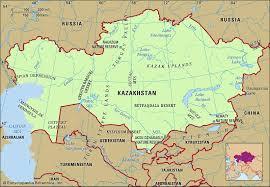
Kazakhstan
Investor Questions That Remain
While the announcements underscore Kazakhstan’s ambition, investors should ask:
- Execution risk: Can the country deliver gallium, superalloys, and magnet recycling projects at a commercial scale, or will delays erode credibility?
- Geopolitical balance: With partnerships spanning the EU, U.S., and China, how will Kazakhstan navigate competing strategic demands?
- Transparency: Will SEZ reforms and monitoring truly protect foreign investors, or will political and bureaucratic friction persist?
- Supply chain impact: Are Kazakhstan’s volumes—gallium, manganese, graphite—sufficient to shift the global REE and battery-material balance, or are they incremental?
For retail investors, the message appears clear: Kazakhstan is positioning itself as a mid-tier rare earth and battery material player, with a digital-first approach to exploration and foreign investor management. Whether it succeeds depends on scale, governance, and global demand alignment.
Source: Ayana Birbayeva, The Astana Times, Sept. 9, 2025.
©!-- /wp:paragraph -->


0 Comments