
Highlights
- Development Bank of Kazakhstan announces $1 billion financing program (2025-2030).
- The program offers 20-year loans for rare earth and critical materials projects.
- Aims to transform Kazakhstan from a raw-materials exporter to a high-value producer.
- Despite mineral wealth and strategic location, the program lacks:
- Clear processing capacity.
- Technology transfer partners.
- Offtake commitments, highlighting the gap between extraction and refining.
- The program represents a geopolitical hedge for investors seeking non-Chinese supply chains.
- Meaningful impact depends on securing international technical expertise for mid-stream processing capabilities.
The Development Bank of Kazakhstan (opens in a new tab) (DBK) has announced a $1 billion financing program (2025–2030) to catalyze projects in rare earth and critical materials extraction and processing. The move, championed by DBK Chairman Marat Yelibayev (opens in a new tab), aims to transform Kazakhstan from a raw-materials exporter into a producer of high-value downstream goods, emphasizing lanthanides, scandium, yttrium, lithium, cobalt, tungsten, germanium, gallium, and graphite.
Table of Contents
The program offers 20-year loans, a minimum 5 billion tenge threshold (about $9.3 million), and grace periods to support project ramp-up. Eligible borrowers must verify reserves under JORC standards, signaling an intent to attract credible international investors. On paper, it reads like an industrial policy masterstroke. In practice, the devil—as always—lurks in metallurgy.
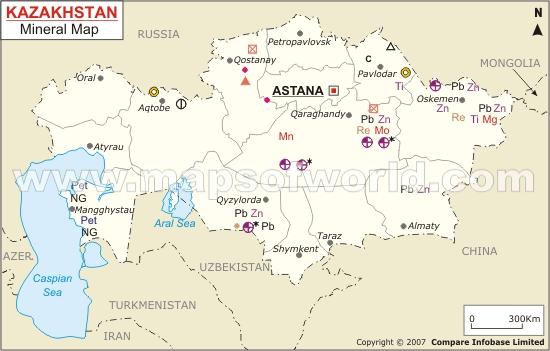
Kazakhstan Minerals Map
The Promise and the Physics
Kazakhstan sits atop enormous mineral wealth, straddling China’s western frontier and the EU’s eastern doorstep. Its infrastructure ties—rail to Xi’an, ports through the Caspian, and growing partnerships with European offtakers—make it a potential bridge between Chinese processing capacity and Western demand for diversified supply chains.
Yet, as Rare Earth Exchanges readers know, “extraction” is never the bottleneck—processing is. Kazakhstan currently lacks domestic refining and magnet-metal capacity. China controls 90 % of global separation and nearly all NdFeB magnet production. Without mid-stream investment or technology transfer, DBK’s billion may yield ore, not oxides.
Reading Between the Bureaucratic Lines
The Astana Times report (opens in a new tab) casts the initiative in gleaming industrial light but skips critical details:
- No mention of project pipeline or private co-financing partners.
- No clear offtake commitments from downstream consumers.
- No strategy for environmental compliance or waste-handling—non-trivial in REE chemistry.
This omission doesn’t imply misinformation, but it does expose policy optimism bias. Kazakhstan’s success depends on pairing capital with international technical expertise—from Australia, Japan, or the U.S.—to close the refining gap. Otherwise, the “diversification” ends at the mine gate.
Why Investors Should Care
For investors, the program marks a geopolitical hedge: a Central Asian nation positioning itself as a neutral corridor between rival supply chains. If executed well, it could add meaningful non-Chinese REE tonnage by late decade. But without verified processing partners, expect a slow build-out, not a fast breakout.
©!-- /wp:paragraph -->


0 Comments