
Highlights
- Kazakhstan is funding $81M in early-stage mineral exploration and streamlining licensing to attract foreign investment in copper and rare earth deposits, reducing upfront risk for investors.
- While the state's de-risking strategy mirrors successful Australian and Canadian models, Kazakhstan lacks industrial-scale rare earth separation capacity, limiting true supply chain diversification.
- Until processing infrastructure, stable energy supply, and logistics improve, Kazakhstan offers upstream optionality for investors—not yet a midstream supply chain breakthrough.
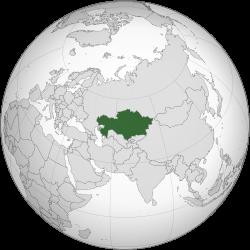
Kazakhstan (opens in a new tab) is positioning itself for a larger role in the global critical minerals race. In plain terms: the state is funding early exploration, streamlining licensing, and actively courting foreign capital to unlock copper and rare earth potential. For investors, the value proposition is straightforward—reduced upfront risk, faster asset access, and exposure to a non-China supply frontier.
De-Risking the Dirt—What Holds Up
The ~$81 million state-backed exploration program, per the Times of Central Asia, (opens in a new tab) is both credible and strategically sound. Early-stage geology is the highest-risk phase of mining, and Kazakhstan’s willingness to absorb that risk mirrors successful models in Australia and Canada.
Regulatory reforms also appear substantive. A “first-come, first-served” licensing regime, combined with digital allocation systems, reduces friction and signals a more transparent, investor-friendly environment. The emphasis on junior mining companies is equally grounded. Juniors are the engine of global discovery. Kazakhstan is attempting to catalyze that ecosystem domestically.
Where the Narrative Runs Ahead of Reality
Rare earth ambitions warrant caution. Exploration does not equal production—and production does not equal separation. Kazakhstan currently lacks industrial-scale rare earth separation capacity. Without midstream capability, any meaningful REE discovery risks flowing into China’s dominant processing system, limiting true supply chain diversification.
The highlighted $1.1 billion tungsten project is more concrete, but tungsten is not a rare earth element. Conflating the two risks, overstating the immediate impact on REE supply dynamics.
The Real Constraints—Energy, Logistics, Processing
The article identifies key bottlenecks but understates their magnitude:
- Power constraints: Mining and refining require stable, high-volume energy
- Logistics friction: Landlocked geography increases cost and complexity
- Processing gap: The central chokepoint in rare earth supply chains
Absent progress here, geology alone will not translate into scalable supply.
Investor Takeaway—Optionality, Not Disruption
Kazakhstan’s direction is credible. Its ambition is clear. But execution remains the variable.
For Rare Earth Exchanges readers, the bottom line is simple: this is upstream optionality—not yet a midstream or downstream breakthrough.
Until separation, metallization, and infrastructure scale, Kazakhstan remains a potential supplier—not a supply chain disruptor.


0 Comments
No replies yet
Loading new replies...
Moderator
Join the full discussion at the Rare Earth Exchanges Forum →