
- Northern Laos is becoming a critical frontier for heavy rare earth extraction, particularly dysprosium and terbium, but lacks a comprehensive national strategy, domestic refining capacity, and proper environmental controls.
- Myanmar's Kachin State demonstrates the catastrophic environmental consequences of unregulated ion-adsorption rare earth mining, including deforestation, water contamination, and toxic waste that travels downstream across borders.
- Without stringent enforcement, transparent regulation, and domestic processing infrastructure, Laos risks bearing all environmental costs of rare earth mining while value chains and profits flow to China and other countries.
How Southeast Asia’s newest rare earth frontier could repeat Myanmar’s environmental disaster.
Laos
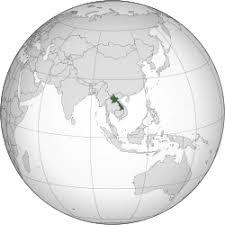
Northern Laos is quietly becoming one of the world’s most consequential—and least understood—frontiers for heavy rare earth element (HREE) extraction. Clay-hosted deposits in provinces such as Houaphanh and Xieng Khouang resemble the geological systems in southern China that historically supplied much of the world’s dysprosium and terbium—two metals essential for high-performance magnets used in electric vehicles, wind turbines, and advanced defense systems.
Yet Laos faces a structural dilemma.
Research cited by Rare Earth Exchanges™, including analysis led by Phouphet Kyophilavong of the National University ofLaos, indicates that the country lacks a comprehensive national strategy for rare earth development and has almost no domestic refining capacity. As a result, much of the value chain—from chemical separation to magnet manufacturing—occurs outside Laos, while environmental risks remain inside it. For global investors and policymakers, Laos is increasingly viewed as a potential “next Myanmar” in the heavy rare earth supply chain.
The deposits attracting attention are ion-adsorption clays, formed when granitic rocks weather in humid tropical climates. Rare earth ions become weakly bound to clay minerals in the soil profile, allowing them to be extracted using chemical leaching rather than large open-pit mines. The dominant method is in-situ leaching, in which ammonium-based solutions are injected into hillsides through boreholes.
The dissolved rare earths migrate downhill and are collected for processing.
On paper, this method appears environmentally lighter than conventional mining. In practice, it depends entirely on tight environmental control. Without proper containment and monitoring, chemicals and dissolved metals can migrate into groundwater, destabilize slopes, and contaminate nearby rivers.
Heavy rare earth mining in this region can lead to significant radioactive pollution. The ores often contain radioactive elements like thorium and uranium, which are released, concentrated, and processed into hazardous, technologically enhanced naturally occurring radioactive material (TENORM) waste. This waste can contaminate water, soil, and air, creating long-term health risks such as cancer.
Myanmar Disaster
Myanmar provides a stark example of what happens when those safeguards fail. Across Kachin State, ion-adsorption rare earth mining expanded rapidly during the past decade to supply China’s refining industry. Investigations by researchers, journalists, and environmental organizations have documented extensive deforestation, polluted waterways, and toxic waste ponds. Some analysts now argue that responsible sourcing from parts of Myanmar is effectively impossible under current conditions.
The environmental footprint is not limited to individual mine sites. Regional monitoring suggests contamination can travel far downstream through shared river systems. Studies cited by Reuters and the Stimson Center identified thousands of mining sites across mainland Southeast Asia potentially releasing chemicals into river systems, including dozens draining into the Mekong basin. That means pollution originating in Laos or Myanmar can ultimately affect communities across multiple countries.
Laos Trouble to Come?
Laos itself has already experienced a warning. In February 2024, reports emerged that a chemical leak from a rare earth mining operation in Houaphanh Province contaminated tributaries feeding the Nam Sam River, a major waterway shared by Laos and Vietnam. Local accounts described fish deaths and water testing that detected elevated acidity and dissolved metals. Community groups later reported limited transparency about the incident and few publicly available environmental monitoring data.
What About Vietnam?
Vietnam appears determined not to repeat Myanmar’s experience. In December 2025, the Vietnamese government tightened restrictions on rare-earth ore exports while promoting domestic processing as part of a broader industrial strategy. The aim is to capture more economic value at home while maintaining tighter regulatory oversight. However, Vietnam faces its own challenge: despite ambitious policies, the country still lacks large-scale refining capacity, meaning the strategy remains largely aspirational for now.
Vietnam’s caution also reflects a lesser-known issue in the rare earth sector: radioactivity. Some rare earth deposits contain naturally occurring uranium and thorium. While common in rare earth geology, these elements can create long-term waste management challenges once mining and processing scale up. If Laos eventually develops domestic separation facilities, it could face similar regulatory and environmental responsibilities without the institutional capacity currently required to manage them safely.
China’s Omnipresent Force
China’s role further complicates the picture. Chinese firms dominate many mining concessions and infrastructure projects across Laos, linking extraction sites directly to refining centers across the border. Beijing has published overseas Green Development Guidelines encouraging companies to follow environmental standards abroad. Yet in frontier regions where regulatory oversight is thin, ESG commitments often depend more on host-country enforcement than corporate pledges. In practice, environmental outcomes can vary widely.
At the REE Crossroads
Laos, therefore, stands at a critical crossroads. Demand for heavy rare earth elements such as dysprosium and terbium is rising rapidly due to electrification, renewable energy expansion, and defense technology needs. Countries with ion-adsorption deposits are gaining strategic importance in global supply chains.
But geology alone will not determine Laos’ future in the rare earth economy. Environmental enforcement, regulatory transparency, domestic processing capacity, and diversified investment partnerships will all shape whether the country can convert geological opportunity into sustainable development.
Without those safeguards, Laos risks repeating the pattern already visible in parts of Myanmar: magnets for the world’s clean-energy technologies—while the environmental costs remain in the rivers and communities where the metals are mined.
For the Mekong region, the stakes could hardly be higher.
Profile
As of early 2026, the Lao People’s Democratic Republic (Laos) is a landlocked, mountainous Southeast Asian nation of roughly 7.9–8.0 million people, governed as a unitary socialist one-party state under the Lao People’s Revolutionary Party (LPRP), with current leader Thongloun Sisoulith (opens in a new tab) serving as both party chief and president. The country has a young population (median age about 25) and is ethnically diverse, withthe Lao majority making up about 53–60%, alongside groups such asthe Khmu and Hmong, among more than 100 smaller ethnic communities.
Theravada Buddhism dominates religious life, though many highland populations maintain traditional animist beliefs, and Lao is the official language. Economically, Laos is transitioning toward a market-oriented system, with a nominal GDP of roughly $16–17.7 billion (about $78–98 billion PPP) and growth supported mainly by agriculture, hydropower, mining, and tourism, though the country faces challenges including inflation, currency depreciation, and rising external debt.
Agriculture still employs about 60% of the workforce, while exports are led by electricity, copper, gold, rubber, and coffee. China and Thailand dominate Laos’ trade and investment relationships, followed by Vietnam. Geographically, Laos covers about 236,800 square kilometers—slightly larger than Utah—and borders China, Vietnam, Cambodia, Thailand, and Myanmar, placing it at the crossroads of mainland Southeast Asia’s emerging infrastructure and resource corridors.


0 Comments
No replies yet
Loading new replies...
Moderator
Join the full discussion at the Rare Earth Exchanges Forum →